Historic zoning decisions have left a lasting legacy of housing inequality. Current leaders have the opportunity to change that.


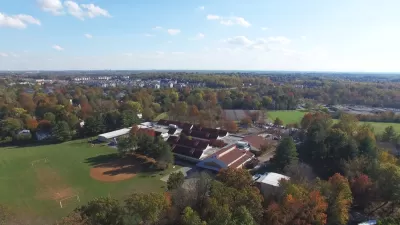
As the county evaluates proposed changes to its zoning code, Mike English analyzes the impacts of zoning regulations in Montgomery County, Maryland. According to English, "zoning, and little else, changes the economic and racial composition of a neighborhood." He assesses the demographics of differently-zoned neighborhoods immediately adjacent to each other, which show a stark economic and demographic difference between areas zoned for single family homes and those zones for higher density. "More flexible zoning is not a panacea for economic and racial equality and diversity. Those questions are complex and beyond the scope of a single article, but it is clear that differences this profound, in areas that are otherwise very similar, is not a total coincidence."
Recent developments in the county's housing policy, such as a proposed "racial equity and social justice impact statement" for Zoning Text Amendments, a proposal to encourage "missing middle" housing, and the county's recent vote to end the county's housing moratorium could shift these dynamics. Understanding the effects of zoning, writes English, helps us understand "how zoning decisions of the past have shaped racial and economic distribution in the county, and how the decisions we make now may have similar impacts going forward."
FULL STORY: Here’s a look at how zoning in Montgomery County can impact a neighborhood block by block

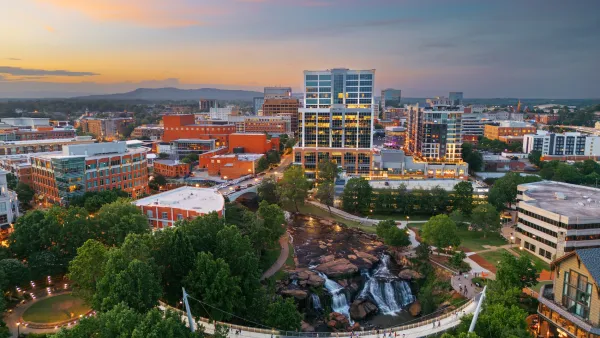
Greenville, SC pushes for missing middle housing
The city recently overhauled its zoning rules to permit more 'low-intensity' housing options.
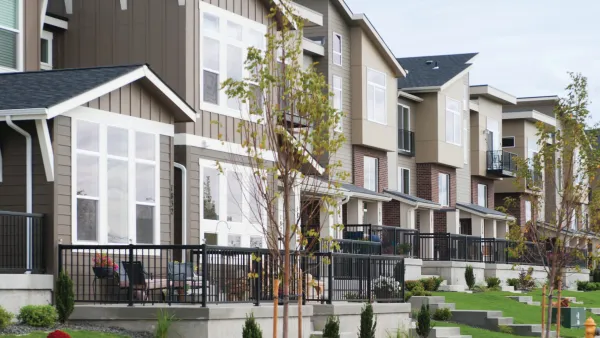
'Missing middle housing' accounted for nearly 20% of Spokane permits in 2025
Recent laws making it easier and less costly to build smaller residential buildings are having their intended effect.
Five simple zoning changes that any city can make to increase housing affordability
Zoning for more affordable housing is not rocket science, says Donald Elliot, author of "An Even Better Way to Zone." Here’s his five-step guide to getting started.

Planetizen Federal Action Tracker
A weekly monitor of how Trump’s orders and actions are impacting planners and planning in America.

The state-sanctioned urbicide of Austin
People don’t kill cities. Freeways do.

US to reduce Colorado River water deliveries to Mexico
A new Colorado Treaty amendment reduces Mexico’s Colorado River water allocation by 250,000 acre feet.

5 New England states march closer to 800 megawatt wind energy project
Securing federal approval for the project may be complicated under the Trump administration, which has historically been hostile towards domestic wind power.

Baltimore to break ground on $50 million Transit Priority Project
The project will bring faster bus trips, safer streets and better bike connections to Baltimore.

Airbnb launches $250 million 'last-dollar financing' housing accelerator, makes first investment in Austin
The company will put $6.4 million towards affordable housing development in Texas’ capital.

FREE Course: Walkable City 1: Why Walkability?
After describing his path towards focusing on walkability as the essence of good planning, Jeff Speck marches through his five principal reasons for making more walkable places.
Reinventing Malls: Planning Alchemy—Turning Gray Fields Into Gold
The course focuses on the opportunities and imperatives that shape reinvention of mall sites.

Eagle County Government
Harvard University Graduate School of Design
Nashville Planning Department
The Architects Foundation
University of Cincinnati Online
The Pocatello Development Authority
The Urban Renewal Agency of the City of Pocatello
Journal of the American Planning Association