With a diameter longer than two football fields, a new wind turbine design promises to revolutionize the wind energy industry.


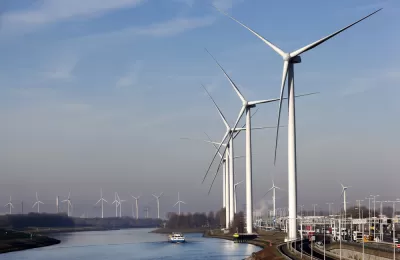
General Electric is testing a massive new offshore wind turbine with the potential to power a town of 12,000 homes, according to Stanley Reed of the New York Times. The machine has a turning diameter of over 200 yards and, in its final design, will be taller than any building in mainland Europe.
Offshore wind technology promises clean, efficient energy production and has grown rapidly in the past two decades as major energy companies look to diversify their offerings. Turbine manufacturers like GE and Siemens Gamesa have been racing to produce bigger and bigger turbines to meet rising demand and get more energy out of each installation. The launch of the outsized GM prototype, which can produce up to 13 megawatts, has jolted the industry, changing the calculations of manufacturers and wind farm developers. Installed in the ocean, the turbines can capture more reliable breezes than on land and will have to contend with fewer challenges from neighboring landowners.
The key to the new turbine's success is the material: a light, strong, and flexible combination of carbon fiber and glass fiber invented by Danish blade maker LM Wind Power, a GE subsidiary. Now that the prototype is operational, GE must figure out how to scale up the manufacturing, installation, and maintenance of the turbines in the marine environment.

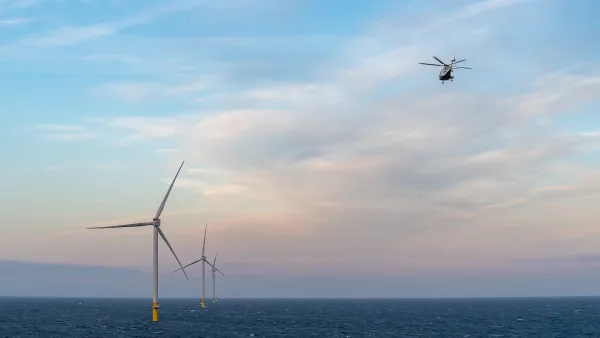
California presses forward on offshore wind
The state is taking steps to prepare its grid and port infrastructure for offshore wind projects despite the federal government's pushback on the technology.
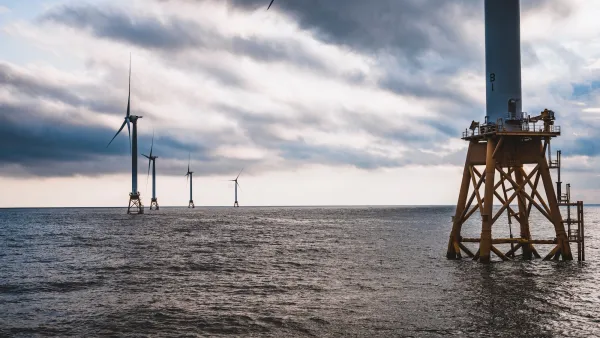
Trump Administration to Pay Energy Firm $1 Billion to Kill Wind Farms in Favor of Fossil Fuel Projects
TotalEnergies will forfeit its lease on two proposed wind energy projects off the coasts of New York and North Carolina.
Nation’s Largest Offshore Wind Project, Suspended by Trump, Restarts Construction
A judge issued a temporary restraining order against the Trump administration’s suspension of five East Coast offshore wind projects.

Planetizen Federal Action Tracker
A weekly monitor of how Trump’s orders and actions are impacting planners and planning in America.

The state-sanctioned urbicide of Austin
People don’t kill cities. Freeways do.

US to reduce Colorado River water deliveries to Mexico
A new Colorado Treaty amendment reduces Mexico’s Colorado River water allocation by 250,000 acre feet.

5 New England states march closer to 800 megawatt wind energy project
Securing federal approval for the project may be complicated under the Trump administration, which has historically been hostile towards domestic wind power.

Baltimore to break ground on $50 million Transit Priority Project
The project will bring faster bus trips, safer streets and better bike connections to Baltimore.

Airbnb launches $250 million 'last-dollar financing' housing accelerator, makes first investment in Austin
The company will put $6.4 million towards affordable housing development in Texas’ capital.

FREE Course: Walkable City 1: Why Walkability?
After describing his path towards focusing on walkability as the essence of good planning, Jeff Speck marches through his five principal reasons for making more walkable places.
Reinventing Malls: Planning Alchemy—Turning Gray Fields Into Gold
The course focuses on the opportunities and imperatives that shape reinvention of mall sites.

Eagle County Government
Harvard University Graduate School of Design
Nashville Planning Department
The Architects Foundation
University of Cincinnati Online
The Pocatello Development Authority
The Urban Renewal Agency of the City of Pocatello
Journal of the American Planning Association