Processing a growing backlog of requests, Seattle Department of Transportation must prioritize which intersections will be made accessible.


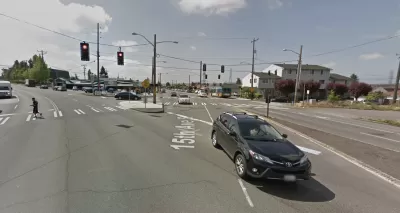
In Seattle, "the vast majority of pedestrian signals don’t have audible sounds for people who are blind and low vision," reports Heidi Groover, relating the story of a North Seattle resident who is forced to rely on the sound of passing traffic to determine when it's safe to cross the street.
Despite a federal consent decree which requires the installation of more than a thousand curb ramps per year, there's no legislation requiring the addition of Accessible Pedestrian Signals. "More than three quarters of Seattle’s signals do not have such devices," says Groover.
At this point, the Seattle Department of Transportation (SDOT) has a backlog of requests for the installation of accessible signals throughout the city. Even in new intersection construction or alteration projects, replacement of inaccessible signals is not always required, Groover notes. According to Groover, only 22% of pedestrian signals in Seattle are accessible.
One reason for the lack of accessible signals: they're not cheap. "Although SDOT has not produced a formal study of upgrading signals, at $50,000 each, upgrading all 875 crossings without accessible signals would cost about $44 million," writes Groover.
Groover reports that SDOT consults with "an advisory group of people with disabilities to prioritize the requests."
Read the full story: Many Seattle intersections lack accessible crossing signals for people with vision or hearing loss

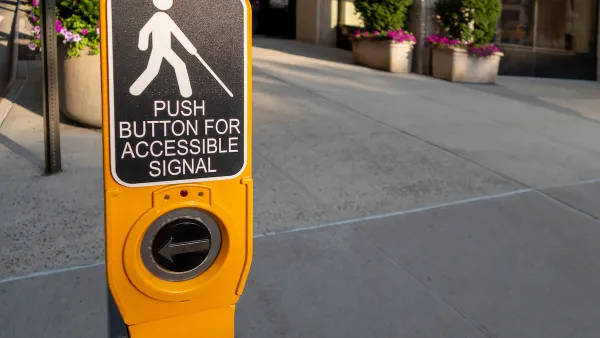
New Guidelines Bring Clarity to Accessibility Requirements
The new rules could help bridge the gaps in accessibility infrastructure and ADA compliance, making roads and sidewalks safer for everyone.
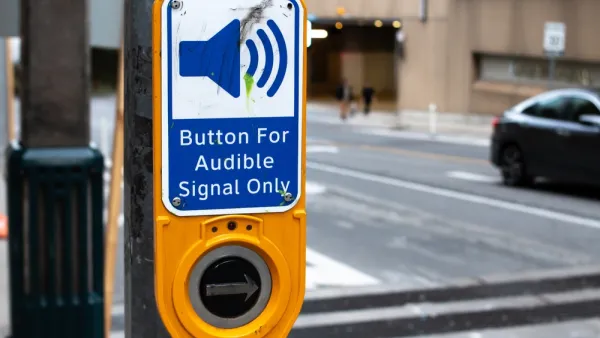
Chicago Found Liable for ADA Violations
A federal judge ruled that the city fails to provide “meaningful access” to many of its streets due to a lack of infrastructure for pedestrians with vision impairments at most of the city’s intersections.
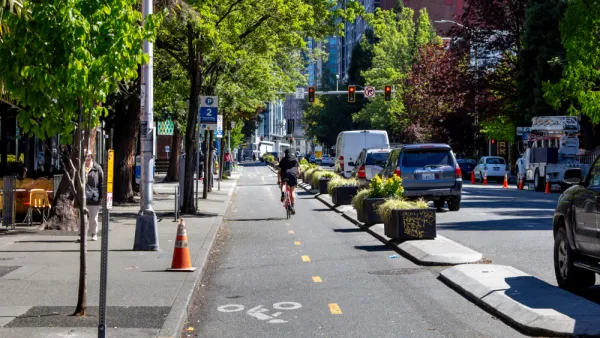
Seattle Planning Commission Urges Reimagining of the City’s Streets
In a set of recommendations submitted to the city, the commission calls for revised land use and transportation policies that reclaim public space from cars and shift focus away from vehicle throughput to more pedestrian-oriented uses.

Planetizen Federal Action Tracker
A weekly monitor of how Trump’s orders and actions are impacting planners and planning in America.

The state-sanctioned urbicide of Austin
People don’t kill cities. Freeways do.

Colorado’s Largest Data Center Could Rise Next to Homes — Without a Public Hearing
The proposed campus would consume 11 times the power of Denver International Airport; as it has across the country, opposition mounts.
Raised interest rates may kill financially vulnerable construction projects
The chief economist at ConstructConnect warns that if construction project owners are negatively impacted by the raised rates, it could result in delayed payments to contractors.
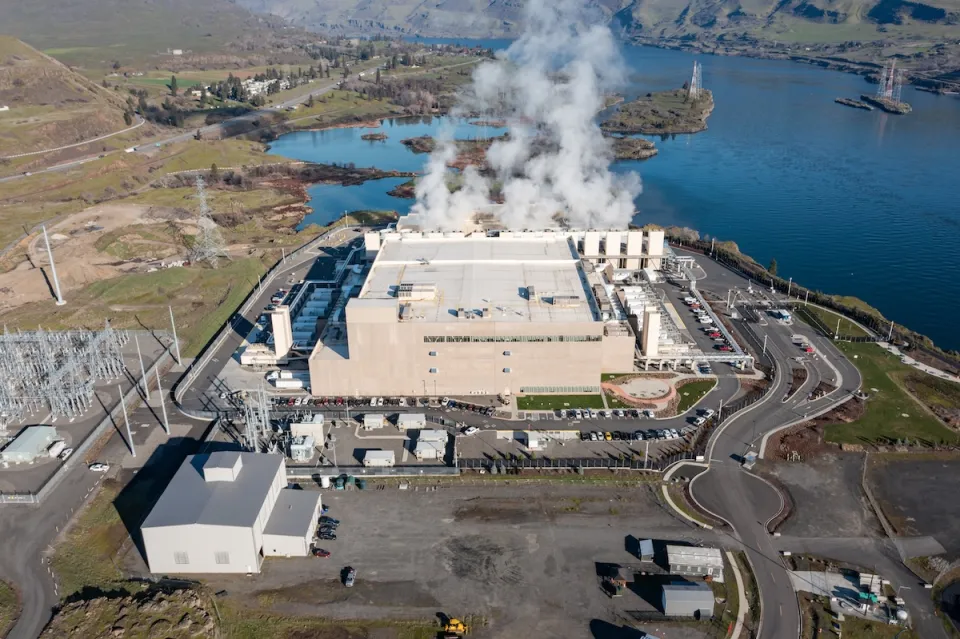
Data centers are consuming nearly 25% of Oregon’s power
The state has 111 data centers, with 32 more either planned or under construction.

A third of Texas cities must update their zoning codes to comply with new housing law
Texas municipalities are now required to allow manufactured housing in at least one residential zoning district.

FREE Course: Walkable City 1: Why Walkability?
After describing his path towards focusing on walkability as the essence of good planning, Jeff Speck marches through his five principal reasons for making more walkable places.
Reinventing Malls: Planning Alchemy—Turning Gray Fields Into Gold
The course focuses on the opportunities and imperatives that shape reinvention of mall sites.

Greater Baltimore Committee
Eagle County Government
Harvard University Graduate School of Design
The Architects Foundation
University of Cincinnati Online
The Pocatello Development Authority
The Urban Renewal Agency of the City of Pocatello
Journal of the American Planning Association