Outdoor dining programs are proving popular in cities all over the United States, as a lifeline for both restaurants and residents seeking some social normalcy. Data from San Francisco reveal the numbers behind the phenomenon.


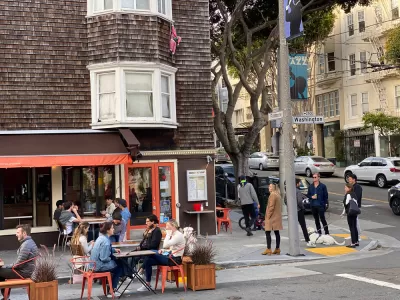
"What a difference a pandemic makes," writes Eve Batey of the changing landscape of business in San Francisco during the pandemic.
"Today, you can’t drive down a business district street in San Francisco without running into a shared spaces platform (SSP). That’s the technical term for the dining areas restaurants have set up in former parking places, private, built-out operations that allow the struggling industry to serve diners reluctant to move indoors."
Although the SSP program is scheduled to expire at the end of the year, Batey reports that the San Francisco Board of Superiors are likely to extend the program, as are a growing list of cities with similar programs around the country, including Philadelphia and New York City.
Given that the SSP program isn't going anywhere any time soon, Batey takes a look at the numbers behind this massive change in the public realm, accounting for both the scale of the change and the cost. For instance, Batey reports that costs for SSP's range from $5,000 for an SSP in the Richmond District to $20,000 for the SSP at a location in Cole Valley.
FULL STORY: Restaurants Are Paying $20,000 (or More) So You Can Dine in the Street

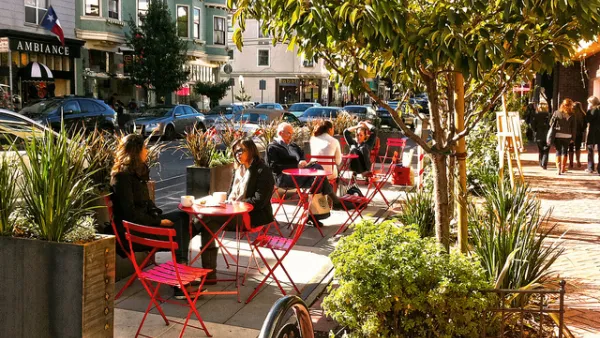
San Francisco Supervisors Vote to Keep Parklets, Close Them at Night
The pandemic-era outdoor seating arrangements can stay, but a last-minute amendment lets business owners close them overnight.
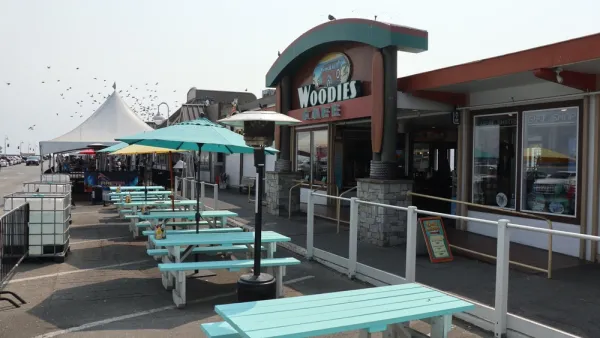
Outdoor Dining Parklets No Longer Cheap and Easy
Cities in Santa Cruz County, California are making outdoor dining laws permanent, and some businesses are getting sticker shock at the extra cost of maintaining the pandemic-era expansion of al fresco dining.
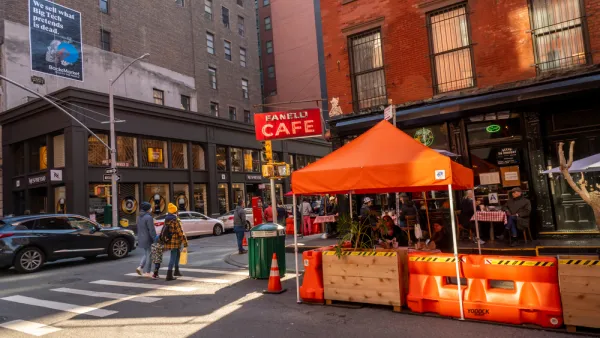
Opinion: Keep Outdoor Dining Without Thwarting Creativity
While New York City's effort to make its outdoor dining program permanent is a welcome reimagining of public space, some worry that regulations will reduce design diversity and increase costs for small restauranteurs.

The state-sanctioned urbicide of Austin
People don’t kill cities. Freeways do.

US to reduce Colorado River water deliveries to Mexico
A new Colorado Treaty amendment reduces Mexico’s Colorado River water allocation by 250,000 acre feet.

New Jersey’s second-largest city bans standalone data centers
Jersey City will continue to allow co-location facilities, such as those meant for research institutions that store their own data.

Amtrak not solely to blame for New Jersey commuter rail's unreliability, report finds
A new study from the Garden State Initiative found that NJ Transit’s budget grew 20% across a 4 year period, but reliability declined significantly over the same period.

EPA erases limits on planet-warming pollution from power plants
Under Monday’s plan, power plants would still have some limits on how much mercury, arsenic and other contaminants they can emit.

Phoenix announces new on-demand transit service, more frequent RAPID buses
Both new services will launch in October, and are part of Phoenix's Project Effective Access Solutions for Easing Congestion.

FREE Course: Walkable City 1: Why Walkability?
After describing his path towards focusing on walkability as the essence of good planning, Jeff Speck marches through his five principal reasons for making more walkable places.
Reinventing Malls: Planning Alchemy—Turning Gray Fields Into Gold
The course focuses on the opportunities and imperatives that shape reinvention of mall sites.

Eagle County Government
Harvard University Graduate School of Design
Nashville Planning Department
The Architects Foundation
University of Cincinnati Online
The Pocatello Development Authority
The Urban Renewal Agency of the City of Pocatello
Journal of the American Planning Association