Wildfires in California and Colorado are spewing out smoke that is traveling to other parts of the country. The health effects of the dirty air are substantial, and they could last long after the fires are out.


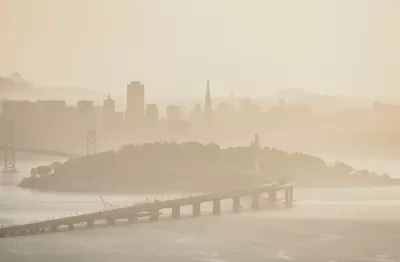
"Record setting conflagrations in California and Colorado have smothered residents of the two states with choking, stinging smoke. But the impact of that smoke is also being felt hundreds, even thousands, of miles away, and the health impacts may last for years after the flames subside," write Michael Kodas and Evelyn Nieves.
Monitoring the impacts of wildfire smoke can be hard because the trail of emissions can be unpredictable and the types of particles and gases in the air depend on what is burning.
"Smoke from burning forests and grasslands can contain everything from carbon monoxide to carcinogens like benzene and formaldehyde, but the two things that health officials focus on are ozone and particulate matter, both of which can travel thousands of miles from the fire that creates them," Kodas and Nieves.
Fine particulate matter can travel far, and the health impacts can be significant. The concern more recently is that inhaling these emissions can make people more vulnerable to the coronavirus, even if they are located far from a wildfire.
Smoke in places such as San Francisco is so bad that residents are unable to leave their homes for any period of time. As a result, they cannot take advantage of walking and outdoor dining, two activities that have helped people cope with lockdowns.
"San Francisco residents are wondering what breathing in the smoke means for their health. Can they be impaired by wildfire smoke the way a person can be sickened by second-hand cigarette smoke? Are the effects cumulative? If so, is living in an increasingly smoky California hazardous to one's health?" add Kodas and Nieves.
FULL STORY: The Fires May be in California, but the Smoke, and its Health Effects, Travel Across the Country

Rain gardens keep up to 99% of pollutants out of San Francisco Bay
The city's roadside rain gardens soak up stormwater and filter out dozens of harmful micropollutants.
Over a Quarter of US Homes Face ‘Severe or Extreme’ Climate Risk
The number of U.S. homes at risk from hurricanes, fires, or flooding is valued at close to $13 trillion.
Report: The West Is the Worst for Air Quality
Thanks to longer fire seasons and increasingly intense blazes, Western states are experiencing the nation’s worst air quality.

The state-sanctioned urbicide of Austin
People don’t kill cities. Freeways do.

US to reduce Colorado River water deliveries to Mexico
A new Colorado Treaty amendment reduces Mexico’s Colorado River water allocation by 250,000 acre feet.

New Jersey’s second-largest city bans standalone data centers
Jersey City will continue to allow co-location facilities, such as those meant for research institutions that store their own data.

Amtrak not solely to blame for New Jersey commuter rail's unreliability, report finds
A new study from the Garden State Initiative found that NJ Transit’s budget grew 20% across a 4 year period, but reliability declined significantly over the same period.

EPA erases limits on planet-warming pollution from power plants
Under Monday’s plan, power plants would still have some limits on how much mercury, arsenic and other contaminants they can emit.

Phoenix announces new on-demand transit service, more frequent RAPID buses
Both new services will launch in October, and are part of Phoenix's Project Effective Access Solutions for Easing Congestion.

FREE Course: Walkable City 1: Why Walkability?
After describing his path towards focusing on walkability as the essence of good planning, Jeff Speck marches through his five principal reasons for making more walkable places.
Reinventing Malls: Planning Alchemy—Turning Gray Fields Into Gold
The course focuses on the opportunities and imperatives that shape reinvention of mall sites.

Eagle County Government
Harvard University Graduate School of Design
Nashville Planning Department
The Architects Foundation
University of Cincinnati Online
The Pocatello Development Authority
The Urban Renewal Agency of the City of Pocatello
Journal of the American Planning Association