A road project in Boston involves removing hundreds of mature trees. Residents say the plan is an environmental justice issue.


A plan for a complete streets redesign of a roadway in the Roxbury neighborhood of Boston includes wider sidewalks, bike lanes, and improved bus stops. But it also involves cutting down scores of trees that run along the boulevard and could eventually threaten up to 500 mature trees.
"The rows of oaks, lindens, maples, and other trees that line Melnea Cass Boulevard in Roxbury have for decades provided vital shade, fresh air, and a leafy balance to a city corridor that can feel like a furnace in summer and a windswept tarmac in winter," reports David Abel.
More than 90 percent of Roxbury’s residents are people of color, and critics of the plan say that the trees provide essential shade and cover in an area experiencing extreme heat. They argue that removing the trees amounts to environmental racism.
The city says removal of the trees is necessary for the design of the road. A plan to replant in the area would replace the trees, but the saplings could take decades to reach maturity.
"Given the steadily rising temperatures from global warming — last month was tied for the second hottest July on record, following July 2019, the hottest month on record — critics of the project said the city should revise the construction plan to preserve far more trees," notes Abel.
Read the full story: Alleging ‘environmental racism,’ residents protest plan to remove scores of mature trees in Roxbury

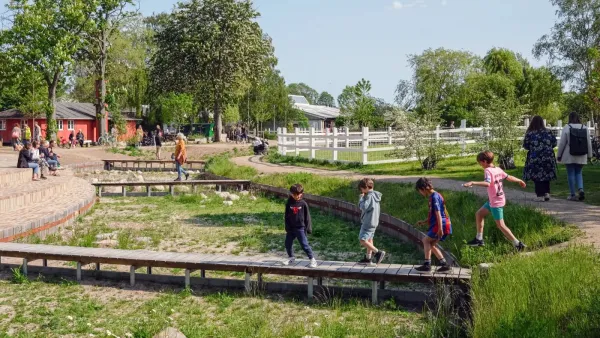
Copenhagen is losing its cool
In a city long designed to maximize light during dark Scandinavian winters, climate change is forcing the Danish capital to rethink its relationship with the sun.
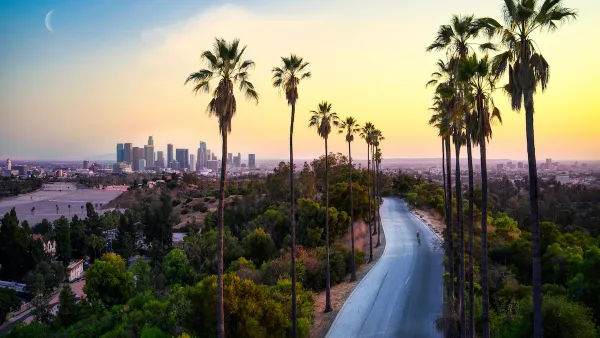
Planting for Change: How Trees Are Powering Climate Action
"Combating Climate Change with Trees" highlights how Southern California communities are strategically planting and nurturing urban forests to cool neighborhoods, improve air quality, and advance environmental justice.
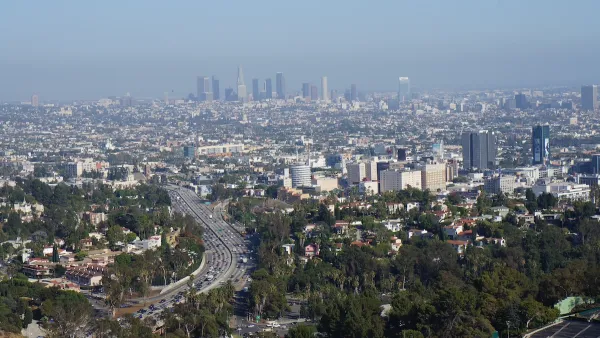
Updating LA’s Tree Rules Could Bring More Shade to Underserved Neighborhoods
A new USC study finds that relaxing Los Angeles’ outdated tree planting guidelines could significantly expand urban tree canopy and reduce shade disparities in lower-income neighborhoods, though infrastructure investments are also needed.

Planetizen Federal Action Tracker
A weekly monitor of how Trump’s orders and actions are impacting planners and planning in America.

The state-sanctioned urbicide of Austin
People don’t kill cities. Freeways do.

US to reduce Colorado River water deliveries to Mexico
A new Colorado Treaty amendment reduces Mexico’s Colorado River water allocation by 250,000 acre feet.

Nation's most wind-powered state turns to coal as data centers increase energy demand
For the first time in decades, Iowa has increased its generation of coal power.

NYC cools commuters with city's first rain garden above a bus stop
New York City officials say the plants in the rain garden can absorb 16 gallons of rainwater during heavy storms.

Brightline West’s future may rely on $6 billion federal loan
The company has until Nov. 2 to make a $400 million equity investment into its proposed high-speed rail line.

FREE Course: Walkable City 1: Why Walkability?
After describing his path towards focusing on walkability as the essence of good planning, Jeff Speck marches through his five principal reasons for making more walkable places.
Reinventing Malls: Planning Alchemy—Turning Gray Fields Into Gold
The course focuses on the opportunities and imperatives that shape reinvention of mall sites.

Greater Baltimore Committee
Eagle County Government
Harvard University Graduate School of Design
The Architects Foundation
University of Cincinnati Online
The Pocatello Development Authority
The Urban Renewal Agency of the City of Pocatello
Journal of the American Planning Association