The forthcoming Boston Urban Forestry Plan is expected to support communities that have been disproportionately exposed to environmental stressors.


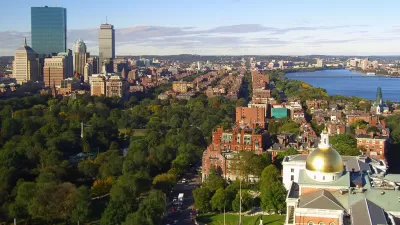
The city of Boston released a request for proposals (RFP) for a contractor to work with the city to create a 20-year urban forest plan.
The city hopes to create an "equitable vision for the protection and expansion" of the city's tree canopy goals, according to the RFP.
"In alignment with previous planning efforts, including Climate Ready Boston, Imagine Boston 2030, and Resilient Boston, the Request for Proposals (RFP) prioritizes a transparent and collaborative planning effort that recognizes and supports communities that have been disproportionately exposed to environmental stressors," according to the RFP.
Chris Teale shared the news of the RFP in an article for Smart Cities Dive. Teale's coverage of the RFP focuses on the benefits of an urban tree canopy as a climate change adaptation measure. Given its expectations about the equitable deployment of the forthcoming urban forestry plan, the city of Boston seems to have read the recent analysis of the discriminatory application of trees and shade in U.S. cities.
Read the full story: Boston issues RFP for first urban forest plan

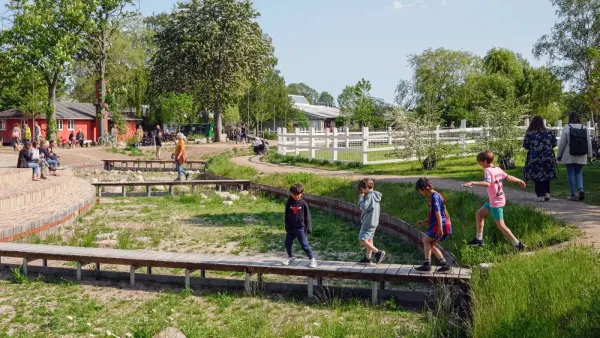
Copenhagen is losing its cool
In a city long designed to maximize light during dark Scandinavian winters, climate change is forcing the Danish capital to rethink its relationship with the sun.
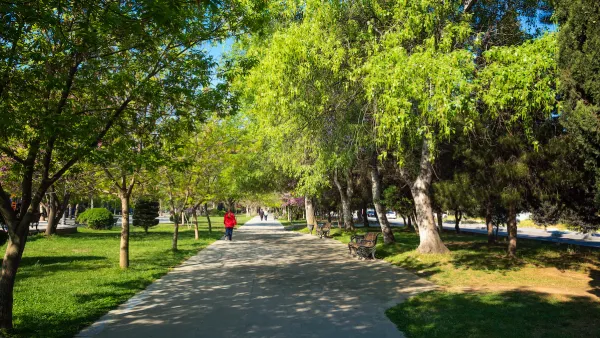
Quantifying How Urban Trees Cool Cities
A new tool can help cities understand the benefits of tree planting efforts at the municipal scale.
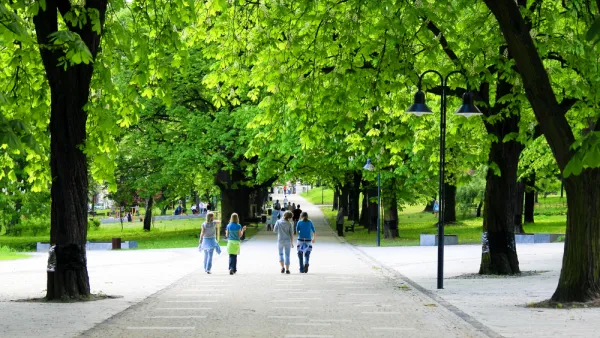
The Problem with Tree Planting Programs
Ambitious campaigns to plant trees in urban areas often don't take into account the complexities of growing and maintaining effective urban forests.

Planetizen Federal Action Tracker
A weekly monitor of how Trump’s orders and actions are impacting planners and planning in America.

California plans to bury El Niño’s downpour
If the state plays its cards right, it may be able to store a billion acre-feet of El Niño’s water in aquifers.

Chicago breaks ground on $3 billion megadevelopment
The new neighborhood, titled Foundry Park, will one day host 3,700 residences.

Satanic Place Names
From streams and lakes to valleys and canyons, I mapped more than 1,000 places named after the Devil.

California High-Speed Rail Authority CEO resigns after $600,000 scandal
Under Ian Choudri, the authority used taxpayer dollars to fund first class flights and trips to nightclubs.

Want to study the Missouri River? Soon, you may need unanimous approval from 10 states
Legislation would require 10 governors’ permission to study or build projects moving water outside the basin.

FREE Course: Walkable City 1: Why Walkability?
After describing his path towards focusing on walkability as the essence of good planning, Jeff Speck marches through his five principal reasons for making more walkable places.
Reinventing Malls: Planning Alchemy—Turning Gray Fields Into Gold
The course focuses on the opportunities and imperatives that shape reinvention of mall sites.

City of Rosemead
Rutgers University, Edward J. Bloustein School of Planning and Public Policy
One Hundred Miles
Hunter College, City University of New York (CUNY)
The Architects Foundation
University of Cincinnati Online
City of Cambridge
Montrose County
The Pocatello Development Authority