Reports last week that the U.S. economy is about 30 percent smaller than before the pandemic aren't reflected in driving trends.


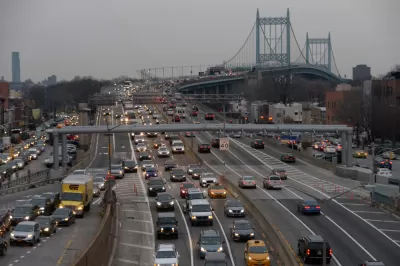
Cailin Crowe shares data from the Trip Reduction Index, created by StreetLight Data and Boston Consulting Group, to track vehicle miles traveled on U.S. roads during the pandemic.
"The index found the national average in VMT dropped 72% from the beginning of March through April 7, but rural counties have now fully recovered to pre-COVID VMT levels while urban counties have reached 90% recovery," according to Crowe.
"The analysis also found that the top three contributing factors to VMT reduction profiles are household income, population density and the number of professional service jobs, which all tend to be more prevalent in urban areas than rural areas."
As the coronavirus has spread, and continued to spread, around the nation, the low point in VMT was achieved on Easter Sunday (April 12). The article notes that with these dramatic changes in the driving patterns of Americans, similar new trends have emerged in bikes, transit, and other mobility services. Recent data reported by the Kinder Institute of Urban Research shows that as VMT has risen again as the pandemic has lingered into its fourth month, infection rates have also risen. While the data stops short of proving any causation, recent research has also served to allay some of the early fears of public transit as a vector for infection.
Specific VMT trends for geographic regions are also pointed out in the source article.
FULL STORY: US roadways nearly restored to pre-pandemic VMT levels

Where the Pandemic Has Scrambled Traffic Patterns
The map of metropolitan areas that drive least, and thus emit fewer greenhouse gas emissions, has been completely redrawn by the pandemic, according to a recent report.
Americans Aren't Likely to Start Driving at Pre-Pandemic Levels Soon
Vehicle miles traveled (VMT) and gasoline production trends point to VMT in the United States staying ten to 12 percent lower than in 2019 for the next few months, at least.
Driving Still Below Pre-Pandemic Levels in the U.S., Study Says
Congestion is increasing much faster than vehicle miles traveled, suggesting that the “new normal” of hybrid work and an influx of suburban residents is taking a toll on the nation's transportation system.

Planetizen Federal Action Tracker
A weekly monitor of how Trump’s orders and actions are impacting planners and planning in America.

The state-sanctioned urbicide of Austin
People don’t kill cities. Freeways do.

US to reduce Colorado River water deliveries to Mexico
A new Colorado Treaty amendment reduces Mexico’s Colorado River water allocation by 250,000 acre feet.

5 New England states march closer to 800 megawatt wind energy project
Securing federal approval for the project may be complicated under the Trump administration, which has historically been hostile towards domestic wind power.

Baltimore to break ground on $50 million Transit Priority Project
The project will bring faster bus trips, safer streets and better bike connections to Baltimore.

Airbnb launches $250 million 'last-dollar financing' housing accelerator, makes first investment in Austin
The company will put $6.4 million towards affordable housing development in Texas’ capital.

FREE Course: Walkable City 1: Why Walkability?
After describing his path towards focusing on walkability as the essence of good planning, Jeff Speck marches through his five principal reasons for making more walkable places.
Reinventing Malls: Planning Alchemy—Turning Gray Fields Into Gold
The course focuses on the opportunities and imperatives that shape reinvention of mall sites.

Eagle County Government
Harvard University Graduate School of Design
Nashville Planning Department
The Architects Foundation
University of Cincinnati Online
The Pocatello Development Authority
The Urban Renewal Agency of the City of Pocatello
Journal of the American Planning Association