The San Diego Planning Department wants to change the system that currently funds improvements to public amenities, facing considerations about the implementation and legality of the proposed alternative.


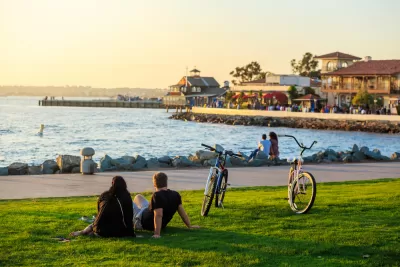
The San Diego planning department hopes to get rid of a development impact fee system that currently funds such public amenities as parks, libraries, and streets, reports MacKenzie Elmer. Under the system, newer and more affluent neighborhoods get more improvements than their less lavish counterparts. Under the fee system, developers pay a different (often outdated) fee in each neighborhood based on the cost of the improvements and the expected amount of development.
The fees vary dramatically neighborhood to neighborhood. "The highest fees in the county are in Del Mar Mesa, $122,048 per home. They’re lowest in San Pasqual Valley, home to the San Diego Zoo Safari Park, at $2,054," says Elmer. The city wants to share the development fees citywide, bringing up questions about which projects would be prioritized and whether it's legal to spend fees in a neighborhood that was collected somewhere else. The ultimate power lies with the mayor who controls the development impact fees as .01% of the annual budget.
FULL STORY: If Your Local Park Sucks, This Is Probably Why

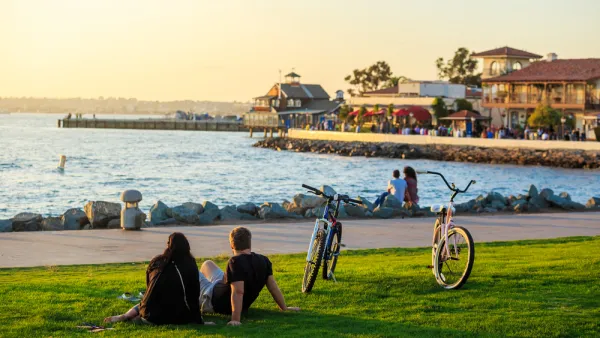
Revealed: New Parks Master Plan for San Diego
The second most populous city in California, San Diego, wants to revolutionize its approach to planning parks and open space.
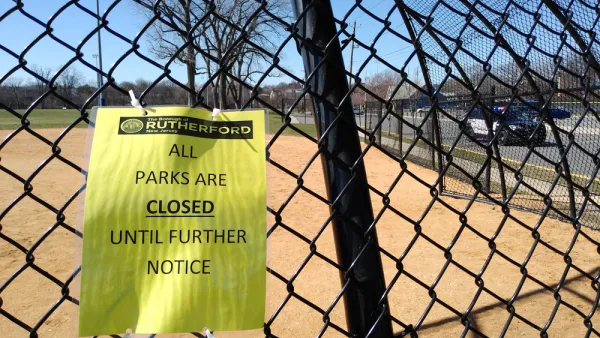
Frontlines of the Social Distancing Effort Shifts to Parks and Open Space
Too many people have been seeking normalcy on parks and on trails. This isn’t a normal time.

The State of New York City's Parks
A new report by the Center for an Urban Future signals the need for attention to the Big Apple's parks before they are beyond repair.

Planetizen Federal Action Tracker
A weekly monitor of how Trump’s orders and actions are impacting planners and planning in America.

The state-sanctioned urbicide of Austin
People don’t kill cities. Freeways do.

US to reduce Colorado River water deliveries to Mexico
A new Colorado Treaty amendment reduces Mexico’s Colorado River water allocation by 250,000 acre feet.

5 New England states march closer to 800 megawatt wind energy project
Securing federal approval for the project may be complicated under the Trump administration, which has historically been hostile towards domestic wind power.

Baltimore to break ground on $50 million Transit Priority Project
The project will bring faster bus trips, safer streets and better bike connections to Baltimore.

Airbnb launches $250 million 'last-dollar financing' housing accelerator, makes first investment in Austin
The company will put $6.4 million towards affordable housing development in Texas’ capital.

FREE Course: Walkable City 1: Why Walkability?
After describing his path towards focusing on walkability as the essence of good planning, Jeff Speck marches through his five principal reasons for making more walkable places.
Reinventing Malls: Planning Alchemy—Turning Gray Fields Into Gold
The course focuses on the opportunities and imperatives that shape reinvention of mall sites.

Eagle County Government
Harvard University Graduate School of Design
Nashville Planning Department
The Architects Foundation
University of Cincinnati Online
The Pocatello Development Authority
The Urban Renewal Agency of the City of Pocatello
Journal of the American Planning Association