Brookings has released a new tool for measuring the impact of the coronavirus on local economies across the country, as well as the effectiveness of economic recovery efforts.


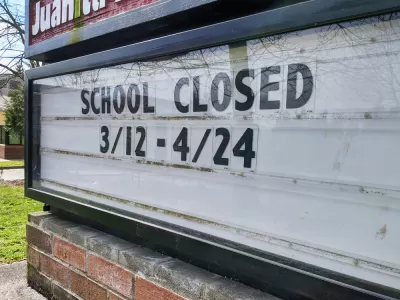
There are a lot of uncertainties still about the ongoing economic impacts of the coronavirus in the United States, according to an article by Alan Berube for the Brookings Institution. "Much will depend on how the virus behaves in upcoming months, as well as how governments, businesses, and households respond."
"What is certain, however, is that the nature of the downturn and the road to recovery will differ widely across local economies," so Berube and colleagues have created a new Metro Recovery Index, presenting data across a variety of indicators "to provide a picture of the impact of the crisis (compared to a pre-crisis state) and the trajectory of recent change for both large and midsized metropolitan areas."
The Metro Recovery Index is available in an interactive dashboard to track economic impacts and trajectories in three major categories: the labor market, the real estate market, and other areas of economic activity, explains Berube. The article includes a quick rundown of the mostly bad news included in each category.
FULL STORY: The Metro Recovery Index: Tracking metropolitan economies through the COVID-19 crisis


A Strategic Approach to Economic Recovery Planning
Six components of a strategic plan for city and regions to guide their short-term actions for equitable economic recovery from the pandemic.
As U.S. Transportation Infrastructure Holds Back Economic Recovery, It's Time for Change
Opinion: Six months into the pandemic, the state of the U.S. economy reveals that the planning profession can support struggling Americans by focusing on transportation and the land use patterns that enable mass transit.

Chicago's Planning Director on Leadership During Crises
Maurice Cox, planning commissioner for the Chicago Department of Planning and Development, is the subject of this in-depth coverage by the Chicago Tribune.

Planetizen Federal Action Tracker
A weekly monitor of how Trump’s orders and actions are impacting planners and planning in America.

The state-sanctioned urbicide of Austin
People don’t kill cities. Freeways do.

US to reduce Colorado River water deliveries to Mexico
A new Colorado Treaty amendment reduces Mexico’s Colorado River water allocation by 250,000 acre feet.

5 New England states march closer to 800 megawatt wind energy project
Securing federal approval for the project may be complicated under the Trump administration, which has historically been hostile towards domestic wind power.

Baltimore to break ground on $50 million Transit Priority Project
The project will bring faster bus trips, safer streets and better bike connections to Baltimore.

Airbnb launches $250 million 'last-dollar financing' housing accelerator, makes first investment in Austin
The company will put $6.4 million towards affordable housing development in Texas’ capital.

FREE Course: Walkable City 1: Why Walkability?
After describing his path towards focusing on walkability as the essence of good planning, Jeff Speck marches through his five principal reasons for making more walkable places.
Reinventing Malls: Planning Alchemy—Turning Gray Fields Into Gold
The course focuses on the opportunities and imperatives that shape reinvention of mall sites.

Eagle County Government
Harvard University Graduate School of Design
Nashville Planning Department
The Architects Foundation
University of Cincinnati Online
The Pocatello Development Authority
The Urban Renewal Agency of the City of Pocatello
Journal of the American Planning Association