Baltimore is taking steps to divest from policing and makes decisions about where to invest $22 million in reallocated funds. One proposal: use the money to support public transit.


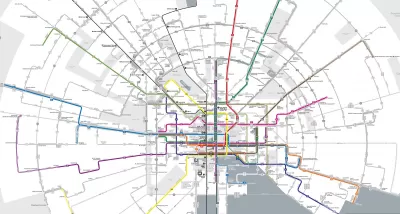
Massive ongoing protests around the country and the world call for police defunding and reallocation of public funds to under-resourced black communities and communities of color. In Baltimore, demands were heard and met when City Council voted to cut $22 million of the city's $550 million police budget.
Martin Csongradi suggests that the slashed funds could end up with transit: "One area the city could consider investing into is the city’s transit system. For decades, unequal access to affordable transit options have weighed down Baltimore’s Black community and have exacerbated racial inequality in the city. An infusion of funds may help to bridge the transit gap." Tracking the history of unequal access to transit and white flight of the 1900s, Csongradi relates the transit decision-making and policy to systemic racism. Now is the time for the City of Baltimore to divest from policing and invest in transit, and by extension, racial equity.
Read the full story: Could defunding Baltimore’s police department help transit?

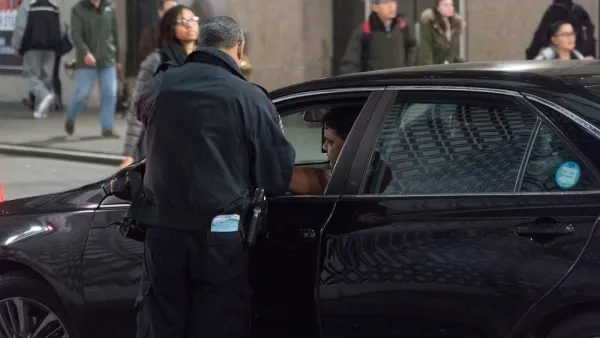
Investment in Public Transit Could Reduce the Need for Police Traffic Enforcement
In Nick Demarsh and Rick Banks' opinion, defunding the police requires cities to reconsider car culture.
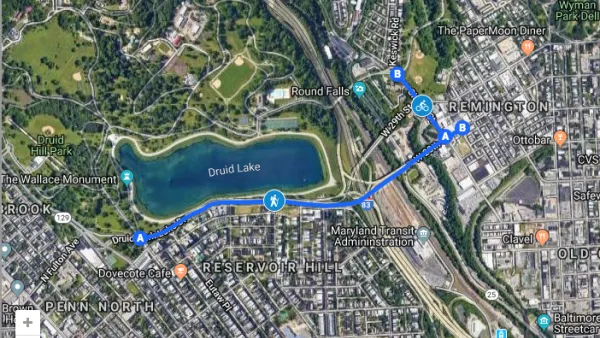
Baltimore's 'Big Jump'
A temporary bike and pedestrian path is changing the street design game in Baltimore.
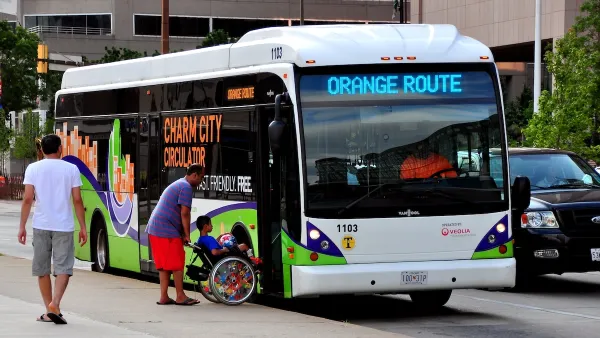
Baltimore to break ground on $50 million Transit Priority Project
The project will bring faster bus trips, safer streets and better bike connections to Baltimore.

Planetizen Federal Action Tracker
A weekly monitor of how Trump’s orders and actions are impacting planners and planning in America.

The state-sanctioned urbicide of Austin
People don’t kill cities. Freeways do.

Colorado’s Largest Data Center Could Rise Next to Homes — Without a Public Hearing
The proposed campus would consume 11 times the power of Denver International Airport; as it has across the country, opposition mounts.

Nation's most wind-powered state turns to coal as data centers increase energy demand
For the first time in decades, Iowa has increased its generation of coal power.

NYC cools commuters with city's first rain garden above a bus stop
New York City officials say the plants in the rain garden can absorb 16 gallons of rainwater during heavy storms.

Brightline West’s future may rely on $6 billion federal loan
The company has until Nov. 2 to make a $400 million equity investment into its proposed high-speed rail line.

FREE Course: Walkable City 1: Why Walkability?
After describing his path towards focusing on walkability as the essence of good planning, Jeff Speck marches through his five principal reasons for making more walkable places.
Reinventing Malls: Planning Alchemy—Turning Gray Fields Into Gold
The course focuses on the opportunities and imperatives that shape reinvention of mall sites.

Greater Baltimore Committee
Eagle County Government
Harvard University Graduate School of Design
The Architects Foundation
University of Cincinnati Online
The Pocatello Development Authority
The Urban Renewal Agency of the City of Pocatello
Journal of the American Planning Association