The usual sounds of the city have subsided, replaced by birds and quiet that at times can be eery and unsettling.


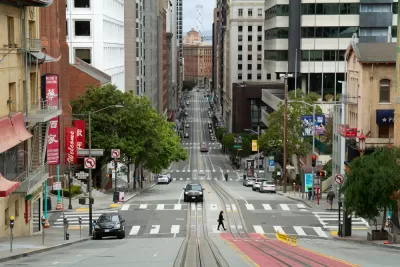
Quoctrung Bui and Emily Badger share details of research that reveals the details of one of the most obvious and thorough changes in cities during the coronavirus pandemic: the eerie quiet of days and nights, punctured occasionally by sirens and birdsong.
"The city no longer sounds the same," according to the article, and researchers are documenting just how complete the change has been. The article focuses on recordings made by researchers at an N.Y.U. project called SONYC, who have recorded audio clips from 16 microphones monitoring patterns in noise pollution in the city for more than three years.
"The microphones are mostly in Manhattan, with others in Downtown Brooklyn and Corona in Queens, but the yearslong audio archive gives a clear sense of a citywide rhythm over time — in normal times," according to the article.
A key finding of the recordings produced during the pandemic: "Twenty-nine of the city’s 30 quietest days during the last three years have been during the pandemic, the recordings suggest. The exception was Christmas Day in 2018."
Similar results have been found with experiments in other cities around the world. The Senseable City Lab at M.I.T., for example, has recorded walks through city parks in Singapore, New York and San Francisco. "In Golden Gate Park in San Francisco, they’ve found, the ambient noise of the city — cars driving by, construction work — has declined, replaced by birdsong," according to Bui and Badger.
Another key point made in the article is that not everyone likes a quieter city. Some are even nostalgic for sounds that used to be annoying.
Read the full story: The Coronavirus Quieted City Noise. Listen to What’s Left.
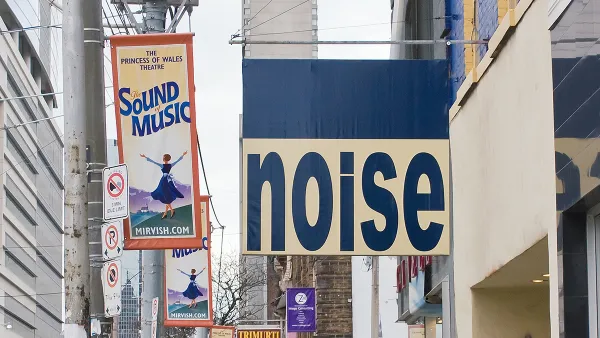
Using Tech to Control Noise Pollution
Several cities are piloting programs that use machine learning to identify and understand urban noise patterns and enforce noise ordinances.
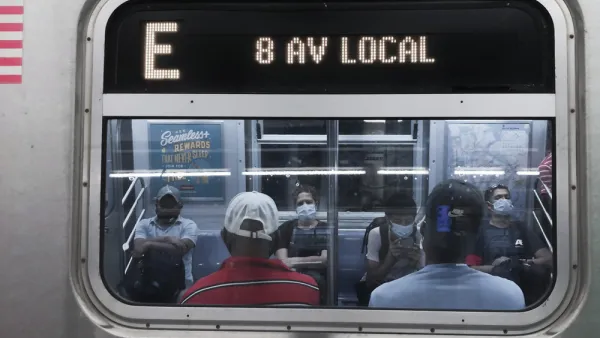
New York Subway Sets Pandemic Ridership Record
With school back in session and Broadway shows open to the public, subway ridership is surging in New York City, but still well below pre-pandemic levels.
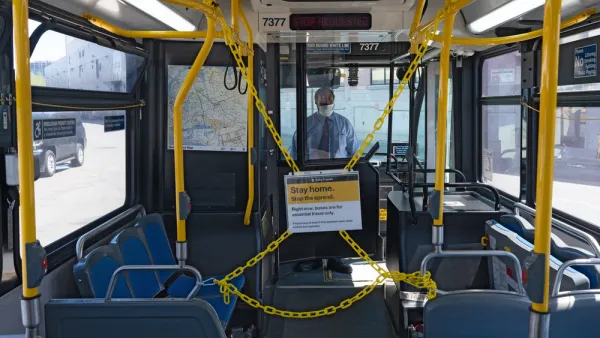
Will Cuomo Save Transit in New York?
Assuming that Congress isn't going to act, does New York Gov Cuomo have the political will to save the New York MTA from sweeping layoffs and service cuts?

Planetizen Federal Action Tracker
A weekly monitor of how Trump’s orders and actions are impacting planners and planning in America.

California plans to bury El Niño’s downpour
If the state plays its cards right, it may be able to store a billion acre-feet of El Niño’s water in aquifers.

Desperate measures: Advocates weigh draining Lake Powell to fill Colorado River
Draining the reservoir could reduce evaporation losses by a couple hundred thousand acre-feet.

In Texas, data centers are swallowing promised parkland
Residents who moved to Taylor, Texas for a rural community now have to contend with three data centers in their backyard.

How a Chicago-sized wind farm beat the odds and powered on
The project spanned five presidential administrations and a standoff with a U.S. military base.

MTA gives itself 30 days to transform pit into basketball court
The site has been under construction since 2022; the city originally estimated it would finish the court in 2024.

FREE Course: Walkable City 1: Why Walkability?
After describing his path towards focusing on walkability as the essence of good planning, Jeff Speck marches through his five principal reasons for making more walkable places.
Reinventing Malls: Planning Alchemy—Turning Gray Fields Into Gold
The course focuses on the opportunities and imperatives that shape reinvention of mall sites.

City of Rosemead
Rutgers University, Edward J. Bloustein School of Planning and Public Policy
One Hundred Miles
Hunter College, City University of New York (CUNY)
The Architects Foundation
University of Cincinnati Online
City of Cambridge
Montrose County
The Pocatello Development Authority