U.S. transit agencies are hemorrhaging money as the majority of riders avoid trains and buses. People still need public transit, and public transit needs help to weather the storm.


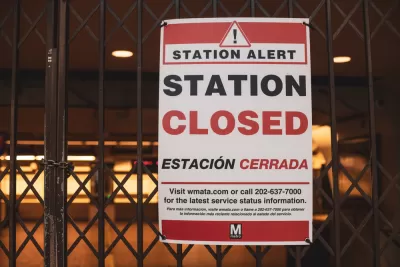
"The American Public Transportation Association (APTA) is urging Congress to provide an additional $23.8 billion in emergency funds to support public transit across the country," reports Cailin Crowe.
The $2 trillion CARES Act, approved by Congress in late March, included $25 billion in funding for beleaguered transit agencies, but transit agencies are still in need as ridership revenues stay at historic lows into the third month of the public health crisis. The advocacy and think tank organization TransitCenter spent much of April raising awareness about the inadequacy of the initial federal support for public transit.
In March, TransitCenter estimated the potential budget shortfall for U.S. public transit agencies somewhere between $26 billion and $40 billion every year that the coronavirus devastates public transit ridership in the country. An independent economic analysis by EBP US, Inc. produced the $23.8 billion figure used in the APTA's lobbying efforts.
FULL STORY: APTA seeks extra $24B to support agencies 'hemorrhaging money'

What's in the New Economic Stimulus Package for U.S. Transit Agencies
A new economic stimulus package that appears headed for approval as of this writing will give $15 billion to public transit, far less than transit advocates had hoped, but far better than nothing.

Streetcar Connection to the Beltline Could Benefit From Federal Funding
Flush with federal stimulus cash and angling for more, planners in Atlanta will explore alignment for a potential rail transit connection to the Beltline.
How $30 Billion in Stimulus Funding Would Change the Equation for Transit Agencies
The funding in the draft stimulus funding package making its way through Congress falls short of the total requested by the American Public Transportation Association, but would go a long way to helping transit agencies weather the pandemic.

Planetizen Federal Action Tracker
A weekly monitor of how Trump’s orders and actions are impacting planners and planning in America.

The state-sanctioned urbicide of Austin
People don’t kill cities. Freeways do.

US to reduce Colorado River water deliveries to Mexico
A new Colorado Treaty amendment reduces Mexico’s Colorado River water allocation by 250,000 acre feet.

5 New England states march closer to 800 megawatt wind energy project
Securing federal approval for the project may be complicated under the Trump administration, which has historically been hostile towards domestic wind power.

Baltimore to break ground on $50 million Transit Priority Project
The project will bring faster bus trips, safer streets and better bike connections to Baltimore.

Airbnb launches $250 million 'last-dollar financing' housing accelerator, makes first investment in Austin
The company will put $6.4 million towards affordable housing development in Texas’ capital.

FREE Course: Walkable City 1: Why Walkability?
After describing his path towards focusing on walkability as the essence of good planning, Jeff Speck marches through his five principal reasons for making more walkable places.
Reinventing Malls: Planning Alchemy—Turning Gray Fields Into Gold
The course focuses on the opportunities and imperatives that shape reinvention of mall sites.

Eagle County Government
Harvard University Graduate School of Design
Nashville Planning Department
The Architects Foundation
University of Cincinnati Online
The Pocatello Development Authority
The Urban Renewal Agency of the City of Pocatello
Journal of the American Planning Association