Ecofascism, or the "promotion of authoritarian, facist [sic] ideologies for environmental good," is mistaken for virtue signaling as the coronavirus sweeps the globe.


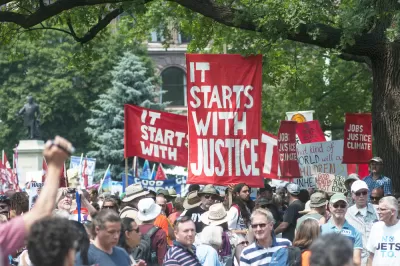
Ecofascism (or, as Sierra Garcia describes it in an article for Grist, the dark side of the environmental movement) has become more visible and vocal as the world reels from the effects of the coronavirus pandemic.
"Minimizing or even encouraging human death and suffering so long as it helps the environment is an excellent example of the dark ideology — and yet variations on the coronavirus-is-good-for-the-climate theme have been cropping up more and more as the virus spreads," writes Garcia.
The purpose of Garcia's article is to highlight the shortcomings of this worldview, and the kind of social media messages that might inadvertently propagate the darker ideology as a misdirected expression of solidarity for the environment.
This stance has some serious flaws, like its disregard of the disproportionate impact different people and societies have on the environment, and its questionable assumption that human society and 'the planet' are somehow discrete and utterly separate actors. But the most disturbing facet of this argument is how it echoes strains of the environmentalist movement that have advocated for reducing nonwhite, non-Western populations.
Numerous examples of the racist connections between environmentalism, conservation, and population follow, along with a call to action to call out ecofascism when its identified in public and social media.
Read the full story: ‘We’re the virus’: The pandemic is bringing out environmentalism’s dark side

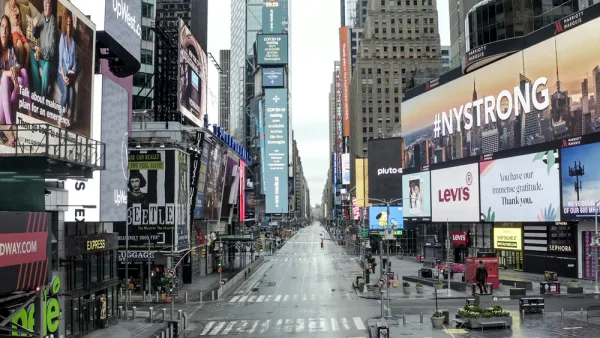
Biden Signs Legislation Ending Covid 19 National Emergency
The Covid 19 national emergency enacted by then-President Donald Trump in March 2020 was officially ended on Monday by President Joe Biden.
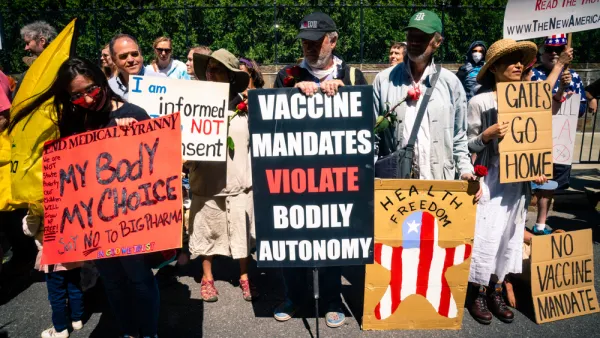
The Shifting Demographics of Covid-19
For most of the Covid-19 pandemic, Black Americans died at much higher rates than White Americans. That trend has reversed at times during the past year.
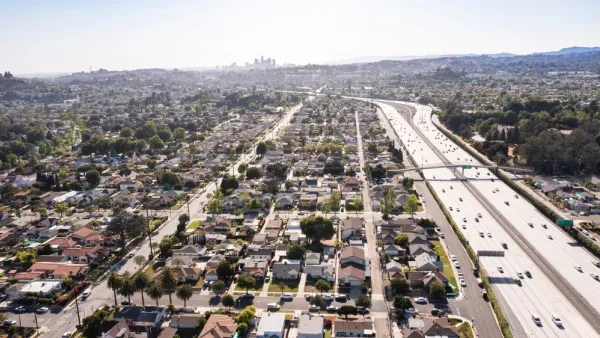
The Consequences of Sprawl: Overcrowded Housing and Covid Deaths
Los Angeles is the nation's capital of both crowding and sprawl. A feature published by the Los Angeles Times provides the history of how the metropolis achieved this contradiction.

Planetizen Federal Action Tracker
A weekly monitor of how Trump’s orders and actions are impacting planners and planning in America.

The state-sanctioned urbicide of Austin
People don’t kill cities. Freeways do.

US to reduce Colorado River water deliveries to Mexico
A new Colorado Treaty amendment reduces Mexico’s Colorado River water allocation by 250,000 acre feet.

Nation's most wind-powered state turns to coal as data centers increase energy demand
For the first time in decades, Iowa has increased its generation of coal power.

NYC cools commuters with city's first rain garden above a bus stop
New York City officials say the plants in the rain garden can absorb 16 gallons of rainwater during heavy storms.

Brightline West’s future may rely on $6 billion federal loan
The company has until Nov. 2 to make a $400 million equity investment into its proposed high-speed rail line.

FREE Course: Walkable City 1: Why Walkability?
After describing his path towards focusing on walkability as the essence of good planning, Jeff Speck marches through his five principal reasons for making more walkable places.
Reinventing Malls: Planning Alchemy—Turning Gray Fields Into Gold
The course focuses on the opportunities and imperatives that shape reinvention of mall sites.

Eagle County Government
Harvard University Graduate School of Design
Nashville Planning Department
The Architects Foundation
University of Cincinnati Online
The Pocatello Development Authority
The Urban Renewal Agency of the City of Pocatello
Journal of the American Planning Association