Bogotá, Colombia is preparing for the coronavirus pandemic by making space for people on bikes in the public realm, calling bikes a hygienic option for mobility.


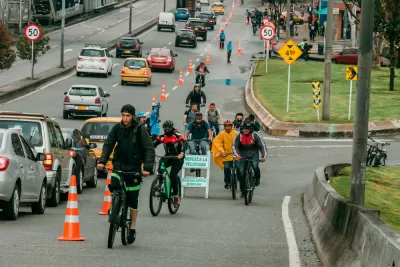
"The Colombian capital of Bogotá is opening 76km (47 miles) of temporary bike lanes to reduce crowding on public transport and help prevent the spread of coronavirus (Covid-19), as well as to improve air quality," reports Sarah Wray.
"22km (13 miles) of the new lanes were converted overnight to open on 17 March by reconfiguring car lanes," according to Wray.
Bogotá Mayor Claudia López released a statement justifying the changes as a benefit to public health during the first stages of pandemic response: "The bicycle, being an individual means of transport, represents one of the most hygienic alternatives for the prevention of the virus, especially in this first preventive stage in which it is recommended to avoid close contact and crowds." [translated]
Meanwhile, in New York City, bike injuries are increasing as bike riding has surged in response to the pandemic. "Cyclist injuries were up 43 percent between March 9 and March 15, according to NYPD statistics, an increase that comes after Mayor de Blasio urged people to bike to work yet did not build any new protected infrastructure to handle the surge of new riders," writes Julianne Cuba.
FULL STORY: Bogotá expands bike lanes to curb coronavirus spread

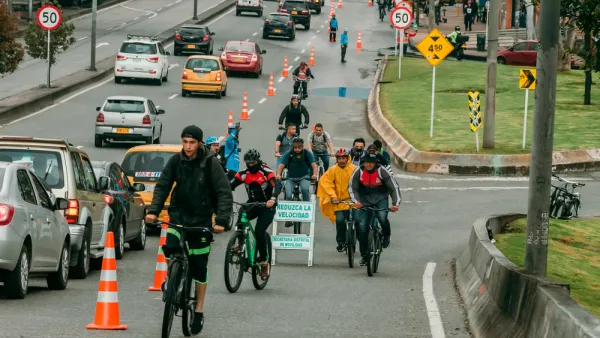
Bogotá Commits to the Bicycle
Colombia's capital city, the birthplace of the Ciclovía, is devoting public space to bikes during lockdown. To reduce traffic, the city plans to allocate even more public space to bike infrastructure and sustainable mobility moving forward.
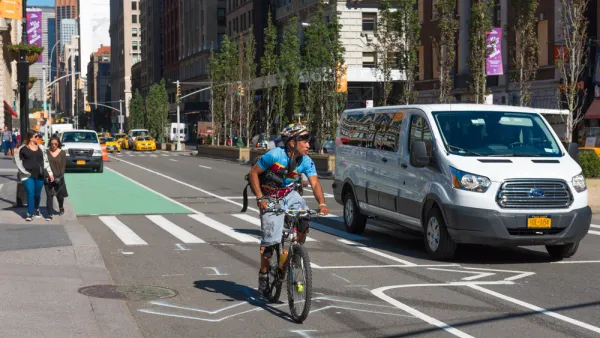
New York Poised to Become a Biking City
Could the pandemic be a tipping point for a century of car-centric planning in New York City's to give way to a more bike-friendly city?
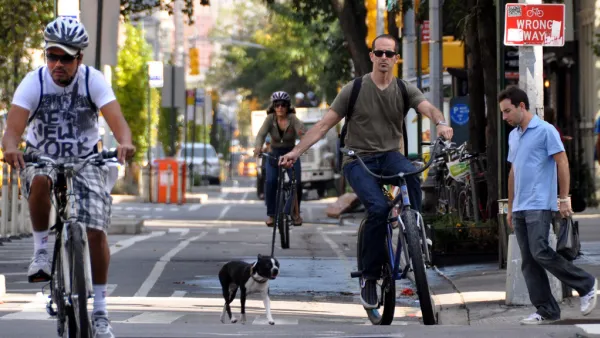
Five Borough Bikeway Plan Released
The Regional Plan Association is calling on New York City to implement an ambitious plan to transform the city into a world class city for biking—for the benefit of the public health and economic realities of the pandemic and beyond.

Planetizen Federal Action Tracker
A weekly monitor of how Trump’s orders and actions are impacting planners and planning in America.

The state-sanctioned urbicide of Austin
People don’t kill cities. Freeways do.

US to reduce Colorado River water deliveries to Mexico
A new Colorado Treaty amendment reduces Mexico’s Colorado River water allocation by 250,000 acre feet.

5 New England states march closer to 800 megawatt wind energy project
Securing federal approval for the project may be complicated under the Trump administration, which has historically been hostile towards domestic wind power.

Baltimore to break ground on $50 million Transit Priority Project
The project will bring faster bus trips, safer streets and better bike connections to Baltimore.

Airbnb launches $250 million 'last-dollar financing' housing accelerator, makes first investment in Austin
The company will put $6.4 million towards affordable housing development in Texas’ capital.

FREE Course: Walkable City 1: Why Walkability?
After describing his path towards focusing on walkability as the essence of good planning, Jeff Speck marches through his five principal reasons for making more walkable places.
Reinventing Malls: Planning Alchemy—Turning Gray Fields Into Gold
The course focuses on the opportunities and imperatives that shape reinvention of mall sites.

Eagle County Government
Harvard University Graduate School of Design
Nashville Planning Department
The Architects Foundation
University of Cincinnati Online
The Pocatello Development Authority
The Urban Renewal Agency of the City of Pocatello
Journal of the American Planning Association