The Interstate 84 viaduct in Hartford, Connecticut, is past due for major updates, and a variety of very different possibilities are on the table.


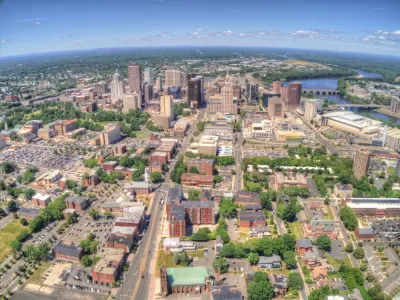
Anthony Flint traces the path of Hartford, Connecticut, from its post-industrial decline to its bounce back from the brink of bankruptcy through redevelopment, zoning and land-use reforms, and mobility improvements.
"But in an illustration of how a mid-sized legacy city can work smart and still face existential challenges, Hartford finds another monumental task in its way: a crumbling piece of 20th-century infrastructure, a stretch of the Interstate 84 viaduct adjacent to downtown that is well past its expiration date," writes Flint.
Options include replacing the freeway, lowering it, burying it underground, and integrating it with a rail network. "All the while—and amid doubt that massive investment in infrastructure is forthcoming—momentum is growing for yet another idea: getting rid of the highway altogether and replacing it with surface boulevards—a feat accomplished in cities like Portland, San Francisco, Milwaukee, and Rochester," says Flint.
The future of the I-84 is one chapter in the longer story of regeneration in Hartford. The question is whether to pursue a megaproject or achieve longer-term goals through smaller changes. "Planners are going to have to bring their best game to study the scenarios and keep the hope alive," adds Flint.
Read the full story: The Downtown Highway That Could Drive Hartford’s Comeback

I-84 Replacement Project Should Connect, not Divide, Hartford
Hartford, Connecticut is offered a once-in-a-lifetime opportunity to undo the mistakes of its forebears—in the form of an elevated urban freeway.
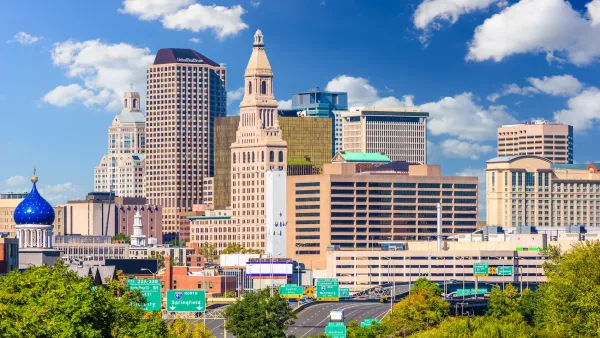
Hartford launches program that uses housing vouchers to facilitate homeownership
The Connecticut capital will allow voucher recipients to use their vouchers toward home payments as a way to build long-term wealth.
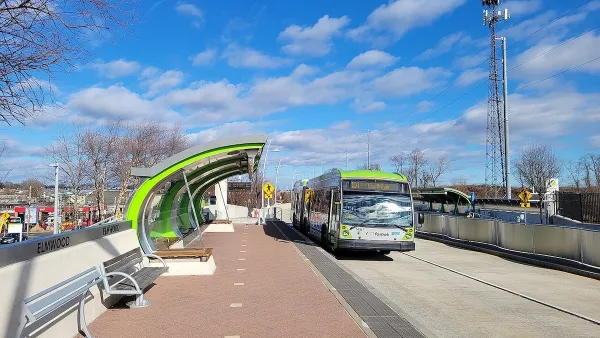
Connecticut Bus System Earns Top Ranking
Hartford’s CTfastrak system wins out over other US bus networks for service quality and connectivity.

Planetizen Federal Action Tracker
A weekly monitor of how Trump’s orders and actions are impacting planners and planning in America.

The state-sanctioned urbicide of Austin
People don’t kill cities. Freeways do.

US to reduce Colorado River water deliveries to Mexico
A new Colorado Treaty amendment reduces Mexico’s Colorado River water allocation by 250,000 acre feet.

Nation's most wind-powered state turns to coal as data centers increase energy demand
For the first time in decades, Iowa has increased its generation of coal power.

NYC cools commuters with city's first rain garden above a bus stop
New York City officials say the plants in the rain garden can absorb 16 gallons of rainwater during heavy storms.

Brightline West’s future may rely on $6 billion federal loan
The company has until Nov. 2 to make a $400 million equity investment into its proposed high-speed rail line.

FREE Course: Walkable City 1: Why Walkability?
After describing his path towards focusing on walkability as the essence of good planning, Jeff Speck marches through his five principal reasons for making more walkable places.
Reinventing Malls: Planning Alchemy—Turning Gray Fields Into Gold
The course focuses on the opportunities and imperatives that shape reinvention of mall sites.

Eagle County Government
Harvard University Graduate School of Design
Nashville Planning Department
The Architects Foundation
University of Cincinnati Online
The Pocatello Development Authority
The Urban Renewal Agency of the City of Pocatello
Journal of the American Planning Association