As many as 1 million species are at risk of extinction if the world, including planning professionals and politicians, doesn't make big changes.


"The great biodiversity of Earth is diminishing so fast that we are now in an extinction crisis," according to an article by Brian Resnick.
"In the past decade, 467 species have been declared extinct (though they might have gone extinct in decades prior), according to the global authority on species conservation status, the International Union for Conservation of Nature, or IUCN. Others have been brought to the brink and still more are seeing serious declines in their population numbers."
The decade has also produced new knowledge about the causes and scope of species loss, as documented thoroughly in the article. The article also includes a list of the five root cases of the biodiversity crisis. Number one on the list: changes in land and sea use.
Resnick explains: "The area of the world that’s been unaltered and untouched by humans is shrinking all the time. And when it shrinks, so does room for nature. A third of the world’s land, the report finds, is currently reserved for agriculture or livestock. Around 100 million hectares (a hectare is 10,000 square meters, or about 2.47 acres) of tropical forest disappeared between 1980 and 2000."
Climate change and pollution also make the list.
Read the full story: The species the world lost this decade
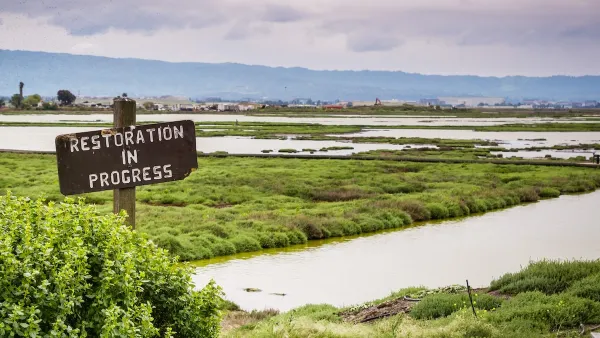
Nature-Based Solutions for Sustainable Climate Action
These solutions offer cost-effective, sustainable methods to combat climate change, but require government action to reallocate subsidies, integrate natural assets into financial systems, and develop biodiversity credit markets.
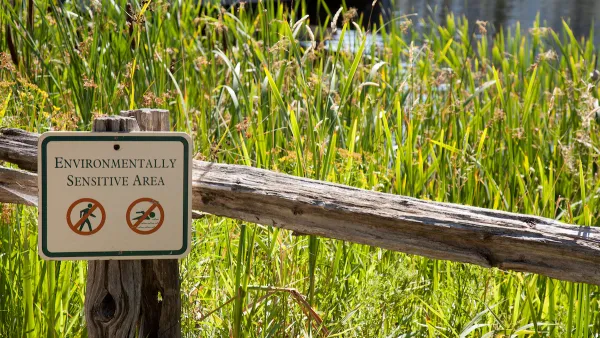
Misuse of Environmental Laws Betrays Their Intent
How laws written to protect natural resources and biodiversity are being reinterpreted by NIMBY groups to block development.
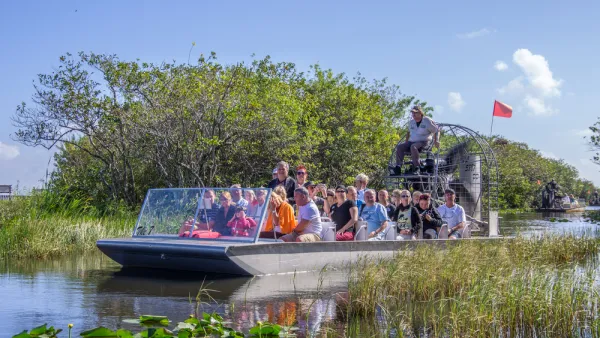
Everglades Restoration To Receive $1.1 Billion in Federal Funds
An 'unprecedented' investment of more than one billion dollars will go toward efforts to restore and conserve the fragile and troubled South Florida ecosystem.

Planetizen Federal Action Tracker
A weekly monitor of how Trump’s orders and actions are impacting planners and planning in America.

California plans to bury El Niño’s downpour
If the state plays its cards right, it may be able to store a billion acre-feet of El Niño’s water in aquifers.

Desperate measures: Advocates weigh draining Lake Powell to fill Colorado River
Draining the reservoir could reduce evaporation losses by a couple hundred thousand acre-feet.

US buildings threatened, destroyed by fires set to triple by 2060
Researchers found a high fire risk for socioeconomically vulnerable neighborhoods in the American West.

LA residents may be allowed to paint their own crosswalks
Councilwoman Katy Yaroslavsky put out a motion instructing the Los Angeles Department of Public Transportation to study the feasibility of allowing volunteers to paint crosswalks.

Dallas moves to overhaul its zoning code
The city's zoning reform will allow more multi-family and mixed-use developments.

FREE Course: Walkable City 1: Why Walkability?
After describing his path towards focusing on walkability as the essence of good planning, Jeff Speck marches through his five principal reasons for making more walkable places.
Reinventing Malls: Planning Alchemy—Turning Gray Fields Into Gold
The course focuses on the opportunities and imperatives that shape reinvention of mall sites.

City of Rosemead
Rutgers University, Edward J. Bloustein School of Planning and Public Policy
One Hundred Miles
Hunter College, City University of New York (CUNY)
The Architects Foundation
University of Cincinnati Online
City of Cambridge
Montrose County
The Pocatello Development Authority