Why isn't more being done to reduce transit construction costs in the United States?


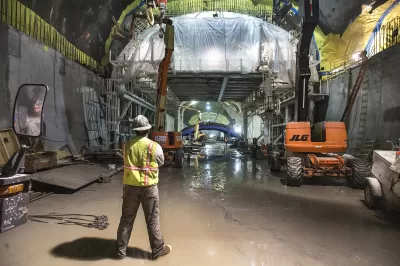
Alex Tabarrok follows on a slide deck by Alon Levy [pdf] to examine possible answers to a big question facing transit planners and engineers: Why don't we know more about why transit investments cost so much in the United States?
Tabarrok voices skepticism about one point raised specifically by Levy—that "GDP per capita is not a big factor once differences in type of subways are accounted for…"—but doesn't elaborate on that skepticism.
Here is Tabarrok's key series of questions, which also happens to be extremely relevant for the Planetizen audience (which includes both planning researchers and professional practitioners): "…isn’t it weird that a Patreon supported blogger has done the best work on comparative construction costs mostly using data from newspapers and trade publications? New York plans to spend billions on railway and subway expansion. If better research could cut construction costs by 1%, it would be worth spending tens of millions on that research. So why doesn’t the MTA embed accountants with every major project in the world and get to the bottom of this cost disease?
FULL STORY: Why Don’t We Know More About the Subway Cost Disease?

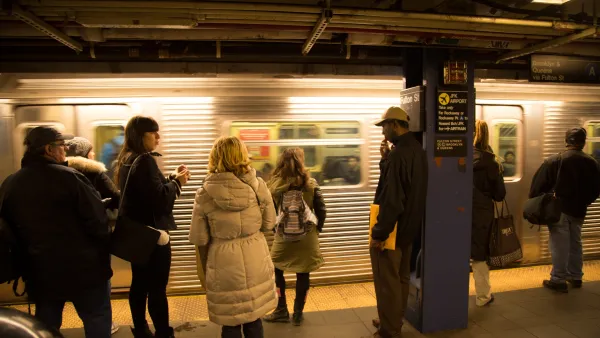
MTA Misses Deadline for State-Mandated Cost Comparison to World Cities
With some of the highest per-mile costs in the world, the state wants more accountability for New York City's transit spending.

Atlanta’s First Bus Rapid Transit Route to Break Ground This Week
Officials in the city of Atlanta are planning a groundbreaking ceremony this week for the Metropolitan Atlanta Rapid Transit Authority’s first bus rapid transit line.
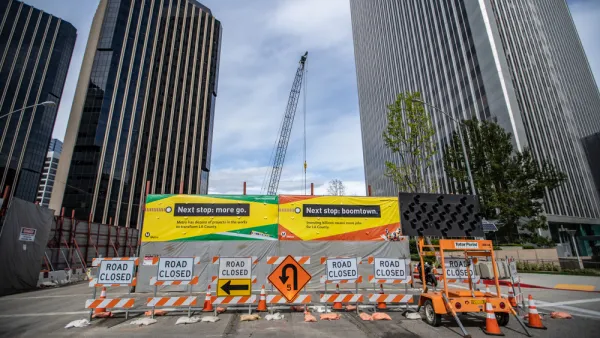
Database Analyzes Global Transit Project Costs
Researchers are cataloging the costs of transit projects around the world in an attempt to identify ways to bring costs down and spend transit funding more efficiently.

Planetizen Federal Action Tracker
A weekly monitor of how Trump’s orders and actions are impacting planners and planning in America.

The state-sanctioned urbicide of Austin
People don’t kill cities. Freeways do.

US to reduce Colorado River water deliveries to Mexico
A new Colorado Treaty amendment reduces Mexico’s Colorado River water allocation by 250,000 acre feet.

Mamdani overhauls NYC's Vision Zero plan with 100 new policy goals
The overhaul aims to reduce traffic deaths and make streets safer for pedestrians, cyclists and drivers through lower speed limits, new safety infrastructure and more.

Amtrak not solely to blame for New Jersey commuter rail's unreliability, report finds
A new study from the Garden State Initiative found that NJ Transit’s budget grew 20% across a 4 year period, but reliability declined significantly over the same period.

EPA erases limits on planet-warming pollution from power plants
Under Monday’s plan, power plants would still have some limits on how much mercury, arsenic and other contaminants they can emit.

FREE Course: Walkable City 1: Why Walkability?
After describing his path towards focusing on walkability as the essence of good planning, Jeff Speck marches through his five principal reasons for making more walkable places.
Reinventing Malls: Planning Alchemy—Turning Gray Fields Into Gold
The course focuses on the opportunities and imperatives that shape reinvention of mall sites.

Eagle County Government
Harvard University Graduate School of Design
Nashville Planning Department
The Architects Foundation
University of Cincinnati Online
The Pocatello Development Authority
The Urban Renewal Agency of the City of Pocatello
Journal of the American Planning Association