As housing prices rise all over the country, quickly growing states like Colorado, Idaho, and Utah are transforming in ways some residents didn't anticipate or desire. Such circumstances are a breeding ground for anti-development politics.


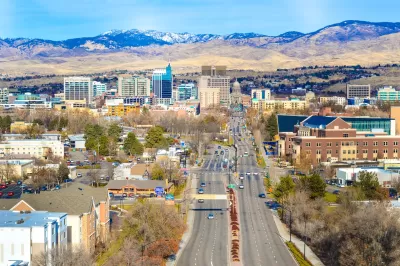
Sophie Quintron reports on the growing development backlash in parts of the West, exemplified by Colorado, Idaho, and Utah.
Colorado’s job growth has a downside. Along the urban corridor where the Rocky Mountains meet the plains, home prices are climbing, luxury apartments are multiplying, and commuters are getting stuck in traffic. Parking spaces on some main streets and popular trailheads are jampacked.
Now some locals, frustrated with the pace of development, are trying to slow it down.
Anti-growth sentiments are gaining traction in more western communities, like around Boise and Salt Lake City, as well. According to multiple sources cited in the article, anti-development politics have a western flavor in these places, but the challenges of housing reflect national trends.
FULL STORY: The West’s Population Boom Leads to Development Backlash

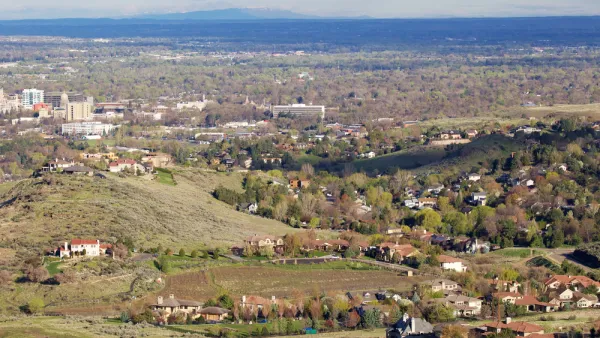
Different Approaches to Fast Growth in Idaho's Treasure Valley
Three cities on the periphery of the fast-growing Treasure Valley showcase different approaches to a sudden influx of newcomers.

The 'Mountain Lion' Cities Rising in the U.S. West
An economist identifies the growth in nine U.S. cities—scattered from Utah to Texas, Arizona, Washington, and Idaho—as similar to the economic power generated in parts of Asia.

Study Touts the Housing Affordability Benefits of Density for the State of Utah
The density debate can't be avoided in fast-growing Utah, according to the researchers and political leaders who support the findings of a new report from the University of Utah's Kem C. Garner Policy Institute.

The state-sanctioned urbicide of Austin
People don’t kill cities. Freeways do.

US to reduce Colorado River water deliveries to Mexico
A new Colorado Treaty amendment reduces Mexico’s Colorado River water allocation by 250,000 acre feet.

New Jersey’s second-largest city bans standalone data centers
Jersey City will continue to allow co-location facilities, such as those meant for research institutions that store their own data.

Amtrak not solely to blame for New Jersey commuter rail's unreliability, report finds
A new study from the Garden State Initiative found that NJ Transit’s budget grew 20% across a 4 year period, but reliability declined significantly over the same period.

EPA erases limits on planet-warming pollution from power plants
Under Monday’s plan, power plants would still have some limits on how much mercury, arsenic and other contaminants they can emit.

Phoenix announces new on-demand transit service, more frequent RAPID buses
Both new services will launch in October, and are part of Phoenix's Project Effective Access Solutions for Easing Congestion.

FREE Course: Walkable City 1: Why Walkability?
After describing his path towards focusing on walkability as the essence of good planning, Jeff Speck marches through his five principal reasons for making more walkable places.
Reinventing Malls: Planning Alchemy—Turning Gray Fields Into Gold
The course focuses on the opportunities and imperatives that shape reinvention of mall sites.

Eagle County Government
Harvard University Graduate School of Design
Nashville Planning Department
The Architects Foundation
University of Cincinnati Online
The Pocatello Development Authority
The Urban Renewal Agency of the City of Pocatello
Journal of the American Planning Association