The former Blue Line, now the A Line, with service from Log Beach to Los Angeles, was shut down in segments for ten months (originally scheduled for eight) for repairs. The weeks since the reopening have been marred spotty, slow service.


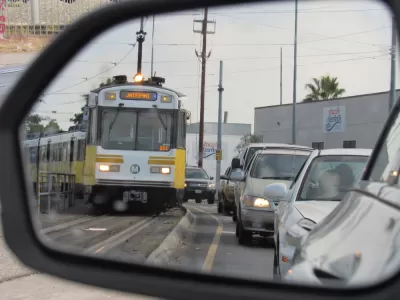
"When Los Angeles County’s oldest rail line reopened this month after a 10-month closure, transportation officials threw three parties, including one emceed by Snoop Dogg," reports Laura Nelson.
The line in question, formerly the Blue Line, now known as the A Line, doesn't seem very improved, according to user observation and system data.
"Two hours after the celebrations ended, a signal problem near downtown L.A. triggered a series of delays. In the three weeks since, the line has seen more than two dozen delays linked to rail cars, gate crossings, overhead power lines and the signal system."
The proof of the work left to do on the A Line is apparent in travel times. "When Metro officials announced the closure, they said the improvements would shave 10 minutes from the travel time between Long Beach and Los Angeles, reducing a 58-minute trip to 48 minutes," according to Nelson. "Metro’s new schedules show a travel time of 53 minutes, five minutes faster than before — but that doesn’t always hold true, riders say. The delays and technical issues have caused unreliable travel times."
FULL STORY: Delays, crowding and technical problems plague Metro’s newly reopened A Line

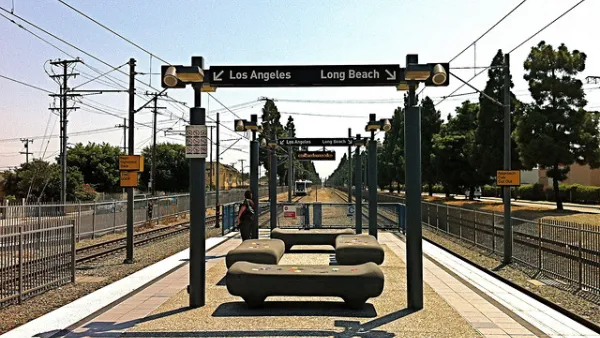
L.A. Metro Will Spend $81.5 Million to Improve Blue Line to Long Beach
The Los Angeles County Metropolitan Transportation Authority (Metro) appears to be taking a break from its perpetual expansion projects to make some improvements to the heavily used but aging Blue Line.
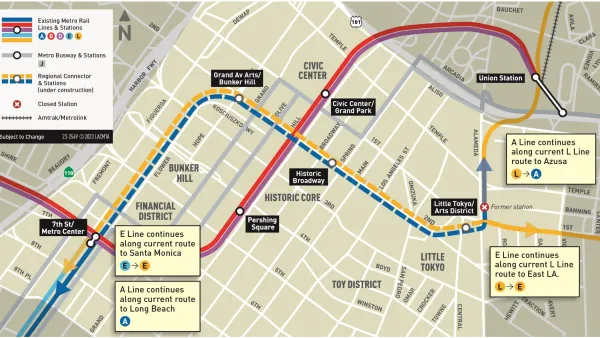
Newly Opened Regional Connector Redefines Light Rail Transit in Los Angeles
Three rail lines have become two rail lines in Los Angeles, providing one-seat rides from four corners of Los Angeles County.
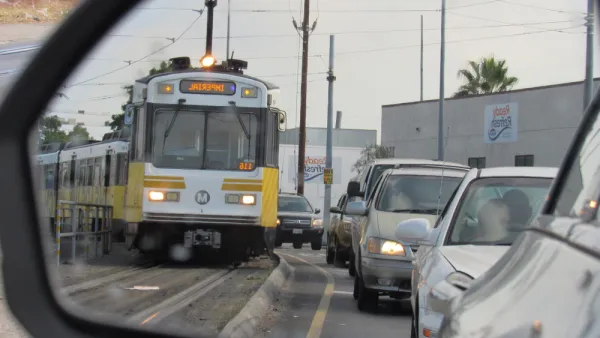
L.A.'s Blue Line Reopening Soon, With a New Name
The Blue Line light rail line, connecting Los Angeles and Long Beach, is almost finished with a $350 million repair program. When it reopens to service it will be called the A Line.

Planetizen Federal Action Tracker
A weekly monitor of how Trump’s orders and actions are impacting planners and planning in America.

The state-sanctioned urbicide of Austin
People don’t kill cities. Freeways do.

US to reduce Colorado River water deliveries to Mexico
A new Colorado Treaty amendment reduces Mexico’s Colorado River water allocation by 250,000 acre feet.

Mamdani overhauls NYC's Vision Zero plan with 100 new policy goals
The overhaul aims to reduce traffic deaths and make streets safer for pedestrians, cyclists and drivers through lower speed limits, new safety infrastructure and more.

Amtrak not solely to blame for New Jersey commuter rail's unreliability, report finds
A new study from the Garden State Initiative found that NJ Transit’s budget grew 20% across a 4 year period, but reliability declined significantly over the same period.

EPA erases limits on planet-warming pollution from power plants
Under Monday’s plan, power plants would still have some limits on how much mercury, arsenic and other contaminants they can emit.

FREE Course: Walkable City 1: Why Walkability?
After describing his path towards focusing on walkability as the essence of good planning, Jeff Speck marches through his five principal reasons for making more walkable places.
Reinventing Malls: Planning Alchemy—Turning Gray Fields Into Gold
The course focuses on the opportunities and imperatives that shape reinvention of mall sites.

Eagle County Government
Harvard University Graduate School of Design
Nashville Planning Department
The Architects Foundation
University of Cincinnati Online
The Pocatello Development Authority
The Urban Renewal Agency of the City of Pocatello
Journal of the American Planning Association