Autonomous micromobility could solve some of dockless bike and scooter share companies' largest remaining challenges, like the local availability of scooters and conformity to local and federal regulations.


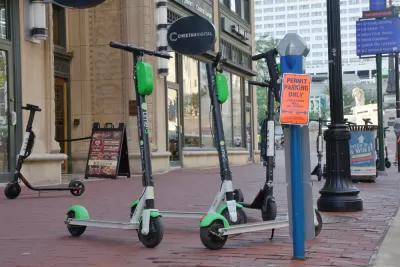
"A new startup called Tortoise, co-founded by Uber veteran Dmitry Shevelenko, aims to outfit scooters and bikes with technology that will allow them to move autonomously or through remote control," reports Jason Plautz.
The company's technology is attached to existing scooters, making it possible to move scooters to bike lanes, sidewalks, or parking areas remotely. "Tortoise claims the innovation will 'solve some of the biggest challenges' associated with micromobility, including clutter and on-demand availability," according to Plautz.
News of an autonomous scooter and bike technology first made in news in January 2019, when Uber started hiring its New Mobilities team and started discussing autonomous micromobility.
Tortoise has already reached partnerships with operators and manufacturers Wind, Gotcha, CityBee, Go X, and Shared, reports Plautz.
Read the full story: Uber alum launches autonomous scooter startup
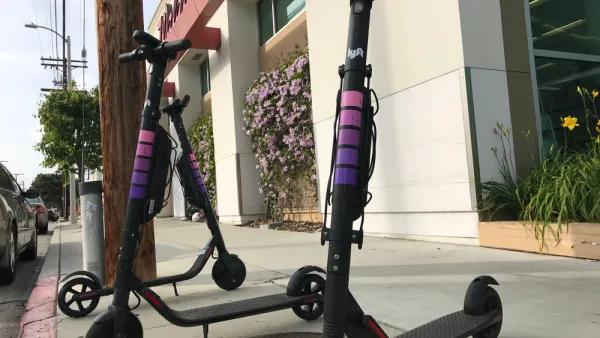
Lyft Pulls Micromobility From Los Angeles Area
The company will no longer provide shared bikes and scooters in the L.A. region, citing a ‘lack of longterm commitment’ from cities.
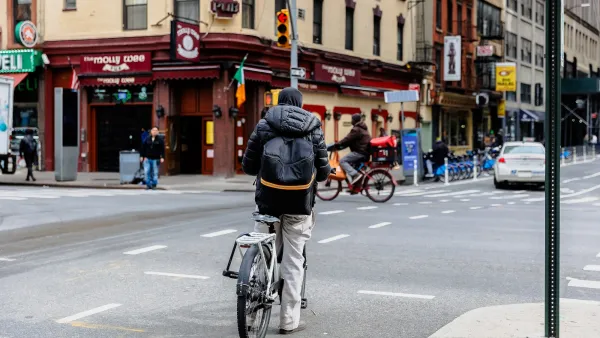
NYC e-bike injury study highlights 'critical infrastructure deficiencies'
The sharp rise in e-mobility injuries points to a need for safer roads, not more punitive laws.
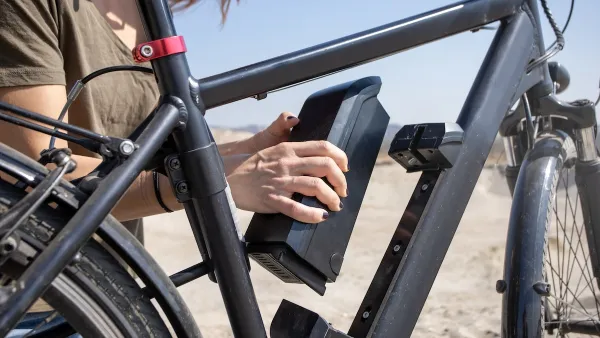
Jersey City Program Offers Battery Swaps for Electric Bikes and Scooters
Residents can swap depleted batteries for fully charged ones as well as charge and park their devices at two pilot sites.

Planetizen Federal Action Tracker
A weekly monitor of how Trump’s orders and actions are impacting planners and planning in America.

Eastern Nebraska is running out of electricity
Data centers and electrification are straining eastern Nebraska’s grid, throttling economic development.

Study reveals best places in the U.S. for cycling, walking
New research from Streetlight Data examines bicycle and pedestrian miles per capita in the 100 largest U.S. cities by population.

Officials look to alter BART extension as price goes through the roof
Tariffs and the war with Iran are behind the rising cost.

To power data centers, Utah company may build hundreds of nuclear reactors on state land
In its permit application, Valar asked for the county to confirm that changes within its outlined plan would still be covered by the permit.

San Antonio is using environmental review to stall ICE detention center
San Antonio sued last month to pause work on the new detention center until the federal government studied its effect on the surrounding area.

FREE Course: Walkable City 1: Why Walkability?
After describing his path towards focusing on walkability as the essence of good planning, Jeff Speck marches through his five principal reasons for making more walkable places.
Reinventing Malls: Planning Alchemy—Turning Gray Fields Into Gold
The course focuses on the opportunities and imperatives that shape reinvention of mall sites.

City of Charlotte
City of Rosemead
Rutgers University, Edward J. Bloustein School of Planning and Public Policy
University of Michigan School for Environment and Sustainability (SEAS)
Hunter College, City University of New York (CUNY)
The Architects Foundation
City of Cambridge
The Pocatello Development Authority
The Urban Renewal Agency of the City of Pocatello