A revision to the region’s plan for the bay will allow areas to be filled in to create habitats that mitigate the effects of climate change.



John King reports that the San Francisco Bay Conservation and Development Commission recently amended the 1969 Bay Plan to allow filling of the bay. "The amendment is intended to lay out a fairly straightforward path for public agencies or nonprofit groups that want to create new wetlands as a tool in preparing for higher tides."
The change reflects a shift in thinking about how natural resources should be managed, says King. Fifty years ago, the approach was to leave natural areas as untouched as possible.
With the threat of climate change, however, strategies to prevent and limit the impacts of sea level rise require habitat restoration and other environmental management activities. "In some cases, this would mean filling what now are shallow waters so that native vegetation can take root and establish itself," notes King.
FULL STORY: Saving SF Bay may mean filling parts of it in, agency says

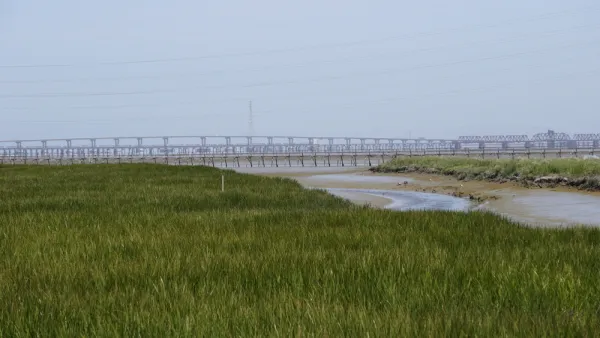
A New Plan for Sea Level Rise in the San Francisco Bay Area
The San Francisco Bay has 400 miles of shoreline, and a dire need for a new approach to dealing with the effects of rising water levels. An estimated $100 billion in potential property damage is at risk.
Big Oil Wins Climate Change Lawsuits
The courts are no place to be deciding on the contribution of fossil fuels to climate change, ruled a Northern California federal district court judge in a "stinging defeat" to San Francisco and Oakland that wanted Big Oil to pay mitigation costs.
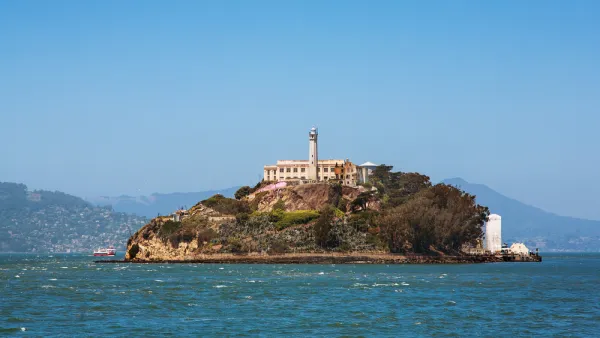
Battle of the Bay: S.F. and Oakland Sue Oil Companies Over Sea Level Rise
Two California cities are going after oil companies with a legal argument that recalls the legislation against big tobacco companies in the 1990s.

The state-sanctioned urbicide of Austin
People don’t kill cities. Freeways do.

US to reduce Colorado River water deliveries to Mexico
A new Colorado Treaty amendment reduces Mexico’s Colorado River water allocation by 250,000 acre feet.

New Jersey’s second-largest city bans standalone data centers
Jersey City will continue to allow co-location facilities, such as those meant for research institutions that store their own data.

Amtrak not solely to blame for New Jersey commuter rail's unreliability, report finds
A new study from the Garden State Initiative found that NJ Transit’s budget grew 20% across a 4 year period, but reliability declined significantly over the same period.

EPA erases limits on planet-warming pollution from power plants
Under Monday’s plan, power plants would still have some limits on how much mercury, arsenic and other contaminants they can emit.

Phoenix announces new on-demand transit service, more frequent RAPID buses
Both new services will launch in October, and are part of Phoenix's Project Effective Access Solutions for Easing Congestion.

FREE Course: Walkable City 1: Why Walkability?
After describing his path towards focusing on walkability as the essence of good planning, Jeff Speck marches through his five principal reasons for making more walkable places.
Reinventing Malls: Planning Alchemy—Turning Gray Fields Into Gold
The course focuses on the opportunities and imperatives that shape reinvention of mall sites.

Eagle County Government
Harvard University Graduate School of Design
Nashville Planning Department
The Architects Foundation
University of Cincinnati Online
The Pocatello Development Authority
The Urban Renewal Agency of the City of Pocatello
Journal of the American Planning Association