The 14th Street Busway will make its debut on Thursday of this week. Cars will be prohibited from the street and buses will gain newfound freedom, in a model that duplicates other efforts in Europe and Canada.


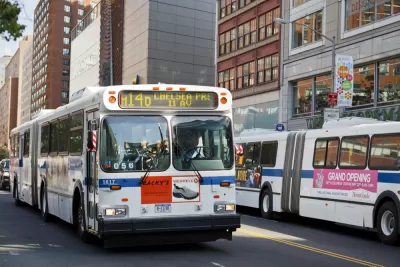
A recent court decision has once again cleared the way for an experiment in traffic engineering on 14th Street in Manhattan: buses will be given priority over cars, because cars will be mostly banned from using the street.
"A 1.1 mile stretch from 3rd Avenue to 9th Avenue, bordering Greenwich Village and Chelsea, will turn into a 'busway' restricting car and truck traffic, creating a corridor of express buses, wide bike lanes and pedestrian-friendly walkways," according to an article by Henry Goldman.
The big opening of the 14th Street Busway is made possible by another court ruling in the ongoing saga of litigation surrounding the project.
"The path to starting the pilot program was cleared Friday by a five-judge state appellate court panel that ruled 3-to-2 to end a temporary restraining order that has blocked it for months. They allowed the experiment while a lawsuit brought by a group of neighboring residents moves forward," explains Goldman. The litigation has continued, despite a court ruling in favor of the project over the summer.
The main beneficiaries of the new 14th Street Busway will be the M14 bus and its riders. Ridership had been plummeting on the line—down 27.4 percent since 2013.
While references to European cities as a model for this kind bus priority on city streets are common, it's worth pointing out also that Toronto cleared cars to make way for the streetcar on King Street, producing tremendous benefits to service and ridership on the line.
FULL STORY: Manhattan’s 14th Street to Ban Most Cars Starting Thursday

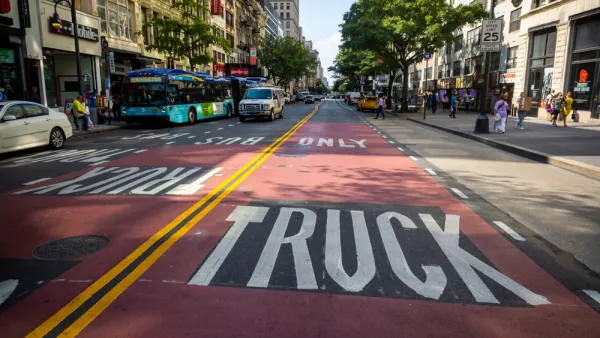
Bus Priority Falling to Local Political Opposition in New York City
An ambitious program to add 20 miles of bus lanes and protected bus ways in the city of New York has been diminished by political opposition in parts of the city.
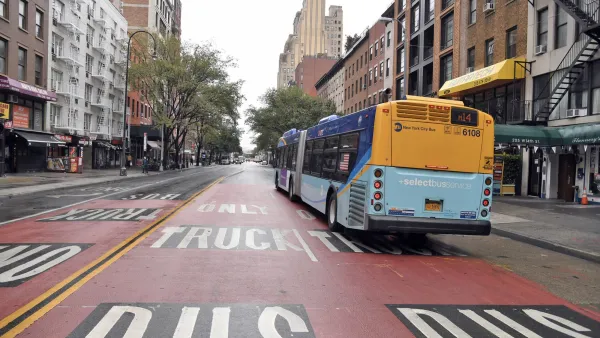
20 Miles of Bus Lanes and Car-Free Busways Coming to New York City
While it falls short of a more ambitious proposal pitched by the MTA recently, a new plan to expand bus priority on the streets of New York City would mark a significant expansion of a trend that started on 14th Street in Manhattan.
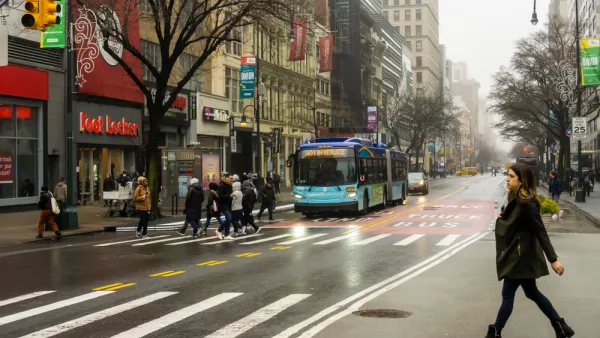
Watch the Miracle on 14th Street in Action
The changes to 14th Street in Manhattan have proven innovative ideas about bus priority and congestion relief.

The state-sanctioned urbicide of Austin
People don’t kill cities. Freeways do.

US to reduce Colorado River water deliveries to Mexico
A new Colorado Treaty amendment reduces Mexico’s Colorado River water allocation by 250,000 acre feet.

New Jersey’s second-largest city bans standalone data centers
Jersey City will continue to allow co-location facilities, such as those meant for research institutions that store their own data.

Amtrak not solely to blame for New Jersey commuter rail's unreliability, report finds
A new study from the Garden State Initiative found that NJ Transit’s budget grew 20% across a 4 year period, but reliability declined significantly over the same period.

EPA erases limits on planet-warming pollution from power plants
Under Monday’s plan, power plants would still have some limits on how much mercury, arsenic and other contaminants they can emit.

Phoenix announces new on-demand transit service, more frequent RAPID buses
Both new services will launch in October, and are part of Phoenix's Project Effective Access Solutions for Easing Congestion.

FREE Course: Walkable City 1: Why Walkability?
After describing his path towards focusing on walkability as the essence of good planning, Jeff Speck marches through his five principal reasons for making more walkable places.
Reinventing Malls: Planning Alchemy—Turning Gray Fields Into Gold
The course focuses on the opportunities and imperatives that shape reinvention of mall sites.

Eagle County Government
Harvard University Graduate School of Design
Nashville Planning Department
The Architects Foundation
University of Cincinnati Online
The Pocatello Development Authority
The Urban Renewal Agency of the City of Pocatello
Journal of the American Planning Association