An old-fashioned story of wealthy developers coming for the water supply of low-income farming communities is being reprised in Colorado.


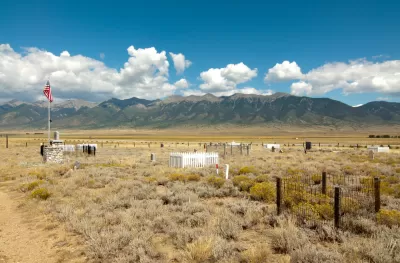
Developers of sprawling suburban communities along the Front Range in Colorado are hoping to tap water supplies in the San Luis Valley, 180 miles away, to support growth, according to an article by Bruce Finley.
Political leaders of the low-income San Luis Valley are resisting the idea, but some farmers in the area have expressed interest in selling water rights.
Renewable Water Resources, "which counts former Gov. Bill Owens as a principal," according to Finley, wants to develop a pipeline that would pump 22,000 acre-feet of water per year from 14 wells drilled 2,000 feet deep at the foot of the Sangre de Cristo mountains. Renewable Water Resources says taking the water from the San Luis Valley is easy compared to other options. Supporters of the idea say the pipeline and water rights could supply an infusion of cash to the low-income corner of the state.
Local leaders are putting up a fight, as detailed by Finley in the source article.

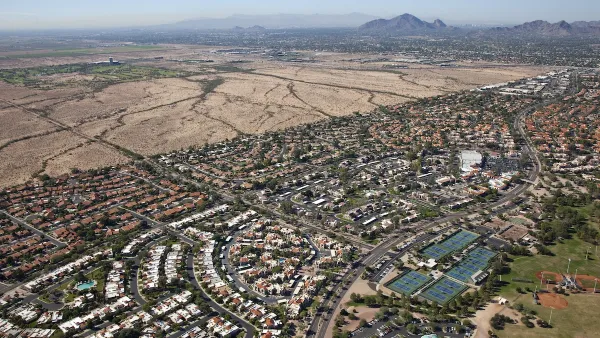
Nearly Half a Million New Arizona Homes Halted Due to Water Crisis
The Arizona Department of Water Resources has put a moratorium on new water supply permits, making the future of planned residential developments uncertain.
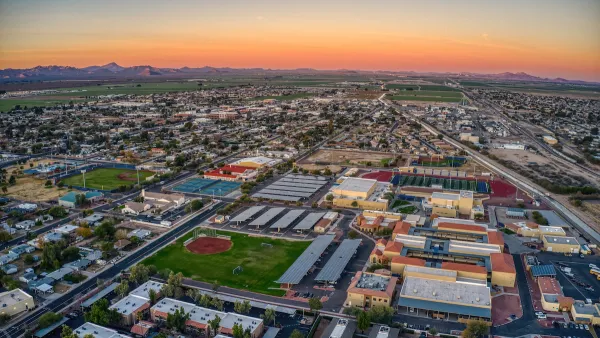
Arizona Town Looks for New Water Sources, Insists Development ‘Full Steam Ahead’
While many Southwest cities are looking for ways to conserve water and limit growth as water supplies become strained, one town is pressing ahead with rapid development.
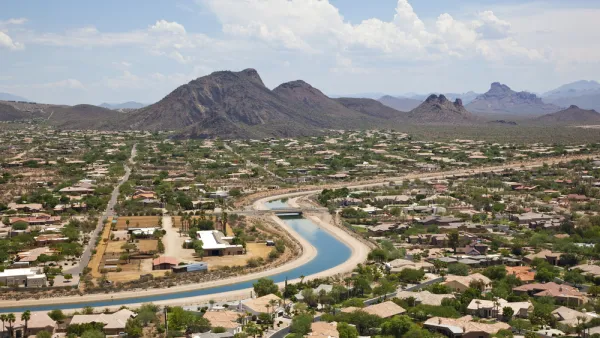
The Water Crisis Comes Home to Roost in Arizona
Due in part to the state’s history of ‘wildcat’ real estate developments, some communities are losing access to water sources as cities and water agencies look for ways to conserve shrinking water supplies.

Planetizen Federal Action Tracker
A weekly monitor of how Trump’s orders and actions are impacting planners and planning in America.

The state-sanctioned urbicide of Austin
People don’t kill cities. Freeways do.

US to reduce Colorado River water deliveries to Mexico
A new Colorado Treaty amendment reduces Mexico’s Colorado River water allocation by 250,000 acre feet.

LA Metro’s ultimatum: no extra buses for LA28 if federal funding isn’t imminently secured
If Metro does not provide additional buses, LA28 organizers will have to find a new way to manage Olympic traffic. LA28’s budget does not include a line item for transit.

Colorado’s Largest Data Center Could Rise Next to Homes — Without a Public Hearing
The proposed campus would consume 11 times the power of Denver International Airport; as it has across the country, opposition mounts.

5 New England states march closer to 800 megawatt wind energy project
Securing federal approval for the project may be complicated under the Trump administration, which has historically been hostile towards domestic wind power.

FREE Course: Walkable City 1: Why Walkability?
After describing his path towards focusing on walkability as the essence of good planning, Jeff Speck marches through his five principal reasons for making more walkable places.
Reinventing Malls: Planning Alchemy—Turning Gray Fields Into Gold
The course focuses on the opportunities and imperatives that shape reinvention of mall sites.

Eagle County Government
Harvard University Graduate School of Design
Nashville Planning Department
The Architects Foundation
University of Cincinnati Online
The Pocatello Development Authority
The Urban Renewal Agency of the City of Pocatello
Journal of the American Planning Association