The latest arrival on the shared mobility scene are Revel mopeds, part of the next generation of devices offering an alternative to car travel.



Henry Grabar takes a closer look at Revel mopeds, which rolled out onto the streets of New York and Washington, D.C., this summer. "In their first 60 days of operation, the company says, the scooters clocked more than 300,000 rides—meaning the service had obtained, overnight, almost half the daily 2018 ridership of New York’s inter-borough ferry system, which receives hundreds of millions in public subsidies."
The mopeds have a top speed of 30 miles per hour, reports Grabar. "One interesting thing about the Revel is that its model hews more closely to existing car culture than the weirder locomotion startups that preceded it. Signing up for Revel requires a driver’s license; users are responsible for traffic violations they commit while riding."
Cities still have a need for fast, flexible modes that can replace car travel, particularly for short trips. And as shared mobility has evolved, travelers are more willing to try out new devices like the Revel moped. "Commuters are now accustomed to trying new things to get where they want to go," notes Grabar.
FULL STORY: Are Revel Mopeds the Fad of the Summer or the Future of Urban Transportation?

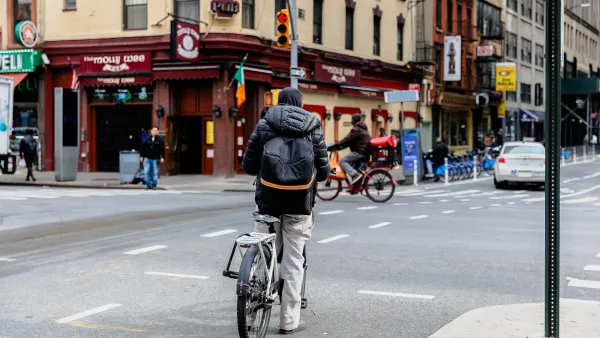
NYC e-bike injury study highlights 'critical infrastructure deficiencies'
The sharp rise in e-mobility injuries points to a need for safer roads, not more punitive laws.
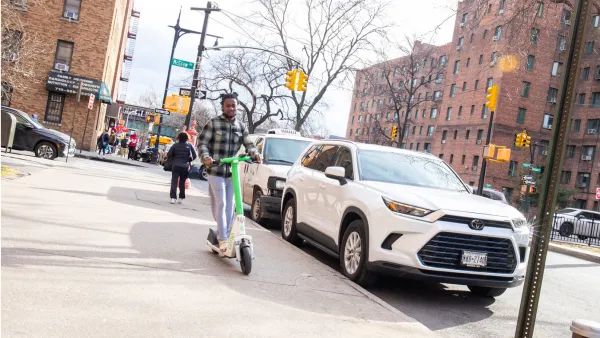
Last Mile: Micromobility in the Outer Reaches of NYC’s Outer Boroughs
In 2021 New York City rolled out an e-scooter program in some of the city’s most underserved transportation zones, focused on equity and access. Urban planner Thandi Nyambose gives an insider’s view of the program from the ground.
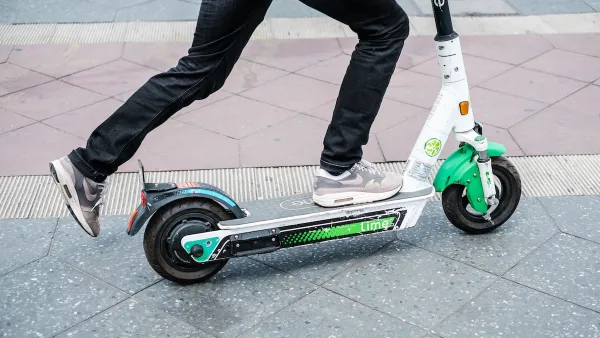
NYC E-Scooter Program Threatened Despite High Ridership
Rental scooters in Queens and the Bronx provided close to two million trips in 2024, with many trips starting or ending near transit. Some city officials want to remove them.

Planetizen Federal Action Tracker
A weekly monitor of how Trump’s orders and actions are impacting planners and planning in America.

The state-sanctioned urbicide of Austin
People don’t kill cities. Freeways do.

US to reduce Colorado River water deliveries to Mexico
A new Colorado Treaty amendment reduces Mexico’s Colorado River water allocation by 250,000 acre feet.

5 New England states march closer to 800 megawatt wind energy project
Securing federal approval for the project may be complicated under the Trump administration, which has historically been hostile towards domestic wind power.

Baltimore to break ground on $50 million Transit Priority Project
The project will bring faster bus trips, safer streets and better bike connections to Baltimore.

Airbnb launches $250 million 'last-dollar financing' housing accelerator, makes first investment in Austin
The company will put $6.4 million towards affordable housing development in Texas’ capital.

FREE Course: Walkable City 1: Why Walkability?
After describing his path towards focusing on walkability as the essence of good planning, Jeff Speck marches through his five principal reasons for making more walkable places.
Reinventing Malls: Planning Alchemy—Turning Gray Fields Into Gold
The course focuses on the opportunities and imperatives that shape reinvention of mall sites.

Eagle County Government
Harvard University Graduate School of Design
Nashville Planning Department
The Architects Foundation
University of Cincinnati Online
The Pocatello Development Authority
The Urban Renewal Agency of the City of Pocatello
Journal of the American Planning Association