The New York Times has published a spectacular mapping and data project to show the extent of flooding along the Mississippi River and its tributaries in the winter, spring, and summer of 2019.



Sarah Almukhtar, Blacki Migliozzi, John Schwartz, and Josh Williams are credited on the byline for an interactive feature that is a stunning piece of mapping and data reporting.
"The year's flooding across the Midwest and the South affected nearly 14 million people, yet the full scale of the slowly unfolding disaster has been difficult to fathom," according to the blurb that introduces the map. "To visualize just how extensive it was, The New York Times created this composite map showing all the areas that were inundated at some point from January to June."
Satellite data is used to show the extent of flooding compared to the usual edges of rivers. Farms that had to delay planting are also shown on the map, along with tags to document property destruction.
FULL STORY: The Great Flood of 2019: A Complete Picture of a Slow-Motion Disaster


Flooding in the Midwest Shows There's No Refuge From Climate Change
While projections say areas of the U.S. Midwest around the Great Lakes will become more hospitable as the climate changes, stormwater and flooding is still a challenge in a surprising number of locations.
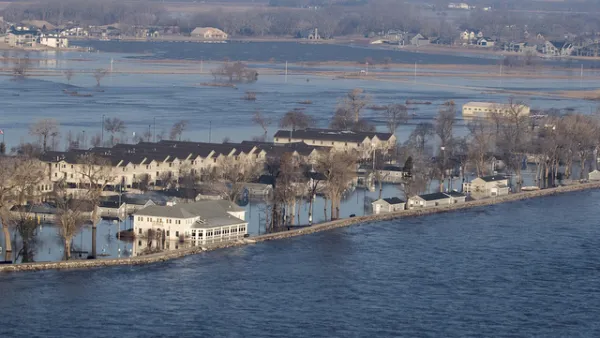
Vital Lessons From the Midwest Bomb Cyclone and Flooding of 2019
The floodwaters still haven't subsided in parts of the Midwest, and lessons about climate change, extreme weather and proactive planning are badly needed to avoid similar catastrophes in the future.
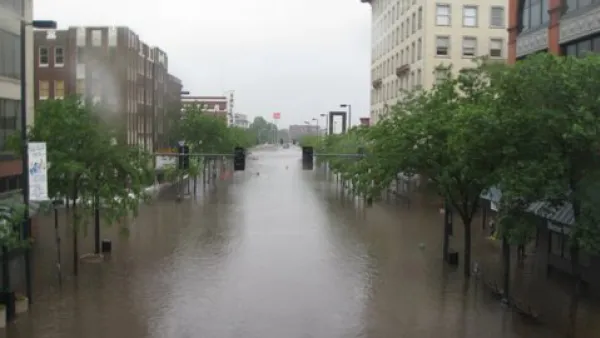
A Toolbox of Green Infrastructure Solutions to Flooding Risks
A new one-stop shop for green infrastructure solutions is available to planners and engineers challenged by flooding.

The state-sanctioned urbicide of Austin
People don’t kill cities. Freeways do.

US to reduce Colorado River water deliveries to Mexico
A new Colorado Treaty amendment reduces Mexico’s Colorado River water allocation by 250,000 acre feet.

New Jersey’s second-largest city bans standalone data centers
Jersey City will continue to allow co-location facilities, such as those meant for research institutions that store their own data.

Amtrak not solely to blame for New Jersey commuter rail's unreliability, report finds
A new study from the Garden State Initiative found that NJ Transit’s budget grew 20% across a 4 year period, but reliability declined significantly over the same period.

EPA erases limits on planet-warming pollution from power plants
Under Monday’s plan, power plants would still have some limits on how much mercury, arsenic and other contaminants they can emit.

Phoenix announces new on-demand transit service, more frequent RAPID buses
Both new services will launch in October, and are part of Phoenix's Project Effective Access Solutions for Easing Congestion.

FREE Course: Walkable City 1: Why Walkability?
After describing his path towards focusing on walkability as the essence of good planning, Jeff Speck marches through his five principal reasons for making more walkable places.
Reinventing Malls: Planning Alchemy—Turning Gray Fields Into Gold
The course focuses on the opportunities and imperatives that shape reinvention of mall sites.

Eagle County Government
Harvard University Graduate School of Design
Nashville Planning Department
The Architects Foundation
University of Cincinnati Online
The Pocatello Development Authority
The Urban Renewal Agency of the City of Pocatello
Journal of the American Planning Association