City councilmembers are debating the future of a 2,200-acre former aluminum smelting plant in Frederick, Maryland. The debate centers on the viability of the parcel as transit-oriented development.


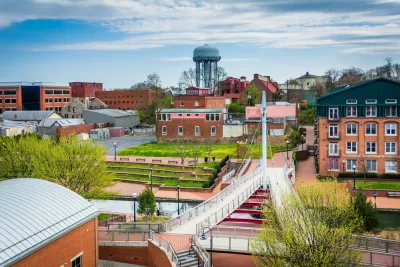
City councilmembers are debating the future of a 2,200-acre former aluminum smelting plant in Frederick, Maryland. The debate centers on the viability of the parcel as transit-oriented development.
Steve Bohnel reports on a controversial component of the Livable Frederick plan, under debate in the Maryland city located proximate to both Washington, D.C. and Baltimore.
The issue at hand is a former aluminum smelting plant and 2,200 surrounding acres. The site has been dormant for two decades, according to an article by Steve Bohnel, but the Livable Frederick plan "labels the area of the county as a possible 'new town' and location for multimodal accessibility."
The designation has split the Frederick City Council. Some question whether the nearby MARC rail spur (with service to Washington, D.C.) is adequate to serve as a commuter rail station for a potential mixed-use development.
Councilmember Steve McKay (R) in July drafted an amendment that would change the land use designation for the parcel "aimed to promote commercial and industrial development, while encouraging future planners to preserve the nearly 2,000 acres of farmland surrounding the Eastalco site," according to Bohnel. In addition to the coverage on the amendment linked above, Bohnel provides additional context for the debate in an article published earlier in July.
Read the full story: As Livable Frederick public hearing nears, debate over Eastalco designation remains
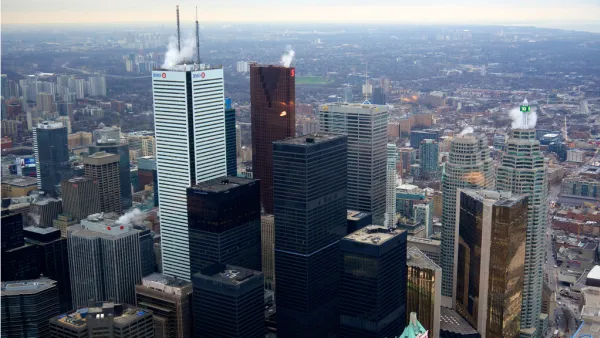
Growth Plan Debate Heats Up in Toronto
The question of how and where to grow is causing controversy in Toronto. A recent op-ed picks a side.

How Cities Can Lead the Way in Reducing Transportation Emissions
Decisions made at the local level can have a significant impact on emissions in the transportation sector.

Report Stresses Links Between Housing and Transit
A Canadian report calls for a more holistic approach to housing development policy and transportation planning.

Planetizen Federal Action Tracker
A weekly monitor of how Trump’s orders and actions are impacting planners and planning in America.

California plans to bury El Niño’s downpour
If the state plays its cards right, it may be able to store a billion acre-feet of El Niño’s water in aquifers.

Desperate measures: Advocates weigh draining Lake Powell to fill Colorado River
Draining the reservoir could reduce evaporation losses by a couple hundred thousand acre-feet.

Housing is the top priority of Seattle’s sole new councilmember
Jenks campaigned on building 1,000 new units of affordable housing.

New tax cuts may slash $1.5 billion in funding for Miami transit, public parks
Amendment 3 will save Miami-Dade homeowners $2,700 in 2028.

Arizona, Wisconsin, Pennsylvania hope to finally advance climate goals post-midterms
The three states have spent years under Republican or divided control.

FREE Course: Walkable City 1: Why Walkability?
After describing his path towards focusing on walkability as the essence of good planning, Jeff Speck marches through his five principal reasons for making more walkable places.
Reinventing Malls: Planning Alchemy—Turning Gray Fields Into Gold
The course focuses on the opportunities and imperatives that shape reinvention of mall sites.

City of Rosemead
Rutgers University, Edward J. Bloustein School of Planning and Public Policy
One Hundred Miles
University of Michigan School for Environment and Sustainability (SEAS)
Hunter College, City University of New York (CUNY)
The Architects Foundation
City of Cambridge
Montrose County
The Pocatello Development Authority