Helicopters are an exclusive mode that lets those who can afford it avoid the time and inconveniences of on-the-ground travel. But, say critics, it just highlights the gap between the city's haves and have-nots.


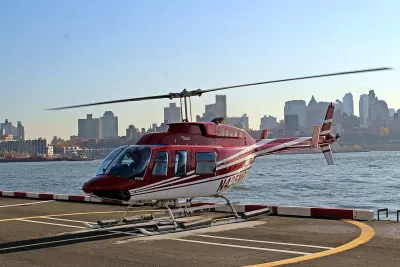
"In New York City, which is saddled with gridlocked roads and slow and unreliable public transit, more and more of those who can afford to are flying over it all," writes James Barron.
The number of private helicopter trips to New York City airports and high-end resort towns on Long Island has increased in recent years, reports Barron. "The jump in helicopter traffic has upset some people on the ground below the flight path who say they have to listen to the incessant roar of the vehicles." Three city council members have also raised safety concerns about helicopters over the city and have called for a Federal Aviation Administration ban on "nonessential" helicopter travel.
Barron also notes that Uber is one of the new contenders in the helicopter travel arena. "The company’s operation in New York is a dress rehearsal for an aerial ride-sharing network elsewhere, using not helicopters but what are essentially air taxis — electric vertical takeoff and landing craft, designed to rise straight up like a helicopter but fly like a fixed-wing aircraft."
FULL STORY: That Noise? It’s the 1%, Helicoptering Over Your Traffic Jam

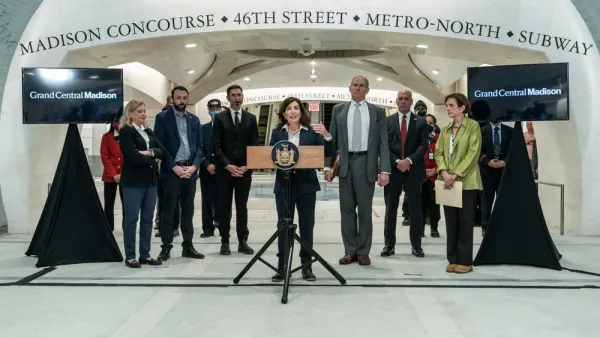
Long Island Rail Now Connects to Grand Central Terminal
A new rail service launched this week could save commuters as much as 40 minutes on trips between Long Island and Manhattan.
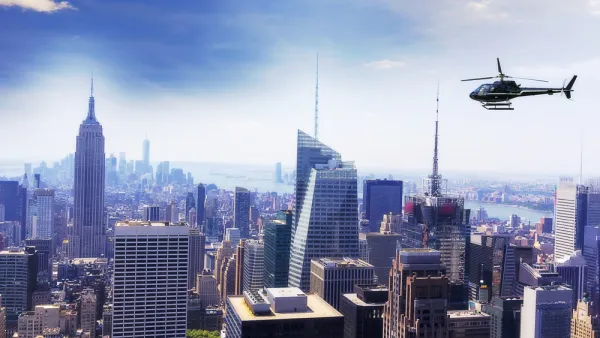
Helicopter Noise Complaints Surge in New York
Residents argue the city and state must do more to regulate the hundreds of flights that criss-cross the area on a daily basis.

LaGuardia Airport Redesign Fails To Address Key Concerns
After an $8 billion renovation, critics of the much-maligned airport claim the design is disjointed, while public transit access to the new terminals remains minimal.

Planetizen Federal Action Tracker
A weekly monitor of how Trump’s orders and actions are impacting planners and planning in America.

The state-sanctioned urbicide of Austin
People don’t kill cities. Freeways do.

US to reduce Colorado River water deliveries to Mexico
A new Colorado Treaty amendment reduces Mexico’s Colorado River water allocation by 250,000 acre feet.

Mamdani overhauls NYC's Vision Zero plan with 100 new policy goals
The overhaul aims to reduce traffic deaths and make streets safer for pedestrians, cyclists and drivers through lower speed limits, new safety infrastructure and more.

Amtrak not solely to blame for New Jersey commuter rail's unreliability, report finds
A new study from the Garden State Initiative found that NJ Transit’s budget grew 20% across a 4 year period, but reliability declined significantly over the same period.

EPA erases limits on planet-warming pollution from power plants
Under Monday’s plan, power plants would still have some limits on how much mercury, arsenic and other contaminants they can emit.

FREE Course: Walkable City 1: Why Walkability?
After describing his path towards focusing on walkability as the essence of good planning, Jeff Speck marches through his five principal reasons for making more walkable places.
Reinventing Malls: Planning Alchemy—Turning Gray Fields Into Gold
The course focuses on the opportunities and imperatives that shape reinvention of mall sites.

Eagle County Government
Harvard University Graduate School of Design
Nashville Planning Department
The Architects Foundation
University of Cincinnati Online
The Pocatello Development Authority
The Urban Renewal Agency of the City of Pocatello
Journal of the American Planning Association