The geography of talent is changing. Richard Florida takes a closer look at where the creative class is moving as a result of the housing affordability crisis in many of the largest and most famous cities in the country.



Richard Florida maps the "rise of the rest" that is taking shape in cities outside of superstar cities all over the country, the "result of both increasingly unaffordable housing in established hubs and the improvement of the economies in less-established hubs."
According Florida's analysis of the term he made famous, the "creative class" is spreading around the country. The article illustrates the trend with a series of maps and infographics. Florida worked with Todd Gabe, an economist at the University of Maine, to track the growth of the creative class overall and across U.S. metros from 2005 to 2017, using data from the U.S. Census American Community Survey (ACS).
In the years that passed from that period, the creative class grew substantially in leading cities, and the rankings of cities with the largest share also changed substantially. In 2017, San Jose has the largest share of creative class, followed by D.C. and San Francisco, explains Florida.
Between 2005 and 2017, Denver and Philadelphia joined the top ten, but a lot of other stories of growth can be told. "A number of Rustbelt and Sunbelt metros which have previously lagged now show robust growth," according to Florida. "Salt Lake City posted the fastest growth, with Pittsburgh and Cincinnati next in line. Las Vegas, which had the smallest creative class share of large metros in 2005, also saw significant growth."
The article also lists the cities where growth of the creative class was slowest over that period.
Read the full story: Maps Reveal Where the Creative Class Is Growing

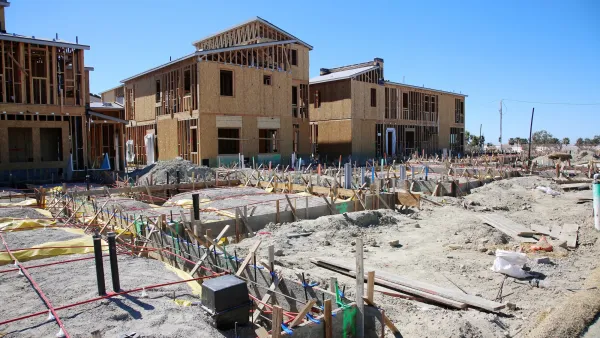
Less than 6% of California cities are building enough housing for very low-income households
Only five jurisdictions are on track to meet their housing goals for all income brackets.
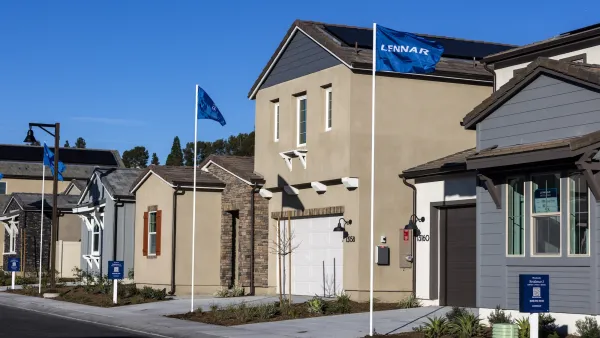
Just 17% of San Diego households can afford the city's $1M+ median home prices
The city is becoming increasingly unaffordable to prospective homebuyers.
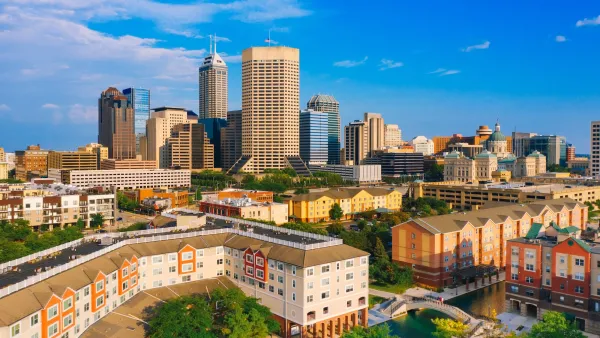
Indianapolis rents grew by 30% since 2020
The metro area has a shortage of roughly 137,000 affordable homes for the lowest-income households.

Planetizen Federal Action Tracker
A weekly monitor of how Trump’s orders and actions are impacting planners and planning in America.

Amtrak, CN end decades-long dispute with eight-year agreement
The new operating agreement establishes an updated framework for the companies to work together, including processes to resolve disputes.

Judges permit Denver to divert 77,000 acre feet from the Colorado River for reservoir expansion
Overuse and climate change have caused the Colorado River’s water levels to plummet.

Northwest rail fans eager for Sept. 30 debut of Amtrak’s Airo fleet
Get ready for that new train smell and more seats. But they won’t go faster or run more frequently on the Cascades route in Washington and Oregon.

NYC DOT wants faster, more permanent street upgrades
The city is examining ways to build more concrete infrastructure without getting entangled in 'decades-long' projects.

'Something we’ve never seen before:' rising utility rates could strain city finances nationwide
Data centers, climate change and other factors have caused utility rates in the United States to increase by 38% since 2020.

FREE Course: Walkable City 1: Why Walkability?
After describing his path towards focusing on walkability as the essence of good planning, Jeff Speck marches through his five principal reasons for making more walkable places.
Reinventing Malls: Planning Alchemy—Turning Gray Fields Into Gold
The course focuses on the opportunities and imperatives that shape reinvention of mall sites.

Harvard University Graduate School of Design
KFH Group Inc.
Greater Baltimore Committee
The Architects Foundation
University of Cincinnati Online
The Pocatello Development Authority
The Urban Renewal Agency of the City of Pocatello