Why is it that smallish cities in western Europe always score so well? Perhaps the underlying assumptions behind ostensibly data-driven "livability" rankings cater to a certain audience and leave most of us out.


Basing his critique on a recent livability ranking from Monocle, Feargus O'Sullivan argues that the way many media outlets approach "livability" among cities is highly suspect. "All are no doubt largely prosperous, high-functioning places," he writes. "But an overall feeling emerges from this cluster of familiar entries. These rankings provide less a universal assessment of livability—a word that comes with its own baggage—and more a snapshot of their compilers' tastes and worldview."
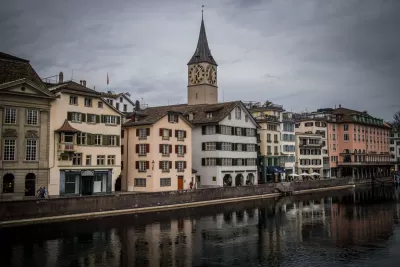
Zurich, for instance, which topped Monocle's list, "is a still-stratified society where high wages compensate for a degree of social stagnation, with migrants and Swiss from the wrong backgrounds enjoying good benefits and excellent tram links on the way to low-skilled jobs."
O'Sullivan also points to "a curious anti-urban slant" across many livability assessments that favorably pits cities of a few hundred thousand against megacities like Beijing or Bangkok. He writes, "it's hard not to wonder why these rankings tend to tap wealthy, smaller cities when larger, less wealthy ones may be making more radical, transformative improvements in life quality."
Though data-driven rankings may seem dispassionate, they still operate upon unstated assumptions. "They assess, broadly, how much potential a city possesses when seen from a privileged point of view: that of a straight, affluent, mobile, and probably white couple who works in something akin to upper management and has children. Remove even one of those characteristics from the equation and the results often seem way off the mark."
FULL STORY: Death to Livability!

The Nation’s Best Small Cities Ranked by Livability, Affordability
A new list looks at a range of factors from housing costs to entertainment to commute times to rank the most attractive small cities in the U.S.
Singapore: A Model for Longevity and Quality of Life
Singapore's remarkable rise in life expectancy, driven by government policies on health, green spaces, and social cohesion, has earned it the distinction of being named the world's sixth “Blue Zone.”

Insights From the Latest Livability Index
The latest edition of the AARP Livability Index reveals the U.S. regions with more of the kinds of neighborhoods that offer quality of life benefits for residents of all ages.

The state-sanctioned urbicide of Austin
People don’t kill cities. Freeways do.

US to reduce Colorado River water deliveries to Mexico
A new Colorado Treaty amendment reduces Mexico’s Colorado River water allocation by 250,000 acre feet.

New Jersey’s second-largest city bans standalone data centers
Jersey City will continue to allow co-location facilities, such as those meant for research institutions that store their own data.

Amtrak not solely to blame for New Jersey commuter rail's unreliability, report finds
A new study from the Garden State Initiative found that NJ Transit’s budget grew 20% across a 4 year period, but reliability declined significantly over the same period.

EPA erases limits on planet-warming pollution from power plants
Under Monday’s plan, power plants would still have some limits on how much mercury, arsenic and other contaminants they can emit.

Phoenix announces new on-demand transit service, more frequent RAPID buses
Both new services will launch in October, and are part of Phoenix's Project Effective Access Solutions for Easing Congestion.

FREE Course: Walkable City 1: Why Walkability?
After describing his path towards focusing on walkability as the essence of good planning, Jeff Speck marches through his five principal reasons for making more walkable places.
Reinventing Malls: Planning Alchemy—Turning Gray Fields Into Gold
The course focuses on the opportunities and imperatives that shape reinvention of mall sites.

Eagle County Government
Harvard University Graduate School of Design
Nashville Planning Department
The Architects Foundation
University of Cincinnati Online
The Pocatello Development Authority
The Urban Renewal Agency of the City of Pocatello
Journal of the American Planning Association