Even though they often occupy valuable real estate, some Boston properties have sat vacant in various states of limbo for years.


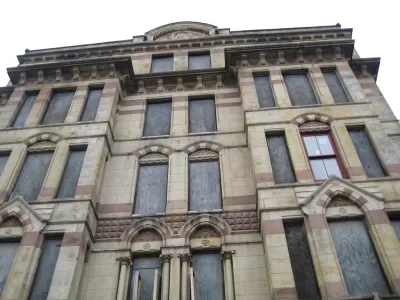
"All over town, buildings sit empty, somehow unused despite a fierce shortage of housing and a long-running development boom that has transformed long-quiet patches of the city into hot property," Tim Logan writes. Here, Logan looks at the stories behind several major examples, like Hotel Alexandra on Massachusetts Avenue and the J.R. Alley Brewery in Mission Hill.
The question of why these buildings remain in a vacant state for so long usually boils down to one of three reasons. In the case of small apartment complexes and old storefronts, there's often a family dispute among inheritors. In other cases, outstanding lawsuits or permitting problems prohibit redevelopment. Other times, the problem is economic: either an owner is waiting around for prices to rise before selling, or wants to redevelop but can't justify the cost.
In the end, though, Boston's overall number of vacant and troubled properties is declining. "Since 1997, the city has tracked so-called distressed buildings — vacant properties with code violations — and by 2015 that number had fallen 80 percent, as empty storefronts and three-deckers were brought back to life," Logan writes.
FULL STORY: Why have these buildings sat empty for years and even decades?

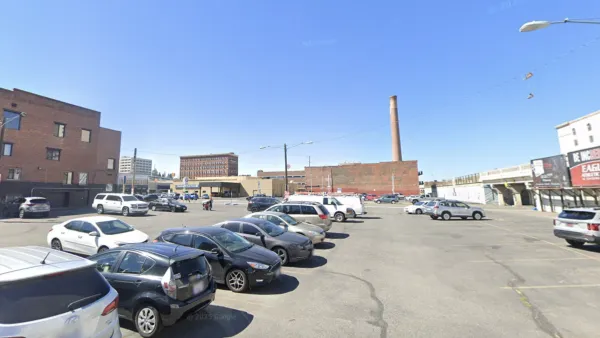
Spokane Could Tax Parking Lots 12% to Increase Development
A proposal before the city council would tax surface parking lots in an effort to boost infill development.
Opinion: Cities Must Take Action on Blighted Downtown Parking Lots
Surface parking lots take up as much as a third of downtown land in some cities, dragging down tax revenue and redevelopment prospects.
How Effective are Philadelphia’s Keystone Opportunity Zones?
The impacts of a tax break designed to create jobs, stimulate development, and reduce blight are proving hard to track.

Planetizen Federal Action Tracker
A weekly monitor of how Trump’s orders and actions are impacting planners and planning in America.

The state-sanctioned urbicide of Austin
People don’t kill cities. Freeways do.

US to reduce Colorado River water deliveries to Mexico
A new Colorado Treaty amendment reduces Mexico’s Colorado River water allocation by 250,000 acre feet.

5 New England states march closer to 800 megawatt wind energy project
Securing federal approval for the project may be complicated under the Trump administration, which has historically been hostile towards domestic wind power.

Baltimore to break ground on $50 million Transit Priority Project
The project will bring faster bus trips, safer streets and better bike connections to Baltimore.

Airbnb launches $250 million 'last-dollar financing' housing accelerator, makes first investment in Austin
The company will put $6.4 million towards affordable housing development in Texas’ capital.

FREE Course: Walkable City 1: Why Walkability?
After describing his path towards focusing on walkability as the essence of good planning, Jeff Speck marches through his five principal reasons for making more walkable places.
Reinventing Malls: Planning Alchemy—Turning Gray Fields Into Gold
The course focuses on the opportunities and imperatives that shape reinvention of mall sites.

Eagle County Government
Harvard University Graduate School of Design
Nashville Planning Department
The Architects Foundation
University of Cincinnati Online
The Pocatello Development Authority
The Urban Renewal Agency of the City of Pocatello
Journal of the American Planning Association