PBS New Hour takes a deep dive into the climbing number of pedestrian deaths in the United States—now at their highest level in almost three decades.


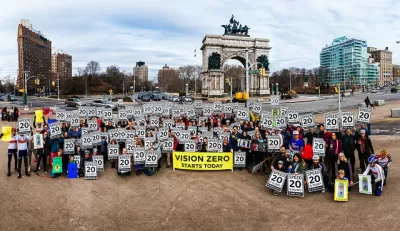
Arren Kimbel-Sannit and a team of student reporters from the Howard Center for Investigative Journalism at Arizona State University report on the growing number of pedestrian fatalities around the nation, with the assumption that a variety of factors is contributing to the growing number of tragedies on the nation's roads: "wider roads, sprawling cities, heavier traffic in residential areas due to navigation apps and increasing distractions from digital devices."
The scene is set by an intersection in Los Angeles, where a driver struck and killed 17-year-old Christian Vega in February. Neighborhood advocates have called for safety improvements for years, according to Kimbel-Sannit, but the city acted too late to prevent Vega's death.
Though the problem is far from isolated to Los Angeles. "Across the country, pedestrian deaths are on the rise, jumping from more than 4,000 in 2009 to nearly 6,000 in 2017," according to Kimbel-Sannit.
The report is available in the television broadcast and in a full transcript published below the video at the link below.
FULL STORY: Why U.S. pedestrian deaths are at their highest level in almost 30 years

Big Cities Make Pedestrian Safety a Priority
New data released Dec. 19 by NHTSA shows increased safety for those traveling by car, but pedestrian fatalities are 15% higher than in 2009. Plans by San Francisco, Los Angeles, New York, and Chicago to increase ped safety are described by the WSJ.
Cincinnati Gets Serious About Pedestrian Safety
A new in-house team dedicated to pedestrian safety at Cincinnati City Hall and a new complete streets ordinance are some of the changes underway in Cincinnati.
U.S. Lagging in Making Streets Safer for Pedestrians
Pedestrian deaths are on the rise in the United States, but cities have been slow to implement effective policies and road design measures to change the trend.

The state-sanctioned urbicide of Austin
People don’t kill cities. Freeways do.

US to reduce Colorado River water deliveries to Mexico
A new Colorado Treaty amendment reduces Mexico’s Colorado River water allocation by 250,000 acre feet.

New Jersey’s second-largest city bans standalone data centers
Jersey City will continue to allow co-location facilities, such as those meant for research institutions that store their own data.

Amtrak not solely to blame for New Jersey commuter rail's unreliability, report finds
A new study from the Garden State Initiative found that NJ Transit’s budget grew 20% across a 4 year period, but reliability declined significantly over the same period.

EPA erases limits on planet-warming pollution from power plants
Under Monday’s plan, power plants would still have some limits on how much mercury, arsenic and other contaminants they can emit.

Phoenix announces new on-demand transit service, more frequent RAPID buses
Both new services will launch in October, and are part of Phoenix's Project Effective Access Solutions for Easing Congestion.

FREE Course: Walkable City 1: Why Walkability?
After describing his path towards focusing on walkability as the essence of good planning, Jeff Speck marches through his five principal reasons for making more walkable places.
Reinventing Malls: Planning Alchemy—Turning Gray Fields Into Gold
The course focuses on the opportunities and imperatives that shape reinvention of mall sites.

Eagle County Government
Harvard University Graduate School of Design
Nashville Planning Department
The Architects Foundation
University of Cincinnati Online
The Pocatello Development Authority
The Urban Renewal Agency of the City of Pocatello
Journal of the American Planning Association