A study about planning for AVs shows that most cities are not actively working to prepare for them and officials are worried about the many potential effects they will have on cities.


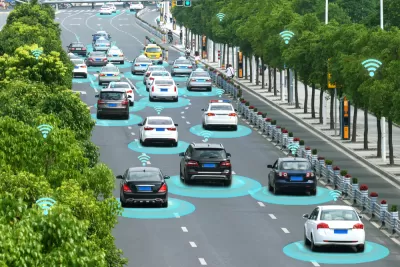
A new article in the Journal of the American Planning Association takes a closer look at how cities are preparing for autonomous vehicles. MIT researchers reviewed plans from the 25 largest U.S. cities and surveyed transportation and planning officials in 120 cities across the country.
The findings show that few cities have started preparing for AVs. "Only a tiny fraction of survey respondents said that their town had a 'clear plan' for autonomous vehicles, and just 36 percent of the largest cities have general plans that mention AVs. Even fewer, 24 percent, have issued separate strategies for maximizing the possible safety and congestion-easing benefits of self-driving cars," reports Laura Bliss.
Most cities report that they are waiting on federal or state legislation to come through and larger, more populated cities are more likely to be prepared. And while officials are looking to the benefits of AVs on roads, a third of respondents are also concerned about the potential negative impacts of the vehicles, including increases in vehicle miles traveled and sprawl and decreases in transit ridership and local revenues.
FULL STORY: Why Aren’t Cities Getting Ready for Autonomous Vehicles?

AV Technology Needs to Take the Realities of Human Behavior into Account
Autonomous vehicle technology assumes that partial automation, where people are in control of vehicles at varying levels, is feasible. But research shows this is not how humans behave.
Planning Ahead for an Autonomous Vehicle Future
A new guide says cities need to plan now for AVs so they are not caught off guard when the technology finally arrives.
Transportation secretary proposes right to 'freedom cars'
The Trump administration wants to promote the production of self-driving cars while allowing Americans to buy tech-free "traditional" vehicles.

The state-sanctioned urbicide of Austin
People don’t kill cities. Freeways do.

US to reduce Colorado River water deliveries to Mexico
A new Colorado Treaty amendment reduces Mexico’s Colorado River water allocation by 250,000 acre feet.

New Jersey’s second-largest city bans standalone data centers
Jersey City will continue to allow co-location facilities, such as those meant for research institutions that store their own data.

Amtrak not solely to blame for New Jersey commuter rail's unreliability, report finds
A new study from the Garden State Initiative found that NJ Transit’s budget grew 20% across a 4 year period, but reliability declined significantly over the same period.

EPA erases limits on planet-warming pollution from power plants
Under Monday’s plan, power plants would still have some limits on how much mercury, arsenic and other contaminants they can emit.

Phoenix announces new on-demand transit service, more frequent RAPID buses
Both new services will launch in October, and are part of Phoenix's Project Effective Access Solutions for Easing Congestion.

FREE Course: Walkable City 1: Why Walkability?
After describing his path towards focusing on walkability as the essence of good planning, Jeff Speck marches through his five principal reasons for making more walkable places.
Reinventing Malls: Planning Alchemy—Turning Gray Fields Into Gold
The course focuses on the opportunities and imperatives that shape reinvention of mall sites.

Eagle County Government
Harvard University Graduate School of Design
Nashville Planning Department
The Architects Foundation
University of Cincinnati Online
The Pocatello Development Authority
The Urban Renewal Agency of the City of Pocatello
Journal of the American Planning Association