Art walks, or open studio tours, often take place in once-gritty neighborhoods trending toward the hip and expensive, but how responsible are the events for the effects of gentrification that emerge?


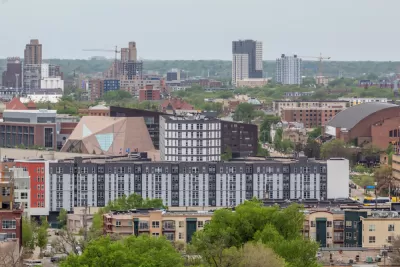
Cinnamon Janzer explores the question of whether Art-a-Whirl, the largest artist open studio tour in the country, held in May every yeear, contributed to the gentrification in the Arts District in Northeast Minneapolis.
Art-a-Whirl began in 1996 as a way for a handful of Northeast-based artists to showcase their work and drum up interest from a few individually invited local buyers. The following year, the Northeast Minneapolis Arts Association (NEMAA), a non-profit artist collective, was formed to support and promote the artists who had flocked to the area in search of affordable live/work options. For years the community of makers thrived, as did Art-a-Whirl. However, as the arts community in Northeast — locally referred to as Nordeast — grew, so did the commodification of arts culture.
What was once a "blue-collar and largely Eastern European community" has now become a place for "developed, regulated spaces home to tech companies and mass-produced art created by design firms," according to Janzer.
Dr. Brittany Lewis, a researcher at the University of Minnesota’s Center for Urban and Regional Affairs, undertook a study of the gentrification of Northeast Minneapolis. Janzer explains the findings of the report in detail in the article.
Read the full story: Did the Largest Art Studio Tour in the US Drive Minneapolis’ Gentrification?
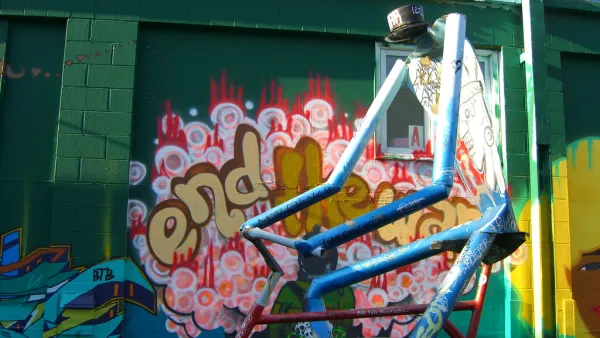
A Tale of Arts-Driven Gentrification in Northeast Minneapolis
It's a familiar story: artists who flocked to an underused district for the low prices and plentiful space now find themselves inundated by new money, newcomers, and lots of craft beer.
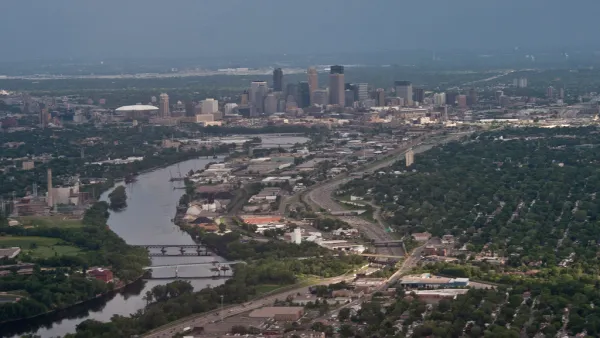
Minneapolis Riverfront Project Raises Issues of Equity
The Upper Harbor Terminal project is set to transform an area north of downtown, but residents are concerned about the long-term impacts and outcomes.
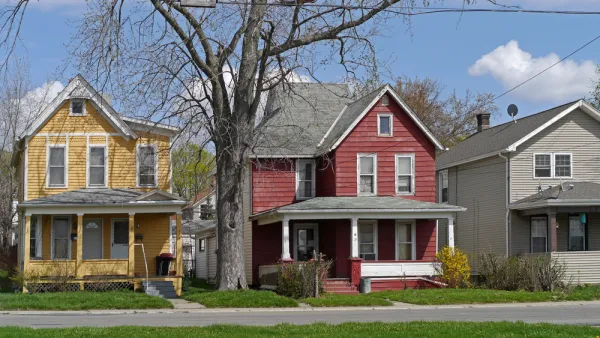
Inner Suburbs Face Identity Crisis
Places like Columbia Heights, an older suburb north of Minneapolis, lie at the focal point of conflict over development and gentrification. Can these places support a 21st-century urbanism?

Planetizen Federal Action Tracker
A weekly monitor of how Trump’s orders and actions are impacting planners and planning in America.

California plans to bury El Niño’s downpour
If the state plays its cards right, it may be able to store a billion acre-feet of El Niño’s water in aquifers.

Desperate measures: Advocates weigh draining Lake Powell to fill Colorado River
Draining the reservoir could reduce evaporation losses by a couple hundred thousand acre-feet.

Mamdani’s pied-à-terre tax survives legal challenge
A panel of judges found that the plaintiffs failed to demonstrate injury as a result of New York City's implementation of the tax.

Eastern Nebraska is running out of electricity
Data centers and electrification are straining eastern Nebraska’s grid, throttling economic development.

Seattle passes record-breaking transit services expansion
Proposition 1 will double the city’s transit tax to add 95,000 more bus trips and preserve 180,000 bus trips annually.

FREE Course: Walkable City 1: Why Walkability?
After describing his path towards focusing on walkability as the essence of good planning, Jeff Speck marches through his five principal reasons for making more walkable places.
Reinventing Malls: Planning Alchemy—Turning Gray Fields Into Gold
The course focuses on the opportunities and imperatives that shape reinvention of mall sites.

City of Rosemead
Rutgers University, Edward J. Bloustein School of Planning and Public Policy
One Hundred Miles
University of Michigan School for Environment and Sustainability (SEAS)
Hunter College, City University of New York (CUNY)
The Architects Foundation
City of Cambridge
Montrose County
The Pocatello Development Authority