Congress needs to do more than fund the status quo in its next infrastructure bill, whenever that long-promised bill becomes a reality.


Democratic leadership is negotiating with President Trump over a $2 trillion-dollar infrastructure bill, but exactly what makes it into the bill will have a tremendous impact on the environment and the country's ability to maintain its transportation resources. While those negotiations have again stalled, the eventual outcome of this bill will have a huge impact. "The country must prioritize measures that shift commuters toward transit while fixing decaying bridges and essential roadways that are a public safety risk if neglected any longer, said the authors of the U.S. PIRG Education Fund study," Aaron Short reports.
The authors of that study write that rather than focusing on expensive to build and maintain auto infrastructure, the country must spend on more cycling, transit and walking. "In the past, lawmakers didn’t worry that building an interstate highway system could lead to sprawling neighborhoods, polluted air that triggers asthma attacks, and a dependency on fossil fuels that we’ve been unable to kick for more than a half century," Short argues. Beyond active transit the author’s of the study argue for a greater focus on water infrastructure, arguing that the issue's importance is only likely to grow.
FULL STORY: There’s a Right Way to Spend Trillions on Infrastructure

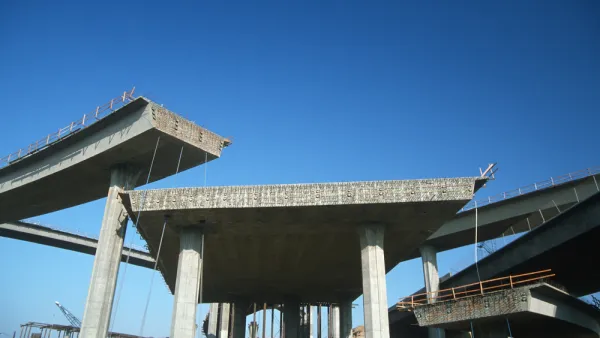
Federal Memo 'Gently' Discourages Highway Construction
The Federal Highway Administration is urging states to prioritize climate-friendly projects and put federal funds toward repairs and active transportation infrastructure.
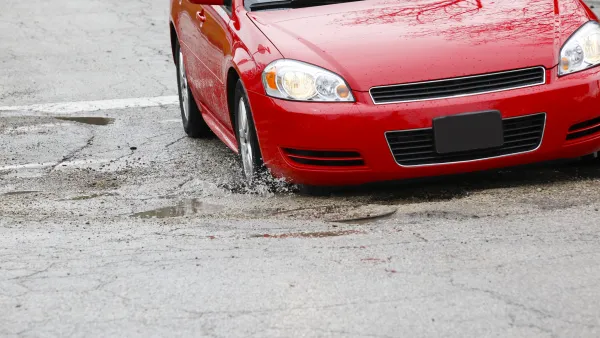
Too Much Spending on New Projects, Not Enough on Maintenance
Transportation for America’s report argues that the growing cost of maintaining highways should refocus spending away from expansion projects, toward maintenance efforts.
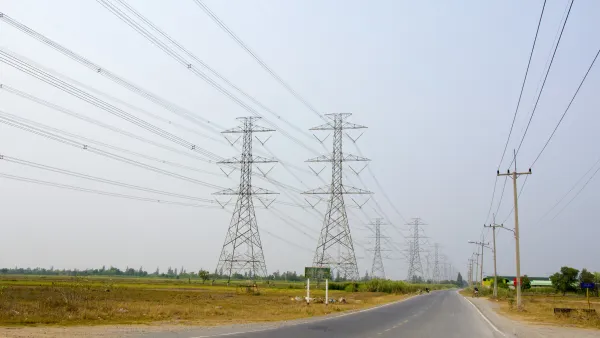
Trump to allow infrastructure along highways, railways in bid to bypass reviews
By building lines close to existing infrastructure, Trump aims to lower costs and bypass environmental oversight and opposition from local communities.

Planetizen Federal Action Tracker
A weekly monitor of how Trump’s orders and actions are impacting planners and planning in America.

The state-sanctioned urbicide of Austin
People don’t kill cities. Freeways do.

US to reduce Colorado River water deliveries to Mexico
A new Colorado Treaty amendment reduces Mexico’s Colorado River water allocation by 250,000 acre feet.

5 New England states march closer to 800 megawatt wind energy project
Securing federal approval for the project may be complicated under the Trump administration, which has historically been hostile towards domestic wind power.

Baltimore to break ground on $50 million Transit Priority Project
The project will bring faster bus trips, safer streets and better bike connections to Baltimore.

Airbnb launches $250 million 'last-dollar financing' housing accelerator, makes first investment in Austin
The company will put $6.4 million towards affordable housing development in Texas’ capital.

FREE Course: Walkable City 1: Why Walkability?
After describing his path towards focusing on walkability as the essence of good planning, Jeff Speck marches through his five principal reasons for making more walkable places.
Reinventing Malls: Planning Alchemy—Turning Gray Fields Into Gold
The course focuses on the opportunities and imperatives that shape reinvention of mall sites.


Eagle County Government
Harvard University Graduate School of Design
Nashville Planning Department
The Architects Foundation
University of Cincinnati Online
The Pocatello Development Authority
The Urban Renewal Agency of the City of Pocatello
Journal of the American Planning Association