The San Diego City Council's Land Use and Housing Commission approved a density bonus program to provide incentives for developers to build middle- and low-income housing.


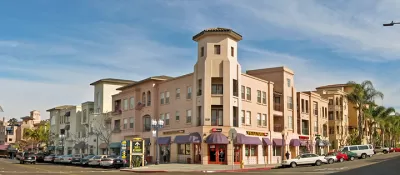
"Officials are proposing to allow developers to build 25 percent more units than a property’s zoning allows if they agree to reserve 10 percent of the units for people making 80 percent to 120 percent of the region’s median income," according to an article by David Warrick in the city of San Diego.
The density bonus program is aimed at developing more residential units affordable to middle-income workers, like nurses, teachers, and firefighters. Median housing prices in the county, $600,000 median price for a home or $1,600 average rent for a one-bedroom apartment, are largely out of reach to those members of the community.
A last minute compromise helped the ordinance win approval from the City Council's Land Use and Housing Commission. After critics of the planned raised concerns that the density bonus for middle-income housing would discourage developers from building housing affordable to lower-income residents, an extra bonus was added to provide an "additional 50 percent density bonus for including the low-income units," according to Warrick.
FULL STORY: San Diego moving forward with middle-income housing incentive


100 Percent Affordable Overlay: Next Up for Berkeley's Reform Movement
After moving forward with parking and zoning reforms, the Berkeley City Council is also considering a new Affordable Housing Overlay on a model previously adopted in Cambridge, Massachusetts.

Colorado Law Lets Schools, Other Public Agencies Build Housing Regardless of Local Zoning
The law is modeled on a similar failed measure from last year that included fewer eligible organizations.
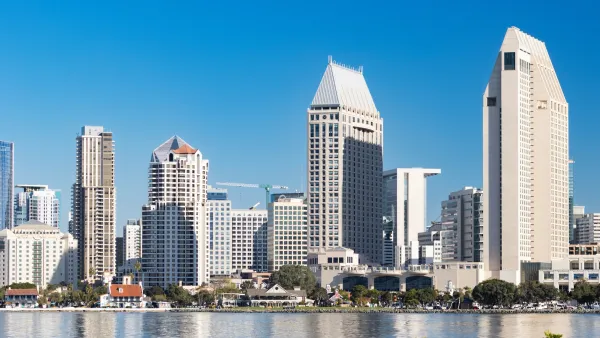
San Diego School District Plans to Build 3,000 Homes for Employees
The district wants to offer affordable housing to 10 percent of its staff by 2030.

The state-sanctioned urbicide of Austin
People don’t kill cities. Freeways do.

US to reduce Colorado River water deliveries to Mexico
A new Colorado Treaty amendment reduces Mexico’s Colorado River water allocation by 250,000 acre feet.

New Jersey’s second-largest city bans standalone data centers
Jersey City will continue to allow co-location facilities, such as those meant for research institutions that store their own data.

Amtrak not solely to blame for New Jersey commuter rail's unreliability, report finds
A new study from the Garden State Initiative found that NJ Transit’s budget grew 20% across a 4 year period, but reliability declined significantly over the same period.

EPA erases limits on planet-warming pollution from power plants
Under Monday’s plan, power plants would still have some limits on how much mercury, arsenic and other contaminants they can emit.

Phoenix announces new on-demand transit service, more frequent RAPID buses
Both new services will launch in October, and are part of Phoenix's Project Effective Access Solutions for Easing Congestion.

FREE Course: Walkable City 1: Why Walkability?
After describing his path towards focusing on walkability as the essence of good planning, Jeff Speck marches through his five principal reasons for making more walkable places.
Reinventing Malls: Planning Alchemy—Turning Gray Fields Into Gold
The course focuses on the opportunities and imperatives that shape reinvention of mall sites.

Eagle County Government
Harvard University Graduate School of Design
Nashville Planning Department
The Architects Foundation
University of Cincinnati Online
The Pocatello Development Authority
The Urban Renewal Agency of the City of Pocatello
Journal of the American Planning Association