The state of Arkansas is now the second station in the nation to completely legalize the Idaho Stop—a frequently practiced maneuver on bikes that advocates say is a key to bike safety and comfort on the streets.



"Arkansas became the second state in the nation to legalize the Idaho Stop on Monday, the biggest breakthrough yet for the iconic 35-year-old bike safety law," report Angie Schmitt.
"The Idaho Stop — named for the first state that allowed it — gives cyclists the right to treat stop signs as 'yields' and red lights as stop signs. Arkansas state lawmakers hope the new law will offer both health and business benefits," adds Schmidt.
Idaho first passed the legislation in 1982, and recorded safety benefits compared to other states ever since. Other states have passed partial versions of the law, or efforts to legalize the Idaho Stop have failed at various points in the legislative process, according to Schmitt.
Read the full story: Arkansas Passes the ‘Idaho Stop,’ Allowing Cyclists to Treat Red Lights Like Stop Signs
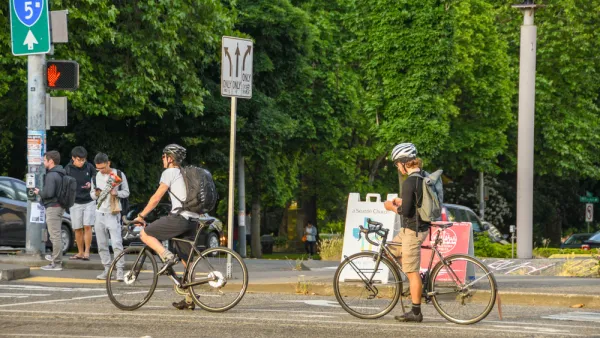
Starting Today: The Idaho Stop Is Legal in Washington State
A law passed in March allowing people on bikes to treat stop signs as yield signs when conditions permit takes effect today in Washington State.

Idaho Stop Breezes Through the Oregon Legislature
Before the Republicans in the Oregon Senate skipped town, they managed to approve a bill that legalizes the Idaho Stop for bikers around the state. The Oregon House also approved the bill this week.
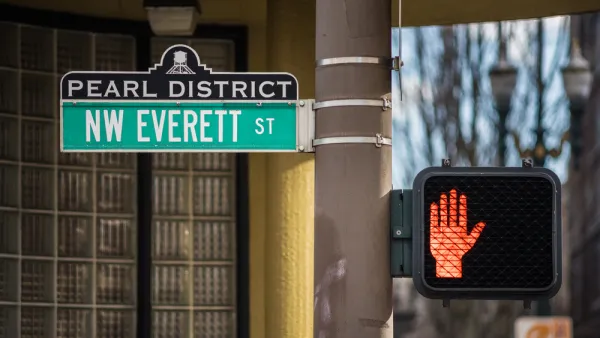
Oregon Could Be Next to Legalize the Idaho Stop
The Oregon State Legislature is moving forward with Senate Bill 998, which includes an amendment that would legalize the practice of rolling through stop signs and blinking red lights on a bike when no car traffic is present.

Planetizen Federal Action Tracker
A weekly monitor of how Trump’s orders and actions are impacting planners and planning in America.

California plans to bury El Niño’s downpour
If the state plays its cards right, it may be able to store a billion acre-feet of El Niño’s water in aquifers.

Desperate measures: Advocates weigh draining Lake Powell to fill Colorado River
Draining the reservoir could reduce evaporation losses by a couple hundred thousand acre-feet.

Chicago voters approve permanent festival grounds, penalty for vacant property owners
Currently, major summer and fall festivals take over public parks for weeks at a time, drawing criticism from nearby residents

NYC votes to cut outdoor dining red tape, speed up permitting
New York City also voted to allow the Department of Transportation to begin work on urgent projects before notifying elected officials.

California appears to reject Prop. 45
The proposition would have expanded the projects that qualify for a streamlined environmental review, effectively paring down the California Environmental Quality Act.

FREE Course: Walkable City 1: Why Walkability?
After describing his path towards focusing on walkability as the essence of good planning, Jeff Speck marches through his five principal reasons for making more walkable places.
Reinventing Malls: Planning Alchemy—Turning Gray Fields Into Gold
The course focuses on the opportunities and imperatives that shape reinvention of mall sites.

City of Rosemead
Rutgers University, Edward J. Bloustein School of Planning and Public Policy
One Hundred Miles
Hunter College, City University of New York (CUNY)
The Architects Foundation
University of Cincinnati Online
City of Cambridge
Montrose County
The Pocatello Development Authority