Big Oil companies are not all alike. Royal Dutch Shell is the first one to part ways with a major oil industry trade group over differences on climate change. It's also linking executive pay to goals to reduce the company's carbon footprint.


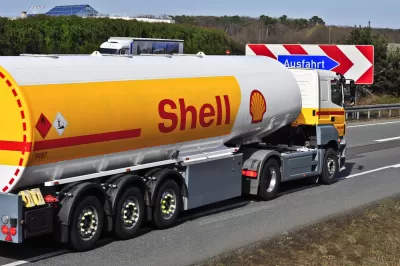
"Royal Dutch Shell Plc on Tuesday became the first major oil and gas company to announce plans to leave a leading U.S. refining lobby due to disagreement on climate policies, citing its support for the goals of the Paris climate agreement," writes Ron Bousso, energy reporter for Reuters. The British-Dutch oil and gas company, headquartered in the Netherlands and incorporated in the United Kingdom, is the largest of the six oil and gas "supermajors.
In its first review of its association with 19 key industry groups, Shell said it had found “material misalignment” over climate policy with the American Fuel & Petrochemical Manufacturers (AFPM) and would quit the body in 2020.
It is the latest sign of how investor pressure on oil companies, particularly in Europe, is leading to changes in their behavior around climate. Last year, Shell caved in to investor pressure over climate change, setting out plans to introduce industry-leading carbon emissions targets linked to executive pay.
AFPM represents 98 percent of oil refining capacity in the United States, according to DeSmog blog. As for climate change, "AFPM believes that using [the Clean Air Act] to control greenhouse gases emissions threatens our nation's economic and energy security."
"Shell has been among the most outspoken oil companies about the need to combat climate change, even as it continues its search for oil and natural gas for future production," reports Steven Mufson (in the source article), who covers "the business of climate change" for The Washington Post.
Shell said that it was at odds with [AFPM] on the Paris climate agreement, carbon pricing, fuel mandates and the reduction of methane emissions.
On fuel mandates, AFPM sued California and Oregon over their low carbon fuel standards programs. On carbon pricing, the group was one of the largest contributors to the No on Initiative 1631 campaign in Washington state last year and No on Initiative 732 in 2016.
But it is the Paris climate agreement that really stands out among all the issues that may have led to the severing of the trade association relationship.
"The need for urgent action in response to climate change has become ever more obvious since the signing of the Paris Agreement in 2015," writes Ben Van Beurden, Chief Executive Officer, at the start of the 48-page Industry Associations Climate Review [pdf].
As a result, society’s expectations in this area have changed, and Shell’s views have also evolved.">
Methane emissions is a subject where the international company's U.S. division, Shell Oil, took issue with the Trump administration's proposed rollback of Obama-era methane emissions rules.
"Breaking from a decades-old tradition of avoiding criticism of U.S. government policies, Shell’s U.S. Country Chair Gretchen Watkins called on the U.S. Environmental Protection Agency (EPA) to tighten rules to plug methane leaks, a potent greenhouse gas," reported Bousso on March 19, his Reuter's article now posted on the Royal Dutch Shell Group website.
“It is a big part of the climate problem and frankly we can do more,” Watkins said in an interview with Reuters at IHS Markit’s CERAWeek conference in Houston.
"We don’t usually tell governments how to do their job but we’re ready to break with that and say, ‘Actually, we want to tell you how to do your job.'"
Also on April 2, Shell released its 2018 Sustainability Report.
BP also concerned about climate change
"The chief economist of one of the world’s biggest oil companies is urging other companies to take climate change seriously — and sooner rather than later," reported Mufson on March 5. "If not, it might be bad for business."
That’s the warning from BP’s Spencer Dale, who made the rounds in Washington last week explaining the business case for finding a solution for the warming planet. BP has said it wants the federal government to take action, having endorsed a $40-a-ton nationwide tax.
However, when it came to the aforementioned Washington state carbon pricing initiative last November, "BPspent more than any other company to defeat [it]," calling it "poorly designed," observes Mufson.
Related in Planetizen:
-
Latest Obama-Era Regulations Targeted by the Trump Administration: Methane Rules, September 13, 2018
Hat tip to InsideClimate News.
FULL STORY: Shell quits trade group over climate-change positions

Big Oil Not Happy With Methane Regulation Rollback
The Trump administration's rollback on August 29 of an Obama-era regulation to reduce methane emissions in the production and distribution of oil and natural gas did not sit well with large oil and gas companies who see value in reducing emissions.

The Big Divide Between Big and Little Oil on the New Climate-Energy Law
President Joe Biden signed what he called “one of the most significant laws in our history” last Tuesday. The energy provisions in the law that benefit oil and gas extraction exposed different perspectives within the industry on the law.
Who's Advocating Rolling Back Fuel Economy Standards?
Conventional thinking is that the auto industry, wanting to sell more fuel-gulping SUVs, are pushing for weaker fuel economy standards, but Hiroko Tabuchi, climate reporter for The New York Times, exposes Big Oil's stealth campaign.

The state-sanctioned urbicide of Austin
People don’t kill cities. Freeways do.

US to reduce Colorado River water deliveries to Mexico
A new Colorado Treaty amendment reduces Mexico’s Colorado River water allocation by 250,000 acre feet.

New Jersey’s second-largest city bans standalone data centers
Jersey City will continue to allow co-location facilities, such as those meant for research institutions that store their own data.

Amtrak not solely to blame for New Jersey commuter rail's unreliability, report finds
A new study from the Garden State Initiative found that NJ Transit’s budget grew 20% across a 4 year period, but reliability declined significantly over the same period.

EPA erases limits on planet-warming pollution from power plants
Under Monday’s plan, power plants would still have some limits on how much mercury, arsenic and other contaminants they can emit.

Phoenix announces new on-demand transit service, more frequent RAPID buses
Both new services will launch in October, and are part of Phoenix's Project Effective Access Solutions for Easing Congestion.

FREE Course: Walkable City 1: Why Walkability?
After describing his path towards focusing on walkability as the essence of good planning, Jeff Speck marches through his five principal reasons for making more walkable places.
Reinventing Malls: Planning Alchemy—Turning Gray Fields Into Gold
The course focuses on the opportunities and imperatives that shape reinvention of mall sites.

Eagle County Government
Harvard University Graduate School of Design
Nashville Planning Department
The Architects Foundation
University of Cincinnati Online
The Pocatello Development Authority
The Urban Renewal Agency of the City of Pocatello
Journal of the American Planning Association