The bonds finance new green infrastructure projects that otherwise would be considered too risky.


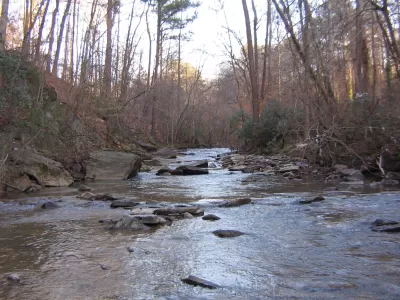
Atlanta wants to clean up the Proctor Creek watershed, and it has released a $14 million environmental impact bond for a series of green infrastructure projects, writes Jared Brey:
Environmental impact bonds (EIBs), like social impact bonds, are a type of financing that provides different levels of return for investors based on how well the projects funded by the bond perform. If a green infrastructure intervention is more effective than expected, investors get a greater return; if less successful, the return is lower.
EIBs are useful financing mechanisms for projects that are innovative but also considered risky and that might be harder to fund through a traditional bond. The Atlanta EIB will fund six projects, including installation of stormwater planters, creek and habitat restoration, and development of bioretention and wetland areas.
The firm Quantified Ventures helped Atlanta with the EIB, and it also worked with DC Water on the country’s first EIB, launched in 2016. Brey reports that investors in Atlanta include both firms committed to the environmental outcomes and larger, more traditional investment firms.
FULL STORY: Atlanta Issues Environmental Impact Bond for Green Infrastructure

Environmental Impact Bonds Change the Funding Game for Green Infrastructure
The Rockefeller Foundations EIB Challenge is putting a spotlight on an innovative new funding mechanism.
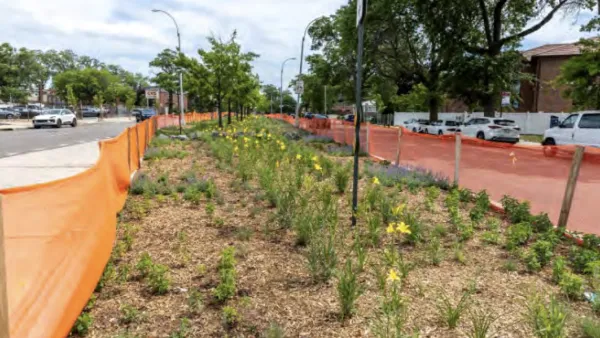
New NYC ‘sponge’ medians will absorb 5 million gallons of stormwater per year
The project will turn three medians in Queens into green infrastructure designed to absorb stormwater.

Atlanta Beltline’s free automated shuttle expands service
A $1.75 million grant funded the autonomous shuttle service’s growth.

Planetizen Federal Action Tracker
A weekly monitor of how Trump’s orders and actions are impacting planners and planning in America.

The state-sanctioned urbicide of Austin
People don’t kill cities. Freeways do.

US to reduce Colorado River water deliveries to Mexico
A new Colorado Treaty amendment reduces Mexico’s Colorado River water allocation by 250,000 acre feet.

Mamdani overhauls NYC's Vision Zero plan with 100 new policy goals
The overhaul aims to reduce traffic deaths and make streets safer for pedestrians, cyclists and drivers through lower speed limits, new safety infrastructure and more.

Amtrak not solely to blame for New Jersey commuter rail's unreliability, report finds
A new study from the Garden State Initiative found that NJ Transit’s budget grew 20% across a 4 year period, but reliability declined significantly over the same period.

EPA erases limits on planet-warming pollution from power plants
Under Monday’s plan, power plants would still have some limits on how much mercury, arsenic and other contaminants they can emit.

FREE Course: Walkable City 1: Why Walkability?
After describing his path towards focusing on walkability as the essence of good planning, Jeff Speck marches through his five principal reasons for making more walkable places.
Reinventing Malls: Planning Alchemy—Turning Gray Fields Into Gold
The course focuses on the opportunities and imperatives that shape reinvention of mall sites.


Eagle County Government
Harvard University Graduate School of Design
Nashville Planning Department
The Architects Foundation
University of Cincinnati Online
The Pocatello Development Authority
The Urban Renewal Agency of the City of Pocatello
Journal of the American Planning Association