Research shows racial disparities in exposure to air pollution as well as consumption of the goods and services that cause it.


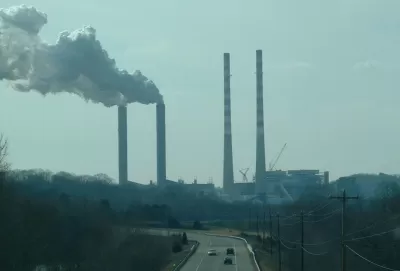
A new study in the journal PNAS looks at the relationship between production and exposure of pollution by considering people’s consumption of goods and services, reports Jonathan Lambert:
After accounting for population size differences, whites experience about 17 percent less air pollution than they produce, through consumption, while blacks and Hispanics bear 56 and 63 percent more air pollution, respectively, than they cause by their consumption, according to the study.
The researchers had to link data about where pollution is located, where and how it is produced, what products and services are related to those emissions, and who consumes those things. "To do that, the researchers actually worked backwards, following consumer spending to different sectors of the economy, and then ultimately to the main emitters of air pollution," says Lambert.
The findings show that the inequalities stem from levels of consumption and not types of consumption, according to researcher Christopher Tessum. "He suggests continuing to strive to make economic activity and consumption less polluting could be a way to manage and lessen the inequities," notes Lambert.
FULL STORY: Study Finds Racial Gap Between Who Causes Air Pollution And Who Breathes It

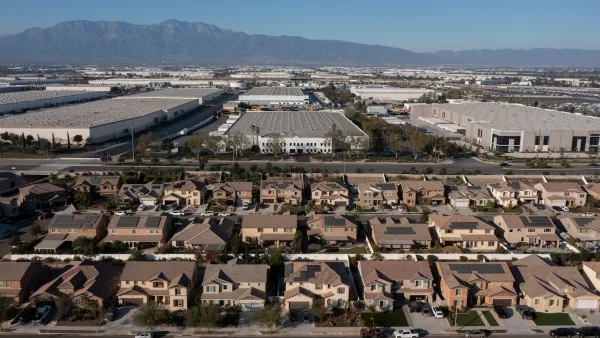
New California Law Regulates Warehouse Pollution
A new law tightens building and emissions regulations for large distribution warehouses to mitigate air pollution and traffic in surrounding communities.
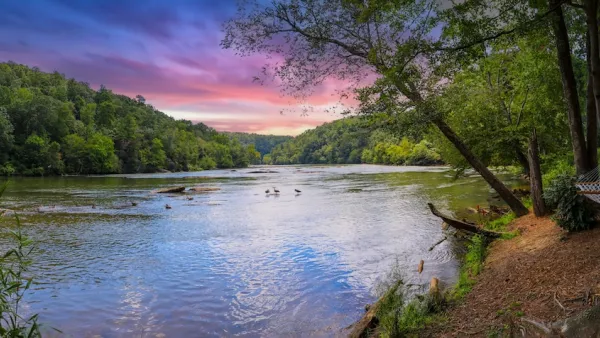
Comment: EPA Cuts will Send Atlanta Back to Eye-burning Ozone, Lung-damaging Smog, and Raw Sewage in the Chattahoochee River
A veteran political journalist takes stock of the hard-earned ground Georgia stands to lose with slashed environmental protection.
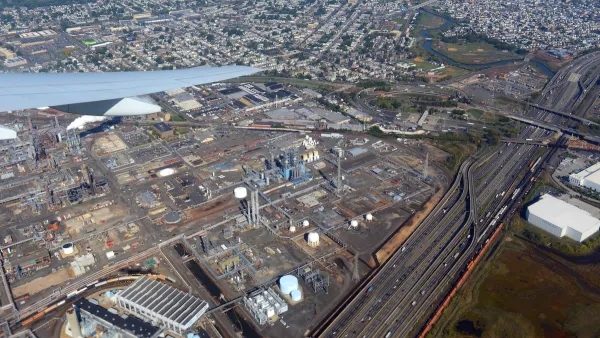
New Jersey to Consider Charging Fossil Fuel Companies for Pollution
A proposed law would make companies liable for damages caused by burning fossil fuels.

Planetizen Federal Action Tracker
A weekly monitor of how Trump’s orders and actions are impacting planners and planning in America.

The state-sanctioned urbicide of Austin
People don’t kill cities. Freeways do.

US to reduce Colorado River water deliveries to Mexico
A new Colorado Treaty amendment reduces Mexico’s Colorado River water allocation by 250,000 acre feet.

Mamdani overhauls NYC's Vision Zero plan with 100 new policy goals
The overhaul aims to reduce traffic deaths and make streets safer for pedestrians, cyclists and drivers through lower speed limits, new safety infrastructure and more.

Amtrak not solely to blame for New Jersey commuter rail's unreliability, report finds
A new study from the Garden State Initiative found that NJ Transit’s budget grew 20% across a 4 year period, but reliability declined significantly over the same period.

EPA erases limits on planet-warming pollution from power plants
Under Monday’s plan, power plants would still have some limits on how much mercury, arsenic and other contaminants they can emit.

FREE Course: Walkable City 1: Why Walkability?
After describing his path towards focusing on walkability as the essence of good planning, Jeff Speck marches through his five principal reasons for making more walkable places.
Reinventing Malls: Planning Alchemy—Turning Gray Fields Into Gold
The course focuses on the opportunities and imperatives that shape reinvention of mall sites.


Eagle County Government
Harvard University Graduate School of Design
Nashville Planning Department
The Architects Foundation
University of Cincinnati Online
The Pocatello Development Authority
The Urban Renewal Agency of the City of Pocatello
Journal of the American Planning Association