A plan to literally change the shape of Manhattan.


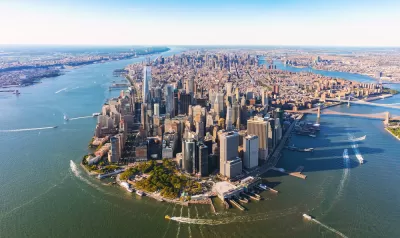
An article written by New York City Mayor Bill de Blasio in the pages of New York Magazine lays out an ambitious new plan to prepare for sea level rise by extending the shoreline of Manhattan.
To address one of the biggest gaps in the city's climate change defenses, according to Mayor de Blasio, "We’re going to protect Lower Manhattan, which includes the Financial District, home to a half-million jobs, 90,000 residents, and the nexus of almost all our subway lines."
More specifically: "South Street Seaport and the Financial District, along the eastern edge of Lower Manhattan, sit so close to sea level — just eight feet above the waterline — and are so crowded with utilities, sewers, and subway lines that we can’t build flood protection on the land. So we’ll have to build more land itself."
Manhattan could eventually be as much as 500 feet longer at its southern end if that plan is implemented.
In addition to describing the plan in more detail, Mayor de Blasio also makes an appeal for federal support in funding the project. "I don’t expect deniers like President Trump to come to the table on this," writes the mayor. "The coalescing agenda represented by the Green New Deal is our best shot."
Additional analysis of Mayor de Blasio's pitch is available from an article by Jonathan Hilburg and another by Annie McDonough.
FULL STORY: My New Plan to Climate-Proof Lower Manhattan

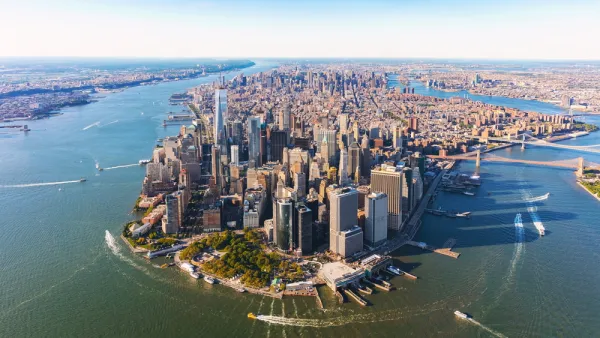
Opinion: One Solution to Manhattan's Land Shortage: Just Build It
A New York Times op-ed calls on the city to add landfill development on Manhattan's southern shoreline, claiming it would increase affordability and protect the city from rising sea levels.
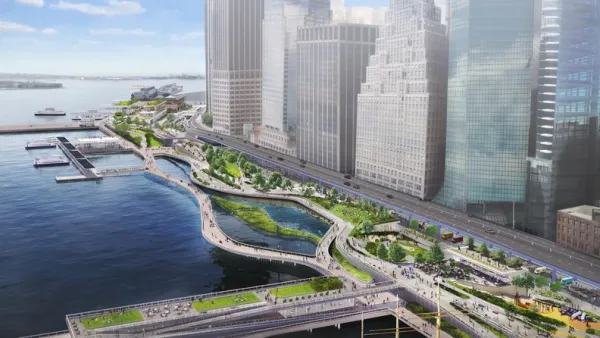
Lower Manhattan Climate Resilience Plan Released
The Financial District and Seaport Climate Resilience Master Plan will extend the shoreline in Lower Manhattan by up to 200 feet.
Another Major Climate Win for Big Oil in Federal Court
A New York federal district court rules on a climate change lawsuit like its West Coast counterpart did last month: Don't hold oil companies accountable for climate change and sea level rise. Baltimore and Rhode Island file climate change lawsuits.

The state-sanctioned urbicide of Austin
People don’t kill cities. Freeways do.

US to reduce Colorado River water deliveries to Mexico
A new Colorado Treaty amendment reduces Mexico’s Colorado River water allocation by 250,000 acre feet.

New Jersey’s second-largest city bans standalone data centers
Jersey City will continue to allow co-location facilities, such as those meant for research institutions that store their own data.

Amtrak not solely to blame for New Jersey commuter rail's unreliability, report finds
A new study from the Garden State Initiative found that NJ Transit’s budget grew 20% across a 4 year period, but reliability declined significantly over the same period.

EPA erases limits on planet-warming pollution from power plants
Under Monday’s plan, power plants would still have some limits on how much mercury, arsenic and other contaminants they can emit.

Phoenix announces new on-demand transit service, more frequent RAPID buses
Both new services will launch in October, and are part of Phoenix's Project Effective Access Solutions for Easing Congestion.

FREE Course: Walkable City 1: Why Walkability?
After describing his path towards focusing on walkability as the essence of good planning, Jeff Speck marches through his five principal reasons for making more walkable places.
Reinventing Malls: Planning Alchemy—Turning Gray Fields Into Gold
The course focuses on the opportunities and imperatives that shape reinvention of mall sites.

Eagle County Government
Harvard University Graduate School of Design
Nashville Planning Department
The Architects Foundation
University of Cincinnati Online
The Pocatello Development Authority
The Urban Renewal Agency of the City of Pocatello
Journal of the American Planning Association