Measure HHH promised to build 10,000 new units of homeless housing units in the city of Los Angeles. Two years later, not a single unit has been added.


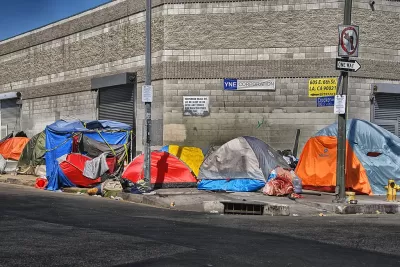
Jason McGahan audits Measure HHH, a $1.2 billion bond measure approved by city of Los Angeles voters in 2017.
"Ultimately more than 77 percent of voters in Los Angeles, a city that in 2016 had more than 21,000 people sleeping at night on its streets, voted to tax themselves to build supportive housing for the chronically homeless, affordable housing for extremely low-income tenants, and provide temporary shelter and services to the destitute," according to McGahan.
Two years later, progress has been slow, despite the promises of the city's elected officials. McGahan reveals details: "A Los Angeles magazine analysis found that the first 25 projects funded by HHH have been delayed by an average of 203 days past their estimated start date: the shortest holdup was 28 days; the longest, 424."
Those delays put Measure HHH's goals to deliver 10,000 units of homeless housing in "serious jeopardy," according to McGahan. "Not a single HHH unit was completed by the end of 2018" and "no more than 239 of the affordable units are expected to be completed by the end of this year."
FULL STORY: Will a Measure to Help L.A.’s Homeless Become a Historic Public Housing Debacle?

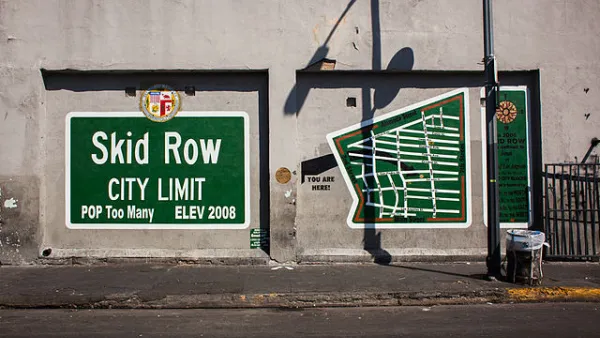
Temporary Trailers Will House Homeless in Downtown L.A.
If approved, a City Council motion would mark a shift in how Los Angeles deals with a rising number of homeless residents.
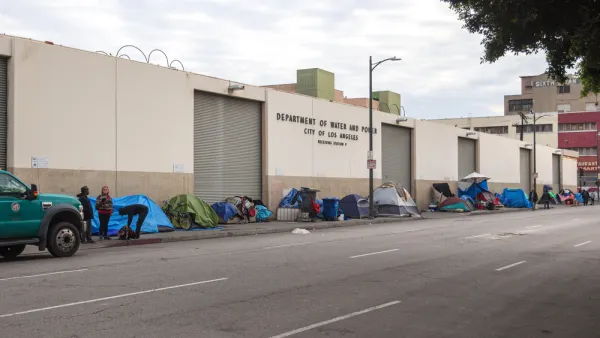
Los Angeles Could Streamline Temporary Shelters, Permanent Supportive Housing
Los Angeles is exploring multiple angles for sheltering the 34,000 homeless living in the city. Urbanize LA takes a look at two of the city's most recent legislative efforts to develop more supportive housing.

Did L.A.’s Supportive Housing Bond Fail?
Six years after Prop HHH was passed, the fund appears to be delivering on its housing construction goals in the 10-year timeline. But the measure is being routinely criticized on all sides.

Planetizen Federal Action Tracker
A weekly monitor of how Trump’s orders and actions are impacting planners and planning in America.

The state-sanctioned urbicide of Austin
People don’t kill cities. Freeways do.

US to reduce Colorado River water deliveries to Mexico
A new Colorado Treaty amendment reduces Mexico’s Colorado River water allocation by 250,000 acre feet.

Mamdani overhauls NYC's Vision Zero plan with 100 new policy goals
The overhaul aims to reduce traffic deaths and make streets safer for pedestrians, cyclists and drivers through lower speed limits, new safety infrastructure and more.

Amtrak not solely to blame for New Jersey commuter rail's unreliability, report finds
A new study from the Garden State Initiative found that NJ Transit’s budget grew 20% across a 4 year period, but reliability declined significantly over the same period.

EPA erases limits on planet-warming pollution from power plants
Under Monday’s plan, power plants would still have some limits on how much mercury, arsenic and other contaminants they can emit.

FREE Course: Walkable City 1: Why Walkability?
After describing his path towards focusing on walkability as the essence of good planning, Jeff Speck marches through his five principal reasons for making more walkable places.
Reinventing Malls: Planning Alchemy—Turning Gray Fields Into Gold
The course focuses on the opportunities and imperatives that shape reinvention of mall sites.


Eagle County Government
Harvard University Graduate School of Design
Nashville Planning Department
The Architects Foundation
University of Cincinnati Online
The Pocatello Development Authority
The Urban Renewal Agency of the City of Pocatello
Journal of the American Planning Association