Transit oriented development doesn’t have to mean evictions and demolitions for existing renters, but often it does.


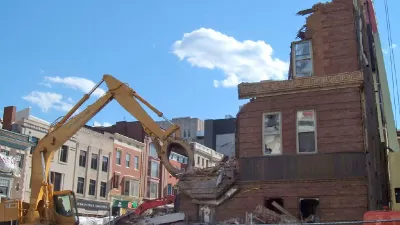
New condominium developments in Vancouver are forcing unnecessary displacement, Christopher Cheung argues in a piece for Tyee. He contends that there is room in the city for more density and new condos, if developers are encouraged to target less dense areas. "Data analyst Jens von Bergmann and transportation planner Denis Agar created visualizations of census data and found that many residential areas already served by frequent transit could handle more density with less displacement," Cheung reports.
Dense areas in Vancouver have been sites of more affordable communities, "But when the market tipped into favouring condos, Shakel was demovicted. The newcomers who bought in the condo building that replaced her home included company presidents and business managers," Cheung writes. If instead of targeting rental properties, developers looked to build up owner occupied housing, they would be dealing on more even footing with a community less vulnerable to displacement.
FULL STORY: It’s Possible to Develop New Housing Without Displacing Tons of Renters. Why Don’t We?

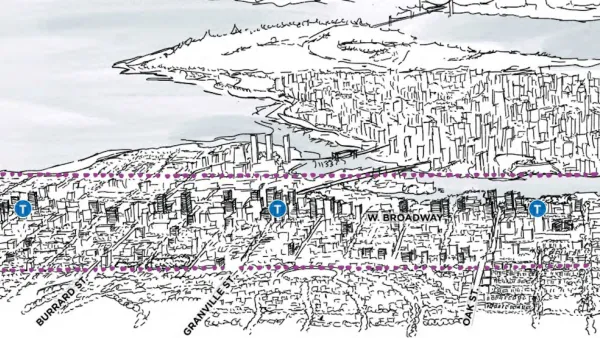
Vancouver’s Controversial Broadway Plan Approved With Amendments
A plan to add new significant amounts of housing, shifting development south into a “second downtown” around the future SkyTrain Millennium Line Broadway Extension, has been approved in Vancouver.
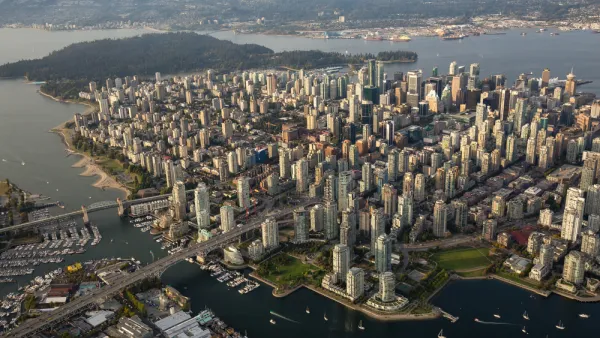
Vancouver Set To Finalize Broadway Rezoning Plan
A plan to increase density along the city's 'Second Downtown' promises to bring badly needed housing to the corridor as the Broadway subway line nears completion.
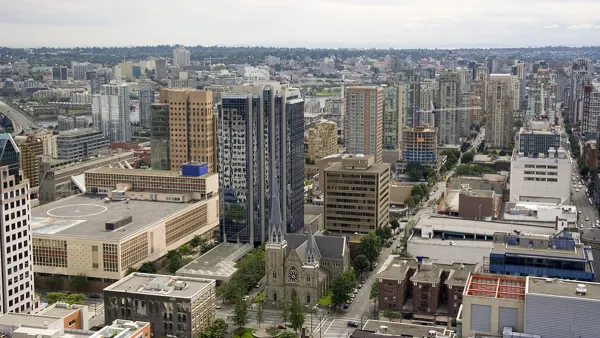
Vancouver Considers Easing Rezoning for Social Housing
The proposal would let non-profits build housing developments of up to six stories without a public rezoning process in mid-rise neighborhoods.

The state-sanctioned urbicide of Austin
People don’t kill cities. Freeways do.

US to reduce Colorado River water deliveries to Mexico
A new Colorado Treaty amendment reduces Mexico’s Colorado River water allocation by 250,000 acre feet.

New Jersey’s second-largest city bans standalone data centers
Jersey City will continue to allow co-location facilities, such as those meant for research institutions that store their own data.

Amtrak not solely to blame for New Jersey commuter rail's unreliability, report finds
A new study from the Garden State Initiative found that NJ Transit’s budget grew 20% across a 4 year period, but reliability declined significantly over the same period.

EPA erases limits on planet-warming pollution from power plants
Under Monday’s plan, power plants would still have some limits on how much mercury, arsenic and other contaminants they can emit.

Phoenix announces new on-demand transit service, more frequent RAPID buses
Both new services will launch in October, and are part of Phoenix's Project Effective Access Solutions for Easing Congestion.

FREE Course: Walkable City 1: Why Walkability?
After describing his path towards focusing on walkability as the essence of good planning, Jeff Speck marches through his five principal reasons for making more walkable places.
Reinventing Malls: Planning Alchemy—Turning Gray Fields Into Gold
The course focuses on the opportunities and imperatives that shape reinvention of mall sites.

Eagle County Government
Harvard University Graduate School of Design
Nashville Planning Department
The Architects Foundation
University of Cincinnati Online
The Pocatello Development Authority
The Urban Renewal Agency of the City of Pocatello
Journal of the American Planning Association