U.S. sales of plug-in electric vehicles, including those with internal combustion engines, increased by 81 percent in 2018 over 2017. But if you remove the best-selling Tesla Model 3 from the mix, the increase drops to 11 percent.


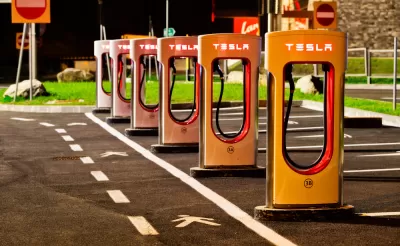
"The 2018 numbers are in, and total U.S. EV sales came in at 361,307 for the year — up 81 percent over 2017 — according to the tracking website Inside EVs," reports Julia Pyper for Greentech Media (GTM) on Jan. 7. The number is expected to be less than 2 percent of total auto sales, but higher than one percent, where it has hovered for the prior two years.
Last year’s strong sales performance really came down to one thing: Tesla. The Silicon Valley automaker sold 139,782 units of the Model 3 in 2018, according to Inside EVs. Including the Model S and the Model X, Tesla was responsible for more than 50 percent of total plug-in vehicle sales last year.
Taking the Model 3 out of the mix, U.S. EV sales increased by only 11 percent last year, a poor showing by most standards.
Pyper talks with analysts who feel optimistic that other manufacturers will offer new models that are competitive with Tesla, which is important as some analysts forecast Tesla's sales to decline
“I don’t think 2019 is going to be all about the Model 3," said Chris Nelder, manager of Rocky Mountain Institute’s mobility practice. "There are a lot more manufacturers making a lot more EVs.”
There are several new mass-market EVs available with over 200 miles of electric range, such as the Kia Soul and Kia Niro. At the same time, brands such as Mercedes, BMW, Porsche, Jaguar and Audi are launching headline-grabbing high-performance electric cars — and putting real pressure on Tesla for the first time.
However, judging by the few electric vehicle models on display at the North American International Auto Show in Detroit on Sunday, and the great number of gas-powered SUVs, Associated Press auto writer Tom Krisher sees little reason to think that 2019 will be the year of the electric vehicle.
In addition, with General Motors' announcement last November that it will closing many of its car manufacturing plants and shift production toward their better-selling light truck lineup, the sixth best-selling EV in the U.S., the Chevy Volt, will cease production. The Chevy Bolt was #7 last year, according to Inside EVs.
Federal EV credit decreases
While the Trump administration has threatened to eliminate federal tax credits for all-electric and plug-in hybrid vehicles, as much as $7,500 per vehicle, and Senator John Barrasso, a Republican from Wyoming, introduced a bill on Oct. 6, 2018 to end the program and tax them instead, the credits will phase-out by design when manufacturers sell 200,000 plug-in models, as Tesla did last summer and General Motors last month.
As the federal subsidy decreases, what will be the impact on EV sales?
AP's Krisher reported earlier that Tesla dropped the price on its models by $2,000, in part because the federal credit dropped by 50 percent to $3,750 on Jan. 1, and will gradually end this year. The other reason: demand appears to be decreasing.
"They have for a long time had more demand than supply," said Michael Ramsey, research director at analysis firm Gartner. "It's becoming apparent that that dynamic is changing."
EV sales underperform in U.S.
Even with the spectacular sales of the Model 3, making it the best-selling luxury car and the fifth best-selling car in the U.S. last year, EV sales in the U.S. lag behind other nations.
"U.S. EV sales to date have been underwhelming," adds GTM's Pyper.
While launching an entirely new class of vehicles is no easy feat, China has seen adoption levels surge, while European countries lead on a per-capita basis.
The U.S. EV sector has seen incremental growth over the past several years, but it has yet to reach an inflection point. And sales actually saw a dip in 2015.
Future California sales
According to a new report from the Institute of Transportation Studies at the University of California at Davis, an upcoming zero-emissions fee could have a chilling effect on EV sales. The $100 annual "road improvement fee" in the Road Repair and Accountability Act of 2017 won't take effect until January 2020, but researcher Alan Jenn indicates it could damper sales by as much as 20 percent.
The report to the California legislature recommends the flat, annual fee be replaced with an vehicle-miles traveled fee applicable only to zero-emission vehicles.
Related in Planetizen:
- Electric Vehicle Incentives: A Tale of Two Countries: U.S. & Norway, December 30, 2018
Hat tip to Ed Mainland.
FULL STORY: US Electric Vehicle Sales Increased by 81% in 2018


U.S. Risks Becoming Backwater for Electric Vehicle Sales
Auto analyst John Voelcker discusses the electric vehicle market in the U.S. on NPR. Ominous clouds belie the excellent sales figures for last year, and policies pushed by Trump only ensure that motor vehicles will continue to gulp more gasoline.
Electric Vehicles See Progress at Local Level but Setbacks in Washington
The new IPCC report calls for decarbonization of transportation. While many cities are attempting to do their part, two recent federal developments in trade policy and tax legislation threaten to will make progress more difficult.
Electric Vehicle Sales Would Take a Hit With GOP's Tax Cut
The House GOP tax plan, which Trump wanted to name the "Cut, Cut, Cut" bill, was intended to cut taxes, but it's also cutting credits, like the federal $7,500 electric vehicle tax credit. How much would its elimination affect EV sales?

Planetizen Federal Action Tracker
A weekly monitor of how Trump’s orders and actions are impacting planners and planning in America.

The state-sanctioned urbicide of Austin
People don’t kill cities. Freeways do.

US to reduce Colorado River water deliveries to Mexico
A new Colorado Treaty amendment reduces Mexico’s Colorado River water allocation by 250,000 acre feet.

5 New England states march closer to 800 megawatt wind energy project
Securing federal approval for the project may be complicated under the Trump administration, which has historically been hostile towards domestic wind power.

Baltimore to break ground on $50 million Transit Priority Project
The project will bring faster bus trips, safer streets and better bike connections to Baltimore.

Airbnb launches $250 million 'last-dollar financing' housing accelerator, makes first investment in Austin
The company will put $6.4 million towards affordable housing development in Texas’ capital.

FREE Course: Walkable City 1: Why Walkability?
After describing his path towards focusing on walkability as the essence of good planning, Jeff Speck marches through his five principal reasons for making more walkable places.
Reinventing Malls: Planning Alchemy—Turning Gray Fields Into Gold
The course focuses on the opportunities and imperatives that shape reinvention of mall sites.

Eagle County Government
Harvard University Graduate School of Design
Nashville Planning Department
The Architects Foundation
University of Cincinnati Online
The Pocatello Development Authority
The Urban Renewal Agency of the City of Pocatello
Journal of the American Planning Association