Cities spend a lot of time and energy pointing to examples of what they don’t want to become.


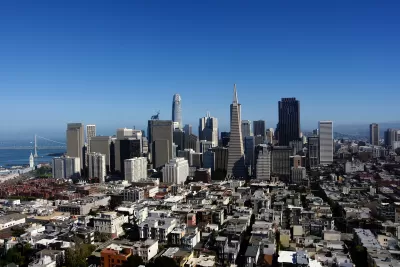
Perceptions of cities often represent for people what they fear might be coming to their own cities, such as rising housing costs, sprawl, congestion, and poverty, writes Emily Badger:
Our deepest anxieties about the future of where we live are embodied in other cities — in Portlandification, Brooklynification, Manhattanization. The comparison is seldom a compliment. You don’t want to become Manhattan (too dense), Portland (too twee), Boston (too expensive), Seattle (too tech-y), Houston (too sprawling), Los Angeles (too congested), Las Vegas (too speculative), Chicago (too indebted).
Many of these cities are doing well by certain standards: job growth, high household incomes, and low unemployment. "But San Francisco-ization and the other -izations don’t refer to the process of acquiring any of these good things. Rather, those terms capture the deepening suspicion of many communities that the costs of urban prosperity outweigh the benefits," notes Badger.
She also points out that there is not a single path to what is seen as an urban disaster. Manhattan, for example, is unaffordable because it built to cater to the wealthy. San Francisco, however, did not build enough, and housing costs skyrocketed as a result.
Badger wonders whether there are examples of cities that have successfully fostered the good outcomes and prevented the bad ones. "We could use a word for the condition of becoming such a place. Maybe Minneapolisization?"
FULL STORY: Happy New Year! May Your City Never Become San Francisco, New York or Seattle

Infrastructure vs. Housing
Do shortages of infrastructure justify restrictive zoning?
Recent Parking Reform: Start of a Wave of Change?
The range of cities that have recently removed parking mandates could help motivate others that are eyeing new parking policies.
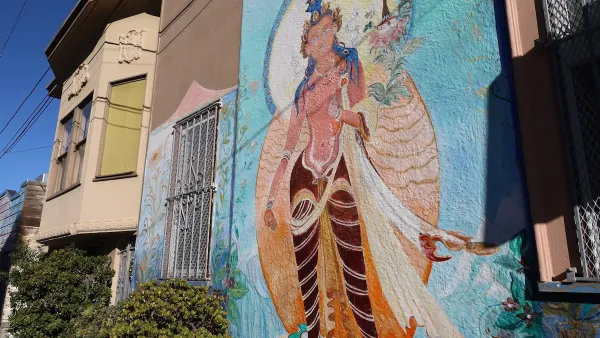
How a San Francisco Land Trust is Preserving Affordable Housing for Artists
The Artist Space Trust has received $10 million in properties bequeathed by artists that will become permanently affordable housing.

Planetizen Federal Action Tracker
A weekly monitor of how Trump’s orders and actions are impacting planners and planning in America.

The state-sanctioned urbicide of Austin
People don’t kill cities. Freeways do.

US to reduce Colorado River water deliveries to Mexico
A new Colorado Treaty amendment reduces Mexico’s Colorado River water allocation by 250,000 acre feet.

Mamdani overhauls NYC's Vision Zero plan with 100 new policy goals
The overhaul aims to reduce traffic deaths and make streets safer for pedestrians, cyclists and drivers through lower speed limits, new safety infrastructure and more.

Amtrak not solely to blame for New Jersey commuter rail's unreliability, report finds
A new study from the Garden State Initiative found that NJ Transit’s budget grew 20% across a 4 year period, but reliability declined significantly over the same period.

EPA erases limits on planet-warming pollution from power plants
Under Monday’s plan, power plants would still have some limits on how much mercury, arsenic and other contaminants they can emit.

FREE Course: Walkable City 1: Why Walkability?
After describing his path towards focusing on walkability as the essence of good planning, Jeff Speck marches through his five principal reasons for making more walkable places.
Reinventing Malls: Planning Alchemy—Turning Gray Fields Into Gold
The course focuses on the opportunities and imperatives that shape reinvention of mall sites.

Eagle County Government
Harvard University Graduate School of Design
Nashville Planning Department
The Architects Foundation
University of Cincinnati Online
The Pocatello Development Authority
The Urban Renewal Agency of the City of Pocatello
Journal of the American Planning Association