Seattle and Bellevue are raising their standards for earthquake preparedness after a study of the Cascadia Fault showed the city was at greater risk than previously thought.



New research the University of Washington’s M9 Project shows previous estimates of the type of seismic activity possible in the area understated the risk. Now, Seattle buildings over 240 feet tall will face tougher seismic standards in the future, but some worry about the buildings already standing. "Researchers found the sedimentary basin under the city can amplify the type of ground motion that’s hardest on high-rises by a factor of two to five — much more than previous estimates," Sandi Doughton reports for the Seattle Times.
Some suggest retrofitting older buildings that may be particularly vulnerable. "Even before the new shaking estimates, older high-rises were known to have a greater risk of serious damage and collapse than buildings that meet modern seismic codes," Doughton writes. Some older construction would have used welds that can fracture. "The city also does not require retrofits for old brick buildings, a seismic menace California tackled decades ago," Doughton reports.
Part of the issue with earthquakes near the city comes from the sediment basin underneath the city of Seattle. The basin can amplify and prolong shaking much longer than other environments would. Still, scientists point out that even though they can study the issue, it’s impossible to know how exactly an earthquake would effect the area, because there hasn’t been an earthquake along the Cascadia Subduction Zone for more than 300 years and there’s no way to be certain all the possible effects.
FULL STORY: What if the megaquake happens when you’re in a Seattle high-rise? New study predicts stronger shaking

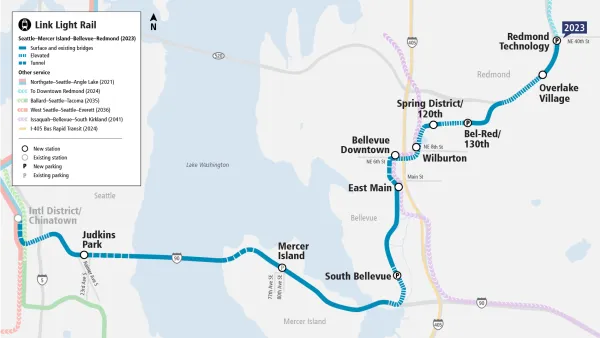
Sooner Rather Than Later: Support Builds for Eastside-Only Light Rail in Seattle
The Eastside Link light rail route, now known as Line 2, is delayed. A Sound Transit board officials is suggesting that some of the route can open soon, while the rest of the route is prepped to open later.
East Link Light Rail Plans Provoke Controversy in Seattle Suburb
A proposal to link local and regional buses with the East Link light rail expansion in Mercer Island, already under construction, threatens to boil over into the courtroom.
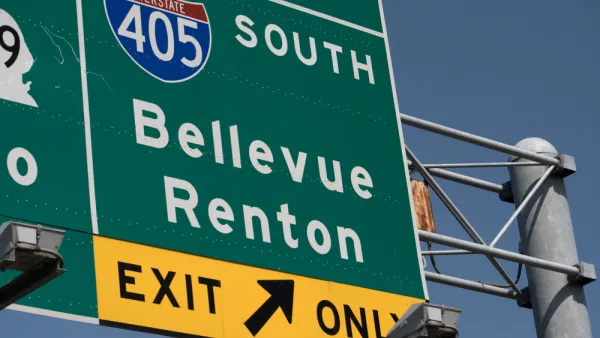
Sound Transit's Stride BRT to Bring Additional Time Savings
An expansion of Interstate 405 in the Seattle region will include bus rapid transit stations that will allow vehicles to travel even faster along the new transit corridor.

The state-sanctioned urbicide of Austin
People don’t kill cities. Freeways do.

US to reduce Colorado River water deliveries to Mexico
A new Colorado Treaty amendment reduces Mexico’s Colorado River water allocation by 250,000 acre feet.

New Jersey’s second-largest city bans standalone data centers
Jersey City will continue to allow co-location facilities, such as those meant for research institutions that store their own data.

Amtrak not solely to blame for New Jersey commuter rail's unreliability, report finds
A new study from the Garden State Initiative found that NJ Transit’s budget grew 20% across a 4 year period, but reliability declined significantly over the same period.

EPA erases limits on planet-warming pollution from power plants
Under Monday’s plan, power plants would still have some limits on how much mercury, arsenic and other contaminants they can emit.

Phoenix announces new on-demand transit service, more frequent RAPID buses
Both new services will launch in October, and are part of Phoenix's Project Effective Access Solutions for Easing Congestion.

FREE Course: Walkable City 1: Why Walkability?
After describing his path towards focusing on walkability as the essence of good planning, Jeff Speck marches through his five principal reasons for making more walkable places.
Reinventing Malls: Planning Alchemy—Turning Gray Fields Into Gold
The course focuses on the opportunities and imperatives that shape reinvention of mall sites.

Eagle County Government
Harvard University Graduate School of Design
Nashville Planning Department
The Architects Foundation
University of Cincinnati Online
The Pocatello Development Authority
The Urban Renewal Agency of the City of Pocatello
Journal of the American Planning Association