A new federal report finds a few reasons for optimism in a nationwide homeless count, but the numbers of homeless in the United States have grown for the second year in a row.


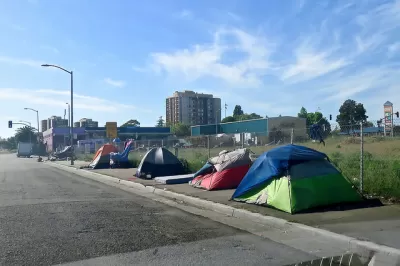
The U.S. Department of Housing and Urban Development (HUD) released its "2018 Annual Homeless Assessment Report (AHAR) to Congress" [pdf] report last week.
"Despite the booming economy, homelessness in the United States rose slightly for the second year in a row, with spikes in high-rent cities like New York and Seattle," reports Glenn Thrush of the report's findings.
"Over all, the national rate of homelessness rose by a modest 0.3 percent to 552,830 people without stable living conditions, the report found. But that represented the second annual increase after seven straight years of declines — the result, in part, of rapidly increasing housing costs that have only recently shown signs of leveling off," adds Thrush. Thrush's coverage, for the New York Times, focused on the bleak, and worsening, homelessness situation in the country.
The report inspired public relations work from HUD and additional media coverage, which are revealing for their differences.
The Associated Press reported from Los Angeles, which achieved a slight decrease in its homeless numbers, which city officials credited to the success of new programs enabled by voter-approved taxes in 2017.
An article by Kelsey Ramirez cut the bad news about the increase in overall homelessness with good news about decreasing veteran and family homelessness.
A press release from the U.S. Department of Housing and Urban Development was the only communication to claim that homelessness isn't worsening around the country as a whole. Instead, reads the headline, homelessness is "unchanged in 2018."
FULL STORY: Homelessness Rises Slightly Despite Strong Economy, Federal Report Finds


HUD Credits COVID-19 Relief for Improved Homelessness Numbers
The U.S. Department of Housing and Urban Development's "2021 Annual Homeless Assessment Report" comes with significant caveats about partial data and changing homeless shelter practices.
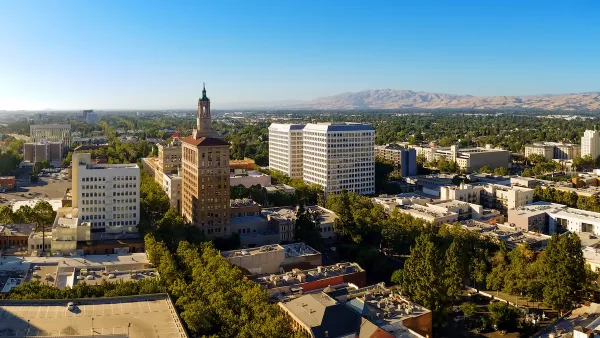
Managing Unsheltered Homelessness in San Jose
As California and other Western states await a SCOTUS ruling that will greatly affect how cities deal with tent encampments, a new stakeholder is causing big changes in how Northern California's largest city deals with its unsheltered population.
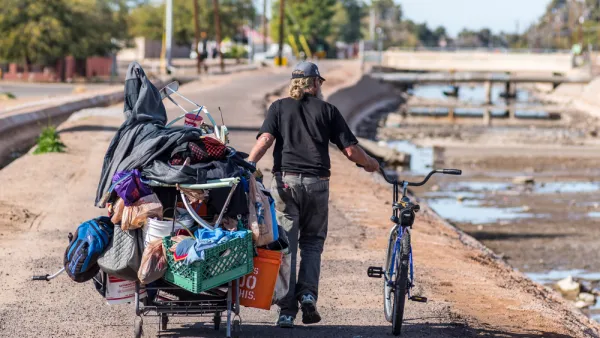
HUD Grants Total $315 Million for Continuum of Care for the Unhoused
An unprecedented federal grant program, announced earlier this month, will support continuum of care for the unhoused in unsheltered and rural settings.

The state-sanctioned urbicide of Austin
People don’t kill cities. Freeways do.

US to reduce Colorado River water deliveries to Mexico
A new Colorado Treaty amendment reduces Mexico’s Colorado River water allocation by 250,000 acre feet.

New Jersey’s second-largest city bans standalone data centers
Jersey City will continue to allow co-location facilities, such as those meant for research institutions that store their own data.

Amtrak not solely to blame for New Jersey commuter rail's unreliability, report finds
A new study from the Garden State Initiative found that NJ Transit’s budget grew 20% across a 4 year period, but reliability declined significantly over the same period.

EPA erases limits on planet-warming pollution from power plants
Under Monday’s plan, power plants would still have some limits on how much mercury, arsenic and other contaminants they can emit.

Phoenix announces new on-demand transit service, more frequent RAPID buses
Both new services will launch in October, and are part of Phoenix's Project Effective Access Solutions for Easing Congestion.

FREE Course: Walkable City 1: Why Walkability?
After describing his path towards focusing on walkability as the essence of good planning, Jeff Speck marches through his five principal reasons for making more walkable places.
Reinventing Malls: Planning Alchemy—Turning Gray Fields Into Gold
The course focuses on the opportunities and imperatives that shape reinvention of mall sites.

Eagle County Government
Harvard University Graduate School of Design
Nashville Planning Department
The Architects Foundation
University of Cincinnati Online
The Pocatello Development Authority
The Urban Renewal Agency of the City of Pocatello
Journal of the American Planning Association