A highly recommended long-read, published by Places Journal, lays the groundwork for the study of maintenance and care.


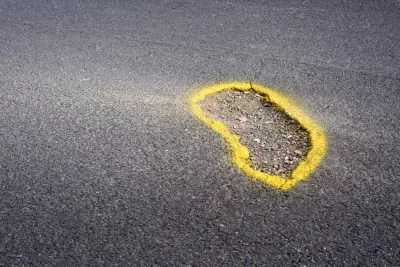
Shannon Mattern writes an intellectual exploration of maintenance.
"This is not an article about how the world is breaking down," writes Mattern. "What we really need to study is how the world gets put back together."
Mattern is talking about the "everyday work of maintenance, caretaking, and repair":
In many academic disciplines and professional practices — architecture, urban studies, labor history, development economics, and the information sciences, just to name a few — maintenance has taken on new resonance as a theoretical framework, an ethos, a methodology, and a political cause. This is an exciting area of inquiry precisely because the lines between scholarship and practice are blurred. To study maintenance is itself an act of maintenance. To fill in the gaps in this literature, to draw connections among different disciplines, is an act of repair or, simply, of taking care — connecting threads, mending holes, amplifying quiet voices.
Before maintenance can challenge innovation as the dominant paradigm, we’ll need to build a bigger public stage. The current discourse is tilted toward economists, engineers, and policymakers — and they’re a pretty demographically homogeneous group.
To focus this inquiry, Mattern separates maintenance into four scales: Rust, Dust, Cracks, and Corruption (the last is described as the maintenance of data.
Read the full story: Maintenance and Care
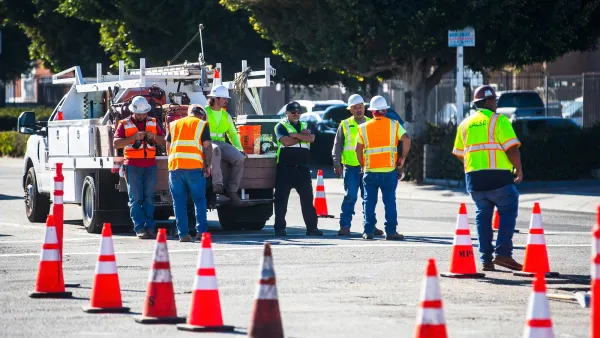
Commentary: LA’s ‘Large Asphalt Repair’ Policy Privileges Drivers, Endangers Others
A new policy to perform spot repairs rather than resurfacing entire streets lets the city skirt requirements to install accessibility and pedestrian infrastructure.
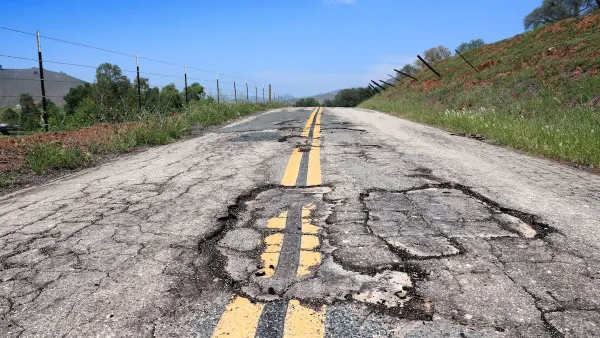
Engineers Gave America's Roads an Almost Failing Grade — Why Aren't We Fixing Them?
With over a trillion dollars spent on roads that are still falling apart, advocates propose a new “fix it first” framework.

Los Angeles Looks to Preserve Affordable Housing
The maintenance of existing affordable housing units often falls through the cracks as funding programs target new construction.

Planetizen Federal Action Tracker
A weekly monitor of how Trump’s orders and actions are impacting planners and planning in America.

California plans to bury El Niño’s downpour
If the state plays its cards right, it may be able to store a billion acre-feet of El Niño’s water in aquifers.

Desperate measures: Advocates weigh draining Lake Powell to fill Colorado River
Draining the reservoir could reduce evaporation losses by a couple hundred thousand acre-feet.

Chicago voters approve permanent festival grounds, penalty for vacant property owners
Currently, major summer and fall festivals take over public parks for weeks at a time, drawing criticism from nearby residents

NYC votes to cut outdoor dining red tape, speed up permitting
New York City also voted to allow the Department of Transportation to begin work on urgent projects before notifying elected officials.

California appears to reject Prop. 45
The proposition would have expanded the projects that qualify for a streamlined environmental review, effectively paring down the California Environmental Quality Act.

FREE Course: Walkable City 1: Why Walkability?
After describing his path towards focusing on walkability as the essence of good planning, Jeff Speck marches through his five principal reasons for making more walkable places.
Reinventing Malls: Planning Alchemy—Turning Gray Fields Into Gold
The course focuses on the opportunities and imperatives that shape reinvention of mall sites.

City of Rosemead
Rutgers University, Edward J. Bloustein School of Planning and Public Policy
One Hundred Miles
Hunter College, City University of New York (CUNY)
The Architects Foundation
University of Cincinnati Online
City of Cambridge
Montrose County
The Pocatello Development Authority