An internet company can't just stop paying for the use of underground transit facilities when it decides the subway company doesn't have the right to charge for the access.


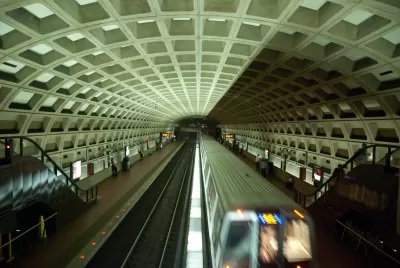
Max Smith reports: "[D.C.] Metro really does control its tunnels and stations, a federal judge ruled Thursday."
The issue was critical to determining whether Metro had the right to charge a fiber optic cable provider for the right to run communications cables through Metro’s tunnels, according to Smith. "FiberLight, LLC stopped paying its bills in 2014, claiming Metro did not truly own the tunnels, or that certified telecoms providers should be allowed to use them for free."
In effect, FiberLight, LLC owes Metro $1 million. "U.S. District Judge Ellen S. Huvelle ruled Thursday that failing to pay was a clear violation of the company’s contract," reports Smith.
FULL STORY: Metro wins ruling on whether it owns its stations, tunnels

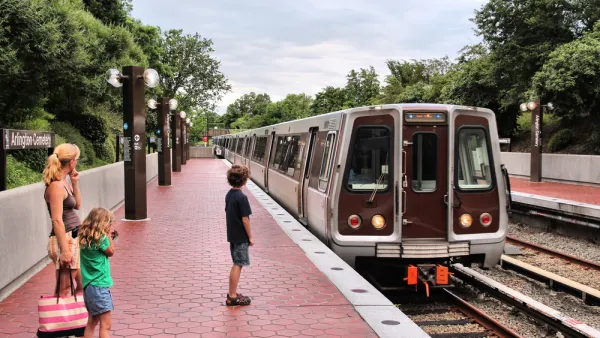
D.C. Metro Blue Line to Close for 3+ Plus Months, Starting Saturday
Platform improvements will close down another rail transit route in the D.C. region for three whole months.
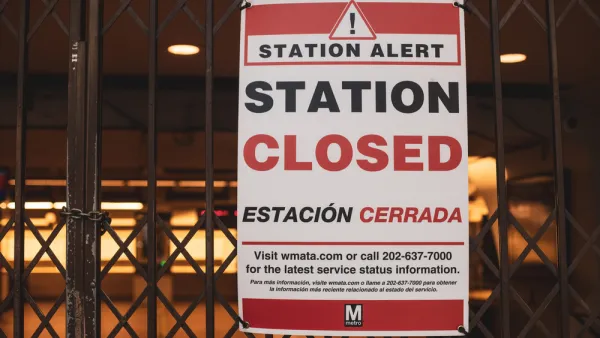
WMATA Approved Buyouts and Service Reductions
The Washington Metropolitan Area Transit Authority couldn't wait for a still hypothetical bailout from Congress or the Biden administration.
D.C. Metro Seeks Public Input on Proposed Service Cuts
D.C. Metro Seeks Public Input on Proposed Service Cuts

Planetizen Federal Action Tracker
A weekly monitor of how Trump’s orders and actions are impacting planners and planning in America.

The state-sanctioned urbicide of Austin
People don’t kill cities. Freeways do.

US to reduce Colorado River water deliveries to Mexico
A new Colorado Treaty amendment reduces Mexico’s Colorado River water allocation by 250,000 acre feet.

Mamdani overhauls NYC's Vision Zero plan with 100 new policy goals
The overhaul aims to reduce traffic deaths and make streets safer for pedestrians, cyclists and drivers through lower speed limits, new safety infrastructure and more.

Amtrak not solely to blame for New Jersey commuter rail's unreliability, report finds
A new study from the Garden State Initiative found that NJ Transit’s budget grew 20% across a 4 year period, but reliability declined significantly over the same period.

EPA erases limits on planet-warming pollution from power plants
Under Monday’s plan, power plants would still have some limits on how much mercury, arsenic and other contaminants they can emit.

FREE Course: Walkable City 1: Why Walkability?
After describing his path towards focusing on walkability as the essence of good planning, Jeff Speck marches through his five principal reasons for making more walkable places.
Reinventing Malls: Planning Alchemy—Turning Gray Fields Into Gold
The course focuses on the opportunities and imperatives that shape reinvention of mall sites.

Eagle County Government
Harvard University Graduate School of Design
Nashville Planning Department
The Architects Foundation
University of Cincinnati Online
The Pocatello Development Authority
The Urban Renewal Agency of the City of Pocatello
Journal of the American Planning Association