In his new book Palaces for the People, sociologist Eric Klinenberg explores the places—from libraries and schools to cafes and churches—where cities' social lives take place. It's a compelling idea but one that Klinenberg discusses clumsily.


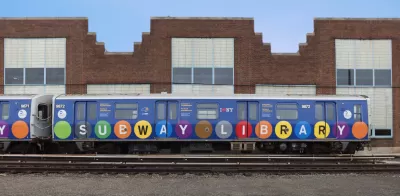
"Palaces for the People takes a meandering journey through what Klinenberg calls 'social infrastructure.' In contrast with 'social capital,' the term coined by Robert Putnam to describe the strength of social relationships, social infrastructure refers to the places where social relationships form. It’s a hardware-vs.-software situation, as it were."
"This premise, like almost everything else Klinenberg writes, is perfectly reasonable and engaging. Klinenberg writes with an admirable social mission: 'If states and societies do not recognize social infrastructure and how it works, they will fail to see a powerful way to promote civic engagement and social interaction, both within communities and across group lines.' And yet, he goes out of his way to muddle his argument and make the provision of social infrastructure seem somehow less urgent than it really is."
Read the full story: The Social Importance of Public Spaces

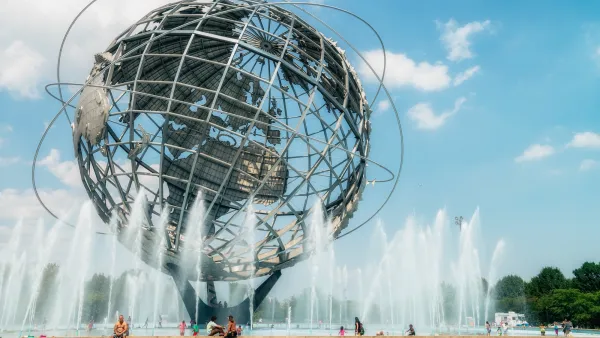
Historic Queens park is getting a $120M upgrade
The borough's largest park will undergo significant upgrades for accessibility, flood mitigation and historic preservation.
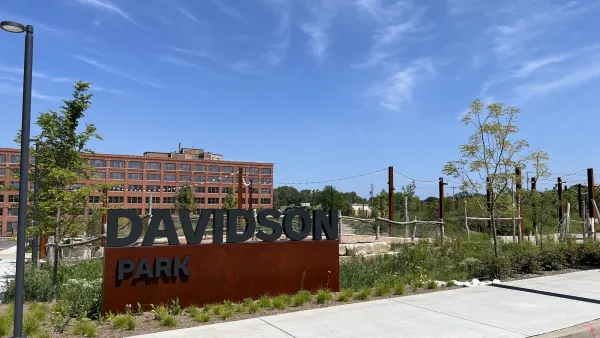
Harley-Davidson turned a Milwaukee parking lot into a green oasis
The park, adjacent to Harley-Davidson headquarters, doubles as stormwater retention infrastructure.
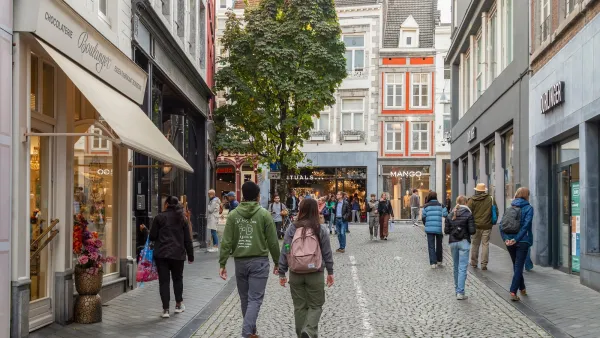
Planning for Love, Part 3: Enhancing human connection through walkability
In the third and final installment of this series, author Hannah Kosoff examines what her research findings say about modern dating and urban form.

Planetizen Federal Action Tracker
A weekly monitor of how Trump’s orders and actions are impacting planners and planning in America.

Amtrak, CN end decades-long dispute with eight-year agreement
The new operating agreement establishes an updated framework for the companies to work together, including processes to resolve disputes.

Judges permit Denver to divert 77,000 acre feet from the Colorado River for reservoir expansion
Overuse and climate change have caused the Colorado River’s water levels to plummet.

NYC DOT wants faster, more permanent street upgrades
The city is examining ways to build more concrete infrastructure without getting entangled in 'decades-long' projects.

'Something we’ve never seen before:' rising utility rates could strain city finances nationwide
Data centers, climate change and other factors have caused utility rates in the United States to increase by 38% since 2020.

Trump to overrule local leaders, lease millions of acres of America’s Pacific Island territories’ seafloors to mining companies
International law says that the Indigenous people of America’s territories have a right to prior and informed consent regarding projects that impact their countries.

FREE Course: Walkable City 1: Why Walkability?
After describing his path towards focusing on walkability as the essence of good planning, Jeff Speck marches through his five principal reasons for making more walkable places.
Reinventing Malls: Planning Alchemy—Turning Gray Fields Into Gold
The course focuses on the opportunities and imperatives that shape reinvention of mall sites.

Harvard University Graduate School of Design
KFH Group Inc.
Greater Baltimore Committee
The Architects Foundation
University of Cincinnati Online
The Pocatello Development Authority
The Urban Renewal Agency of the City of Pocatello